Mobility as a Social Service
Toyota/PIT Client
Service Design
UX Research
Designing a community-rooted planning space to reimagine mobility as a social service
With Toyota Mobility Foundation and South East Community Services, we explored how autonomous vehicles could be tools for equity, connecting underserved communities to services beyond food access.
Developed as part of the Mobility as a Social Service Project, Indiana University Indianapolis, 2025–2026.
Role
UX Researcher & Designer
Team
4 designers/researchers; Led by Prof. Youngbok Hong
Duration
8 months (Sep 2025 – Apr 2026)
Scope
Service Design
Neighbors access food, but not the services
that could change their situation
SECS offers food, financial coaching, employment support, and education, yet most neighbors take only the food. In parallel, TMF sought to explore how autonomous vehicles could function as tools for equity, not just transportation.
Two questions framed the work:
Why do pantry users underutilize non-food support services?
How might we design a mobility system that connects neighbors to broader support?
A wraparound service
that brings care to the neighbor
Instead of separate trips to each service, an AV network coordinates them into a single journey built around one person's day.
We delivered it as an interactive website that follows one neighbor's story end to end, grounded in a research report. The story runs through a single persona, Maya.
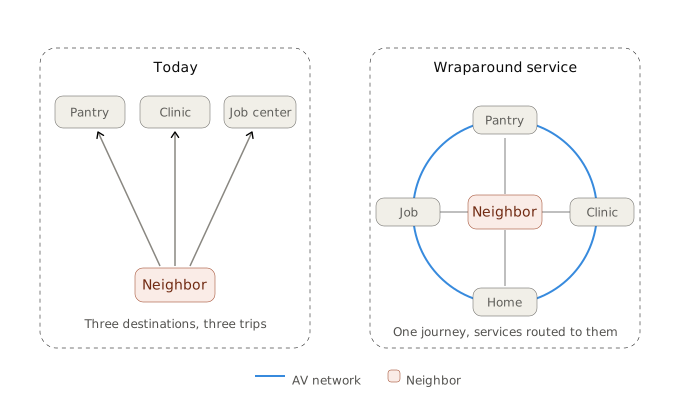
The pantry's reach grows without the pantry moving: the trip comes to the neighbor
A shared artifact three very different audiences
can read from one seat
The concept reframed AV mobility as social-care infrastructure rather than transportation. The prototype gave a Toyota executive, a SECS volunteer, and a transit planner one story they could each experience from the community's perspective.
The service is legible through three lenses, each answering "what is the AV, really":
Layer 01
AV as Reach
The pantry reaches more neighbors without moving.
Layer 02
AV as Social Infrastructure
The service connects neighbors to pantries, clinics, job centers, and schools they can count on.
Layer 03
AV as Operational Node
The system runs itself. Routing, deliveries, and demand balance with no dispatcher and no coverage gaps.
Centering community voices across 3 methods
We adopted a qualitative participatory design approach focused on the UNDERSTAND stage and combed rapid inputs, group-level patterns, and deep narratives, so the themes that were credible, actionable, and grounded in community reality.
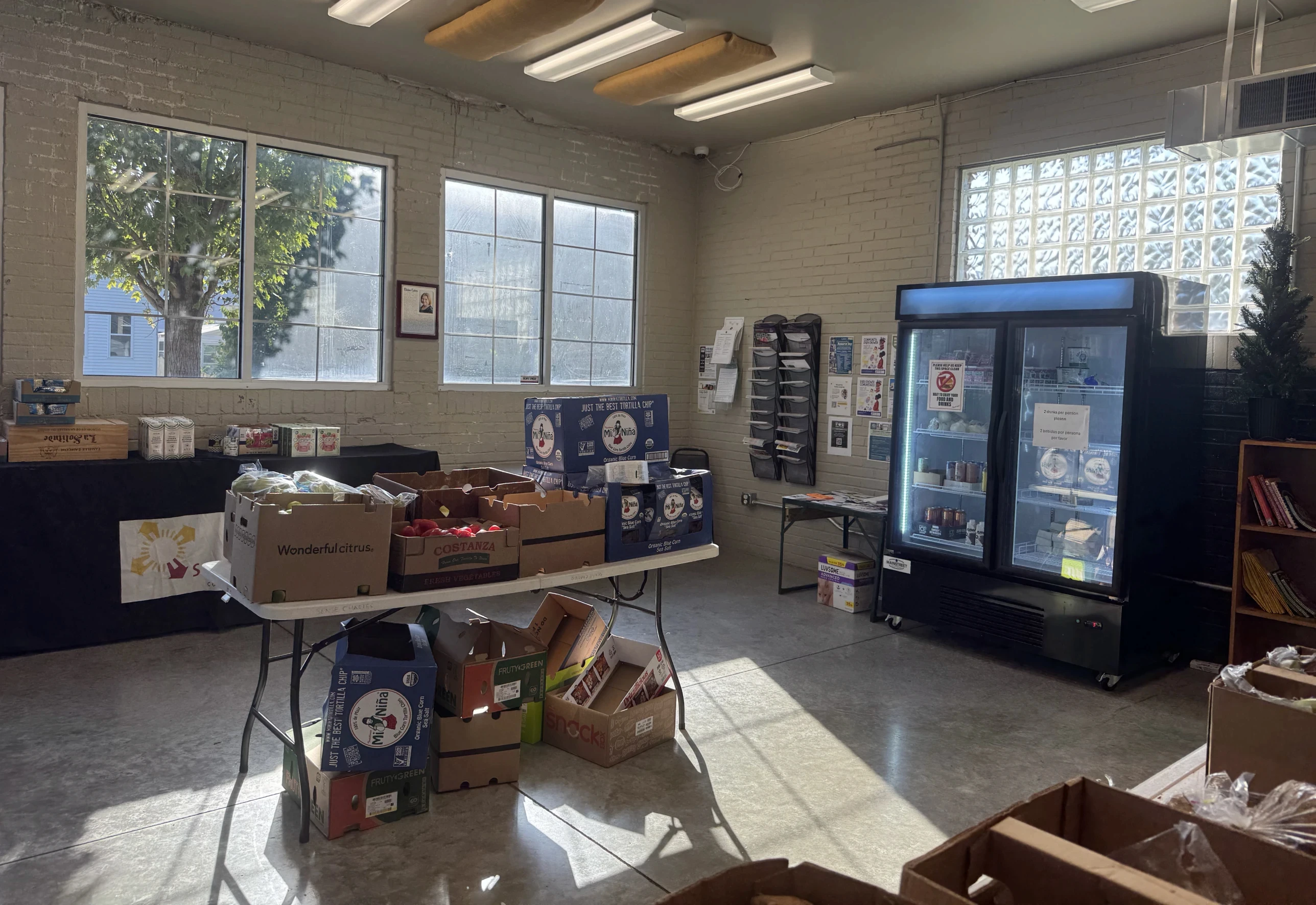
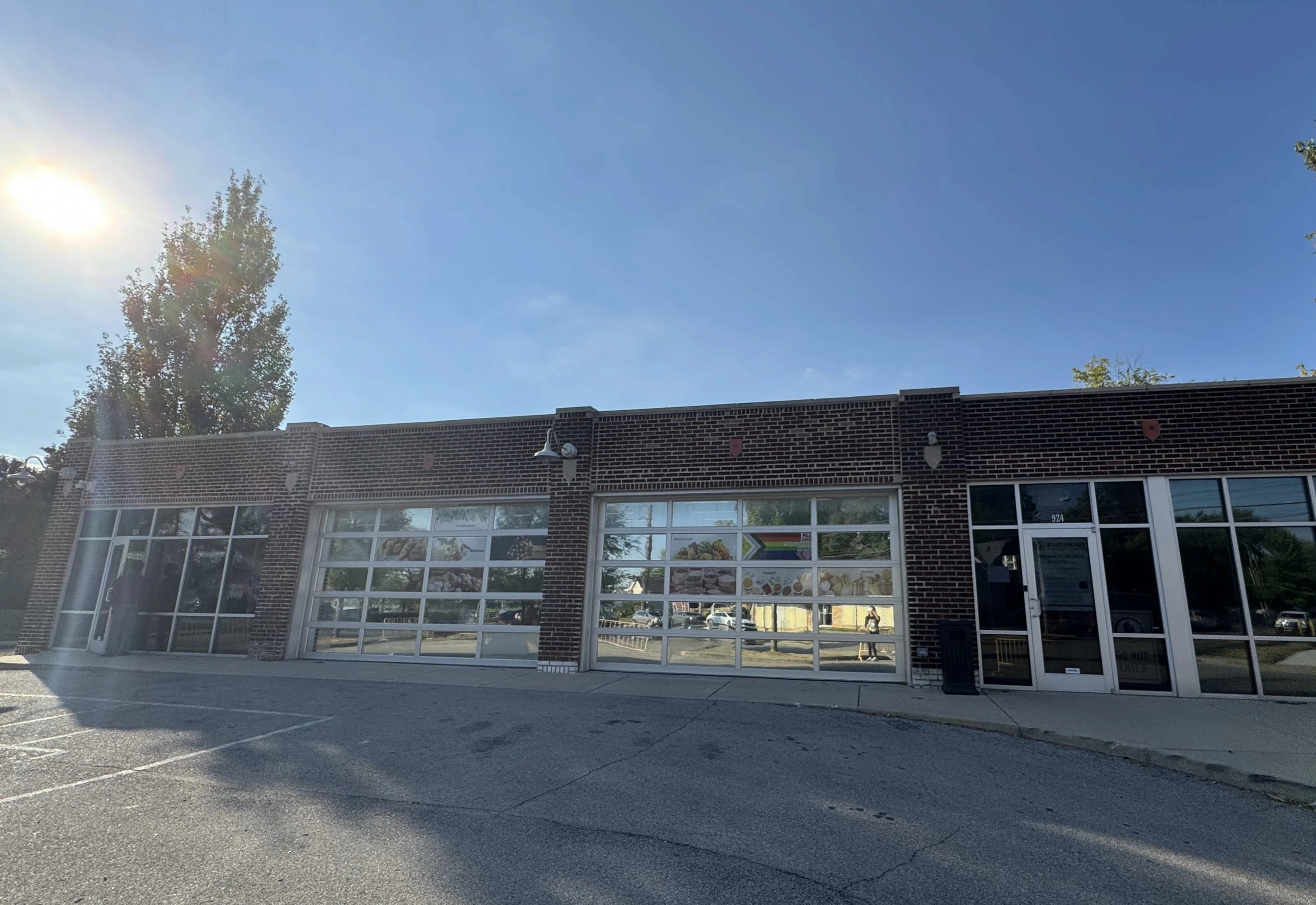
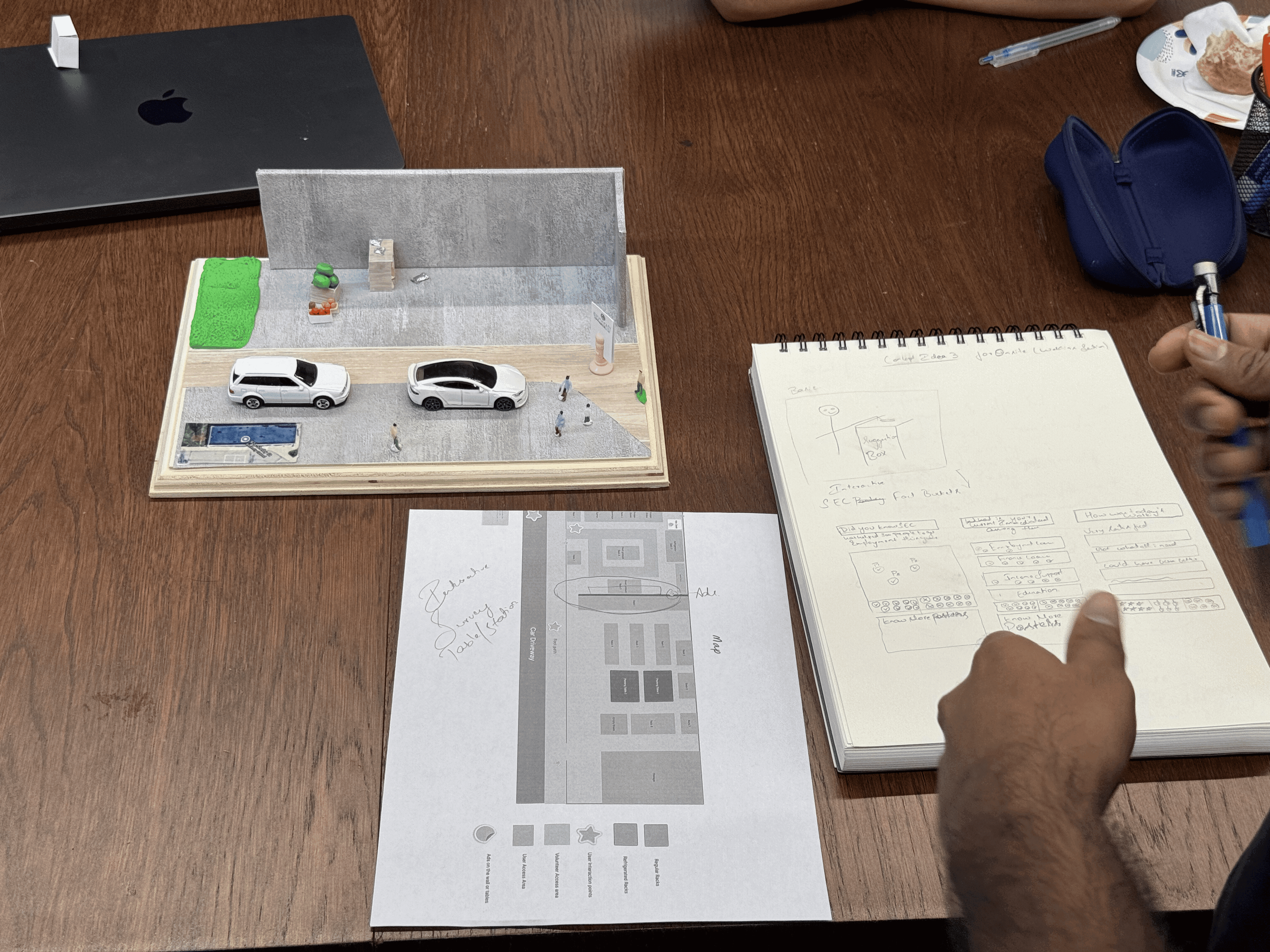
On-site observation at Southeast Community Services
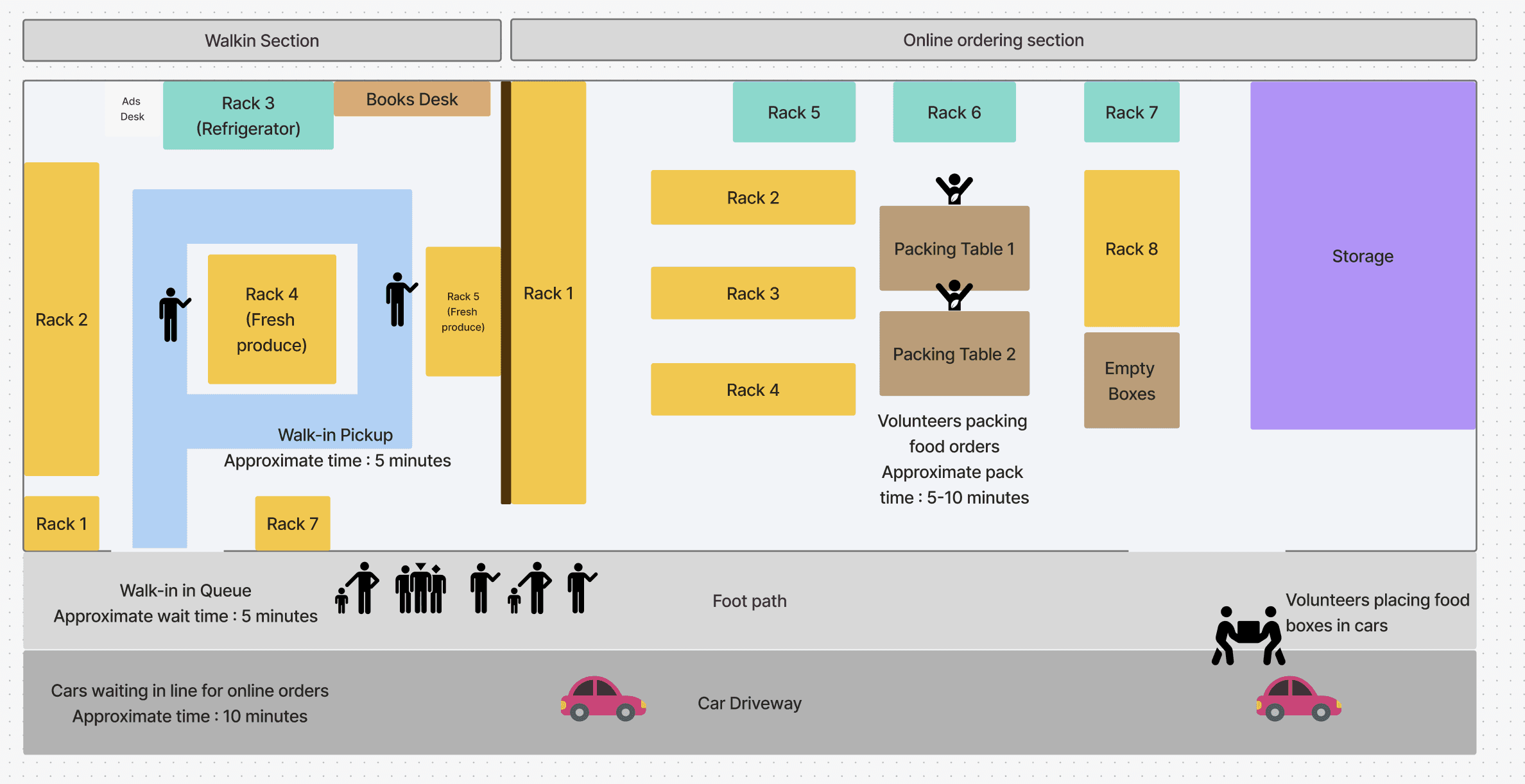
Observation map highlighting key user interaction points
Method 01
AI Interviews
Rapid conversational interviews via Genway AI. Clients scanned QR codes in their cars during pickup.
27
AI-moderated interviews (5 Spanish, 22 English)
Method 02
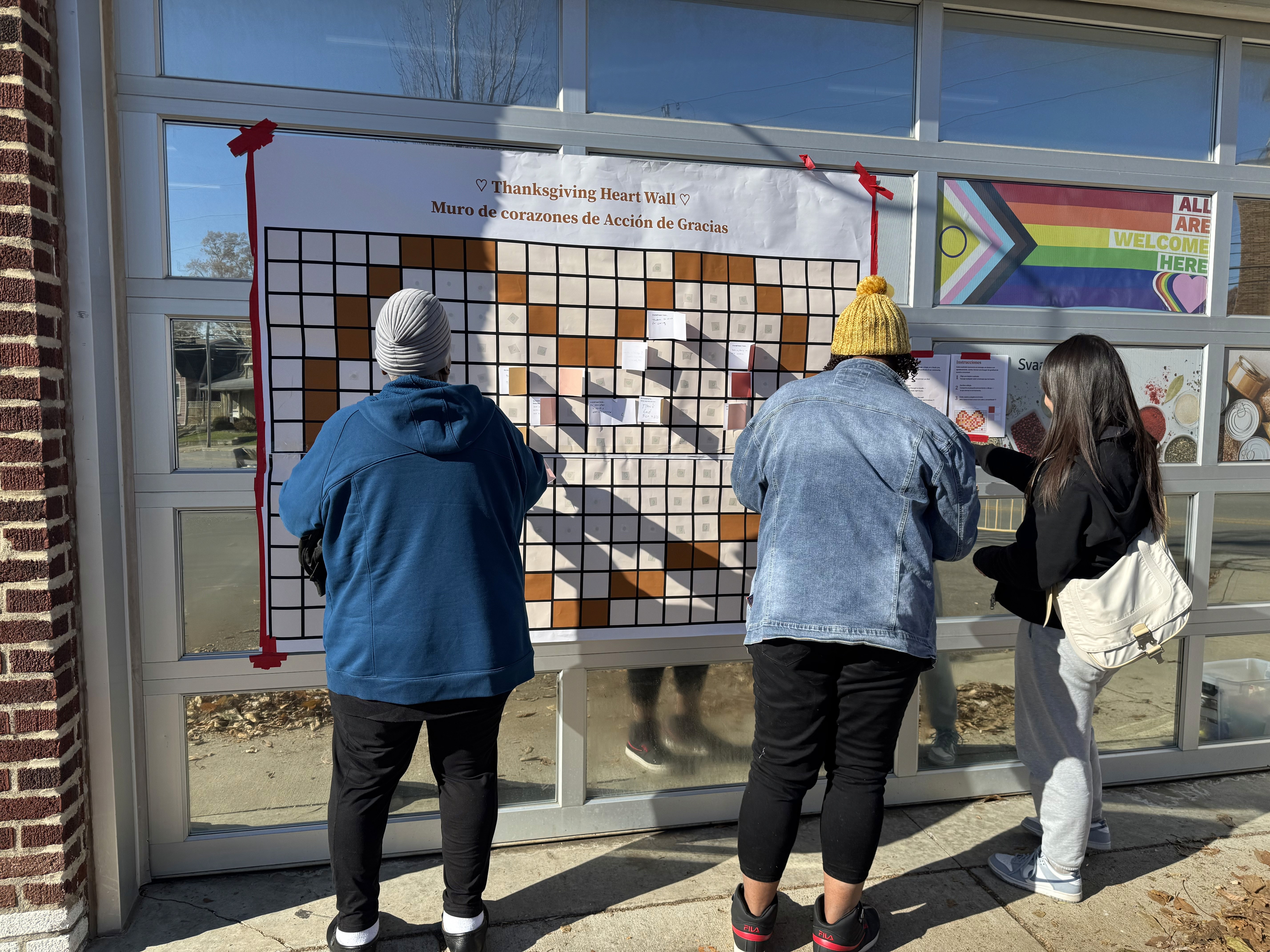
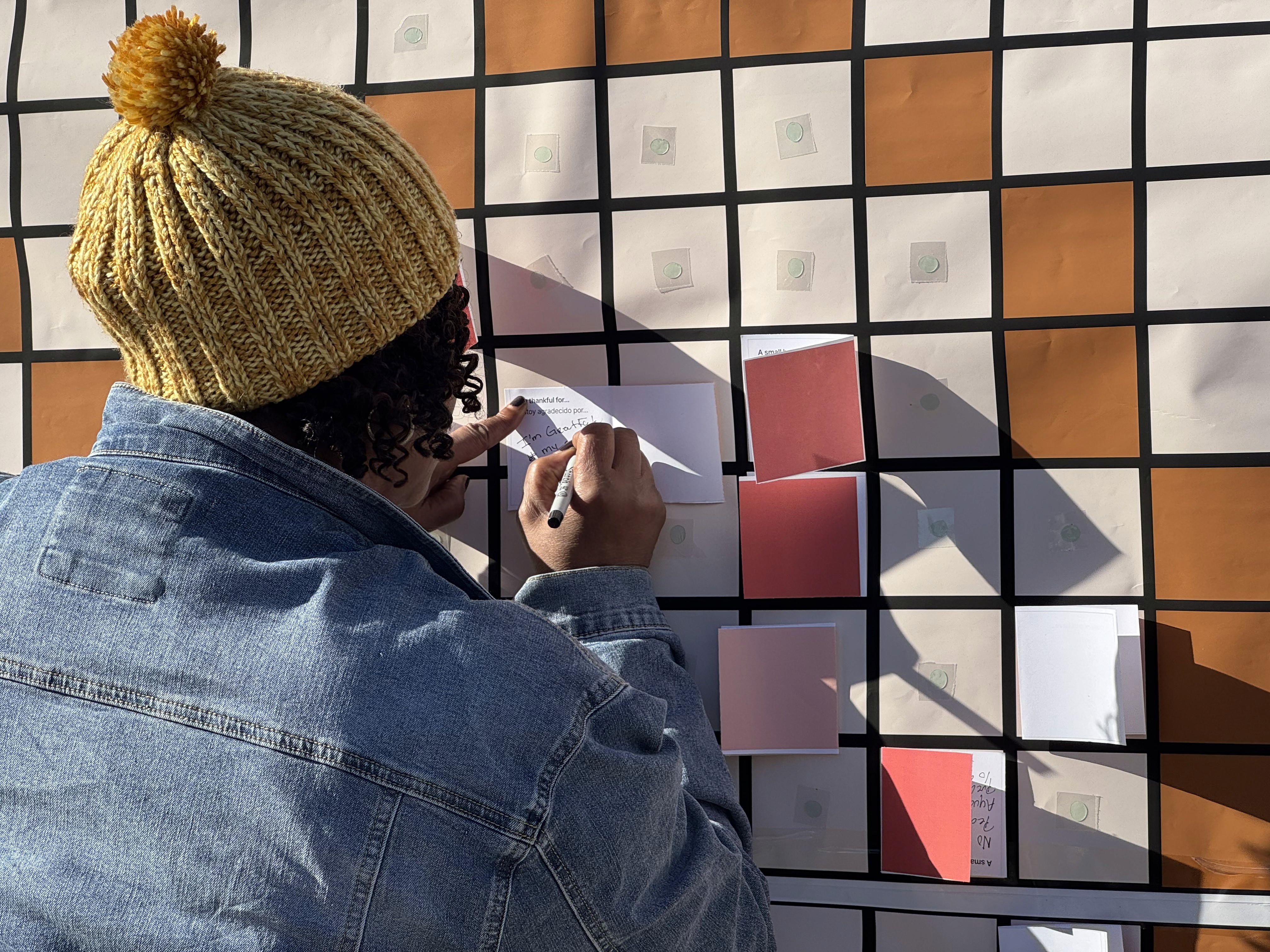
Sticker Wall
Across 2 sessions. Low-pressure prompt posters outside the pantry during wait times.
50+
Sticker wall participants, on-site
Method 03
Focus Groups
Hands-on "ideal meal" activity surfaced insights about dignity and belonging.
3
Focus group sessions, 10 participants total
Why neighbors know about services but don't use them
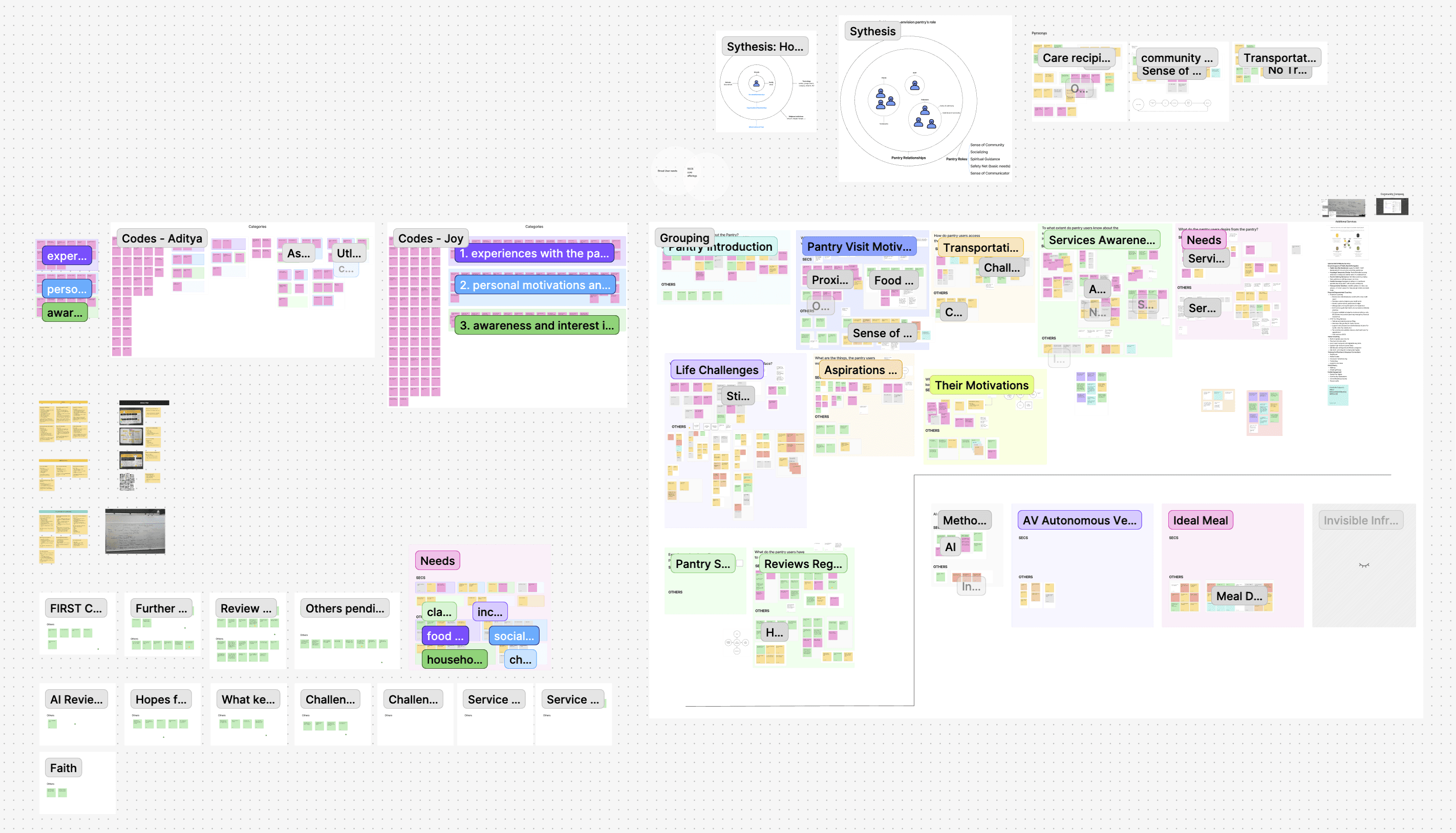
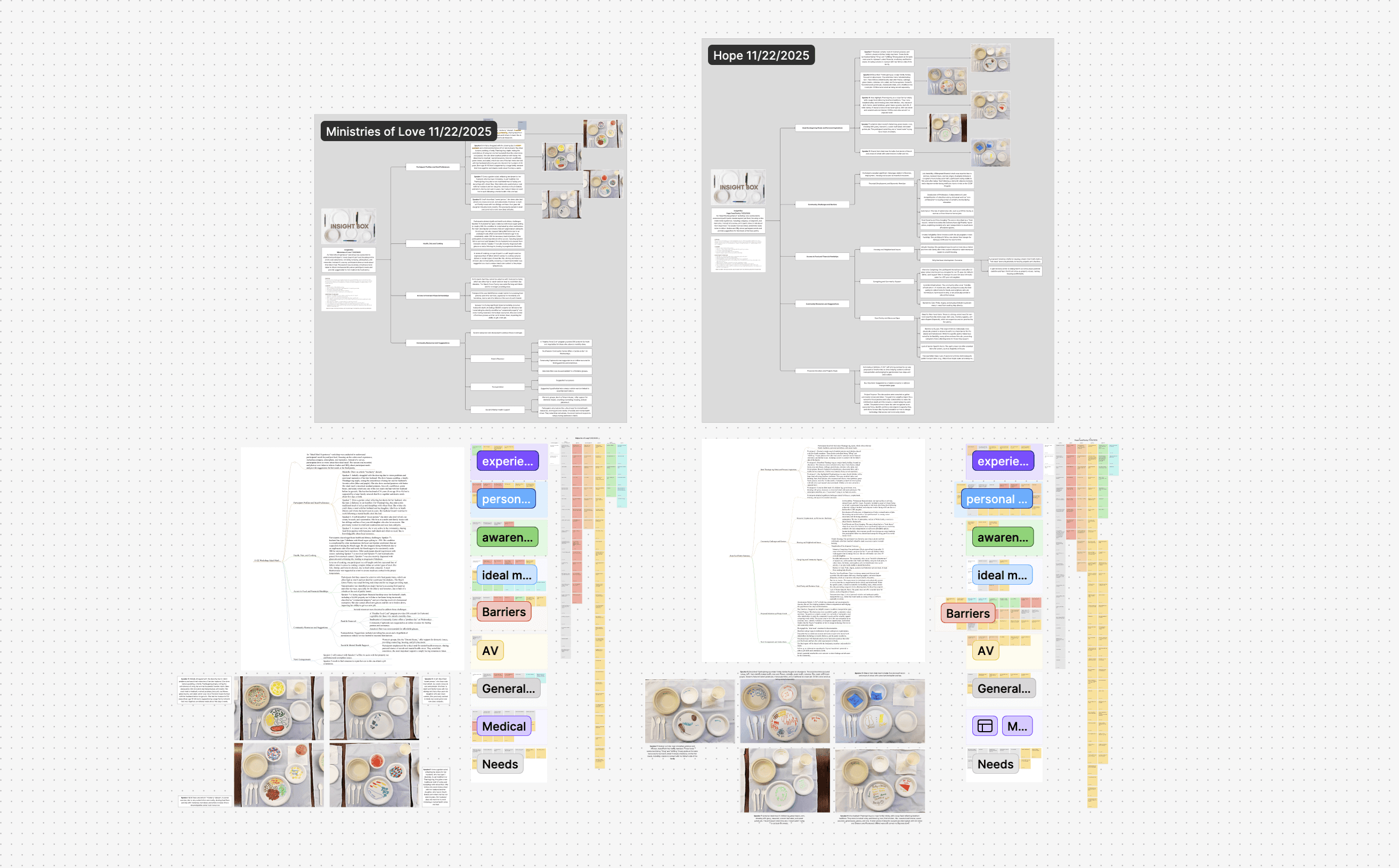
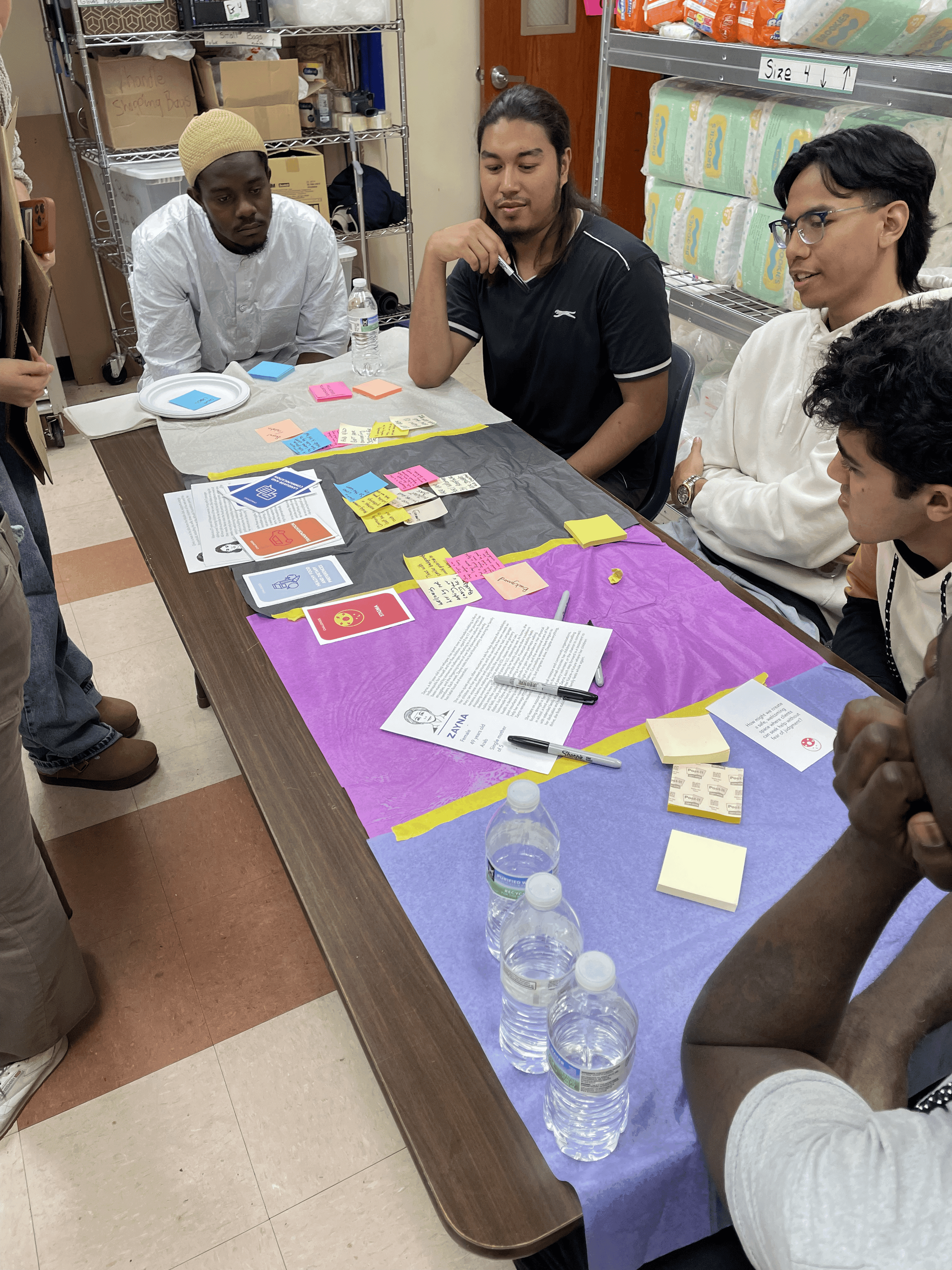
Collaborative synthesis in FigJam!
Co-design workshops with community stakeholders
3+ workshops with internal team, pantry volunteers, and transit partners (IndyGo, Gleaners) to test and refine speculative mobility concepts with community partners.
How might we design an autonomous mobility system that works the way neighbors actually live?
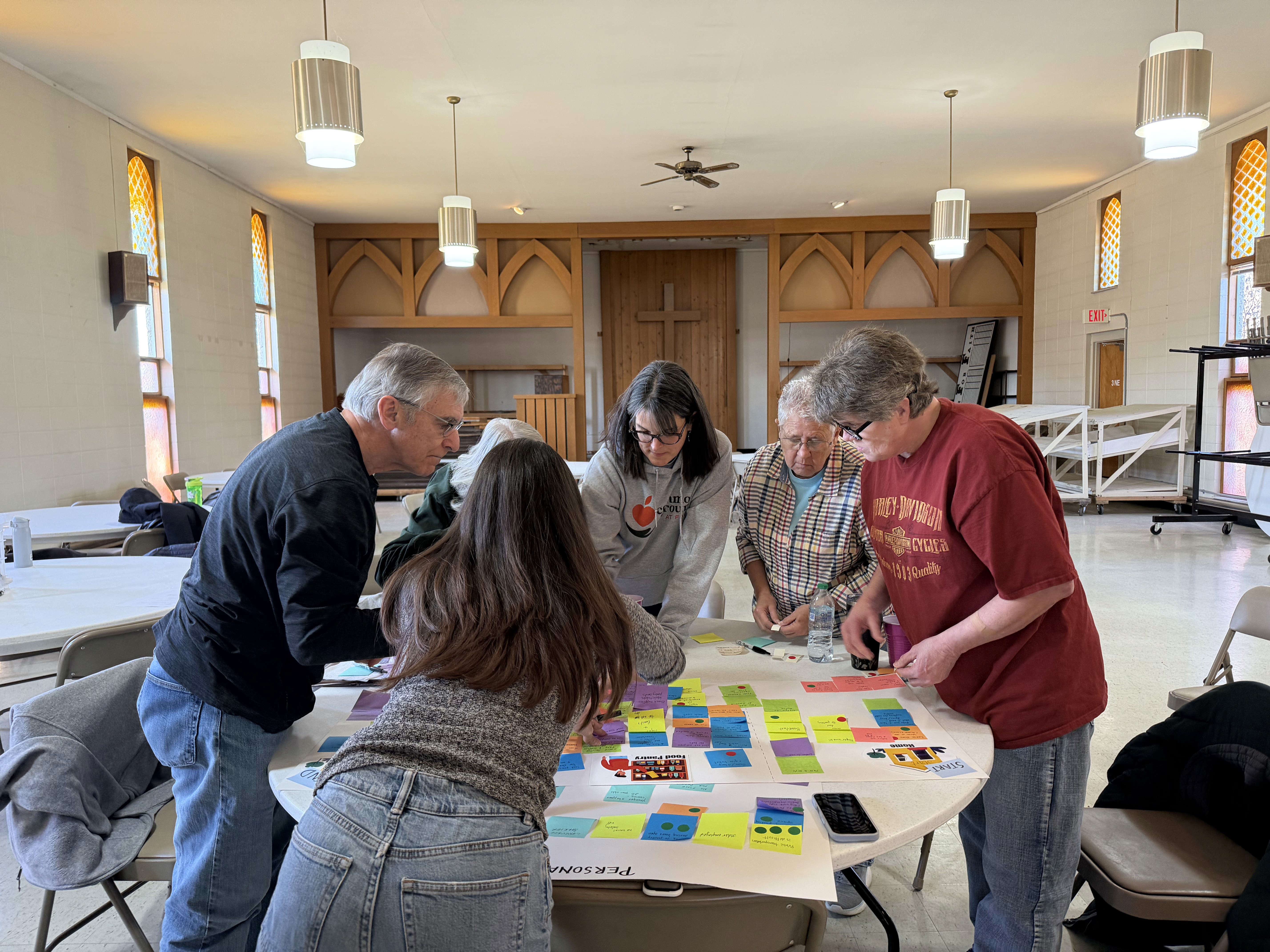
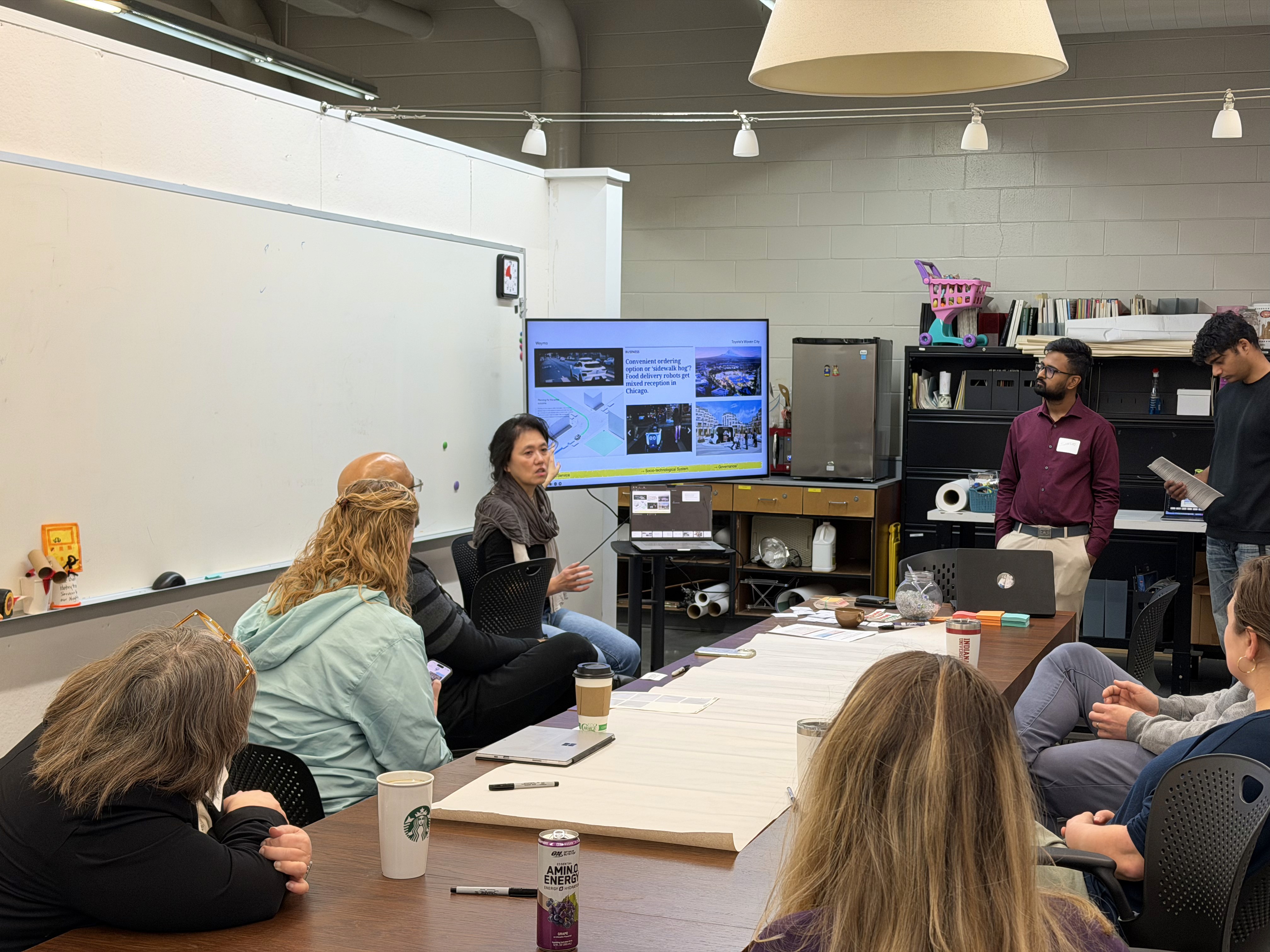
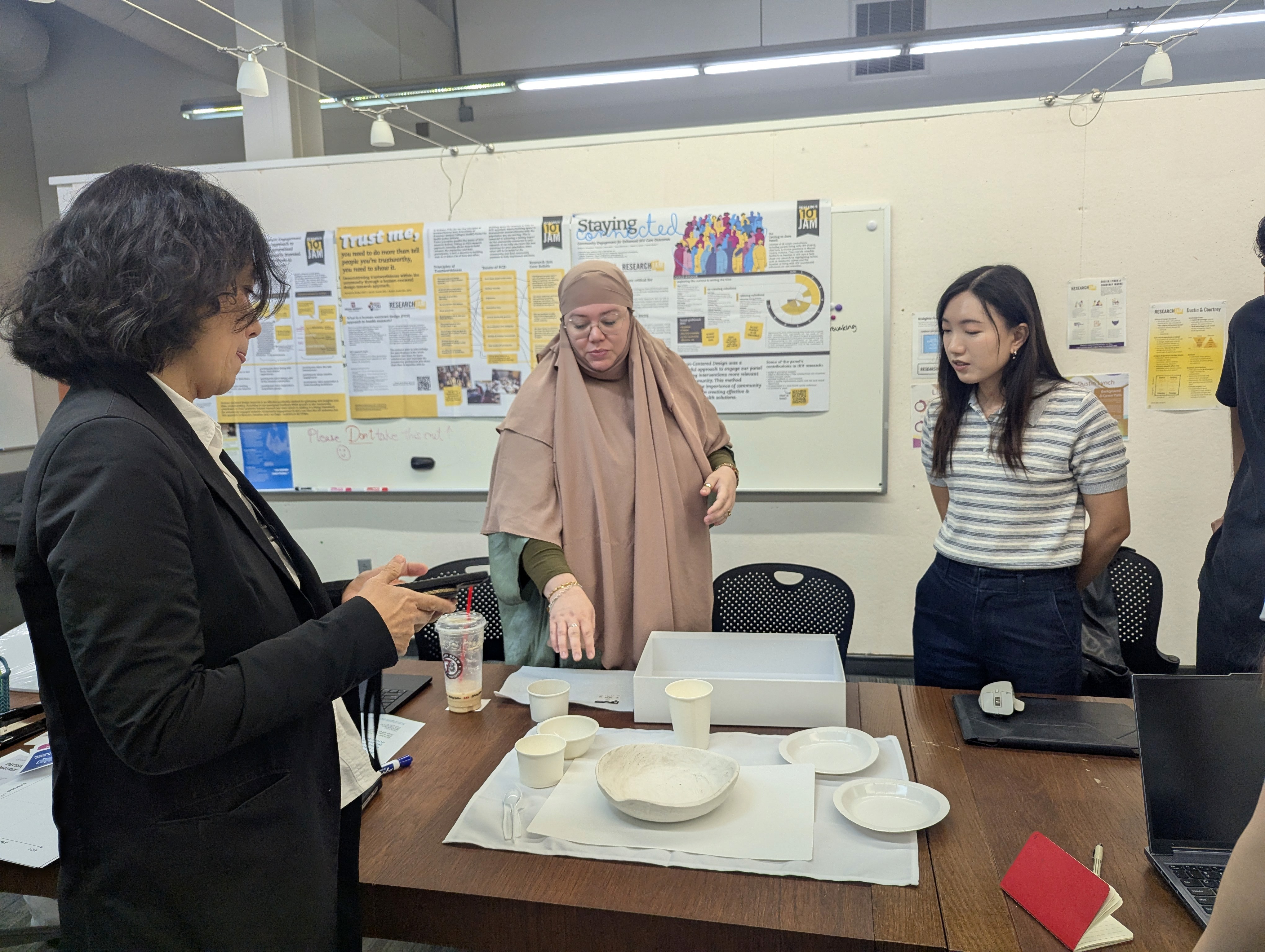
Workshop participants: internal team, pantry volunteers, and community system stakeholders
A narrative tool for the speculative concept
The prototype translates ecosystem-level research into a human-scale story — one that a Toyota executive, a SECS volunteer, and a transit planner can all experience from the community's perspective.
This project challenged me to move beyond digital platforms and mobile design by engaging community members as co-creators and designing both service and speculative systems. I learned to conduct robust, participatory research while balancing future-oriented thinking with real-world constraints. The experience deepened my understanding of how design can shape systems and reinforced the value of building with communities, not just for them.