Autonomous Mobility as a Social Service
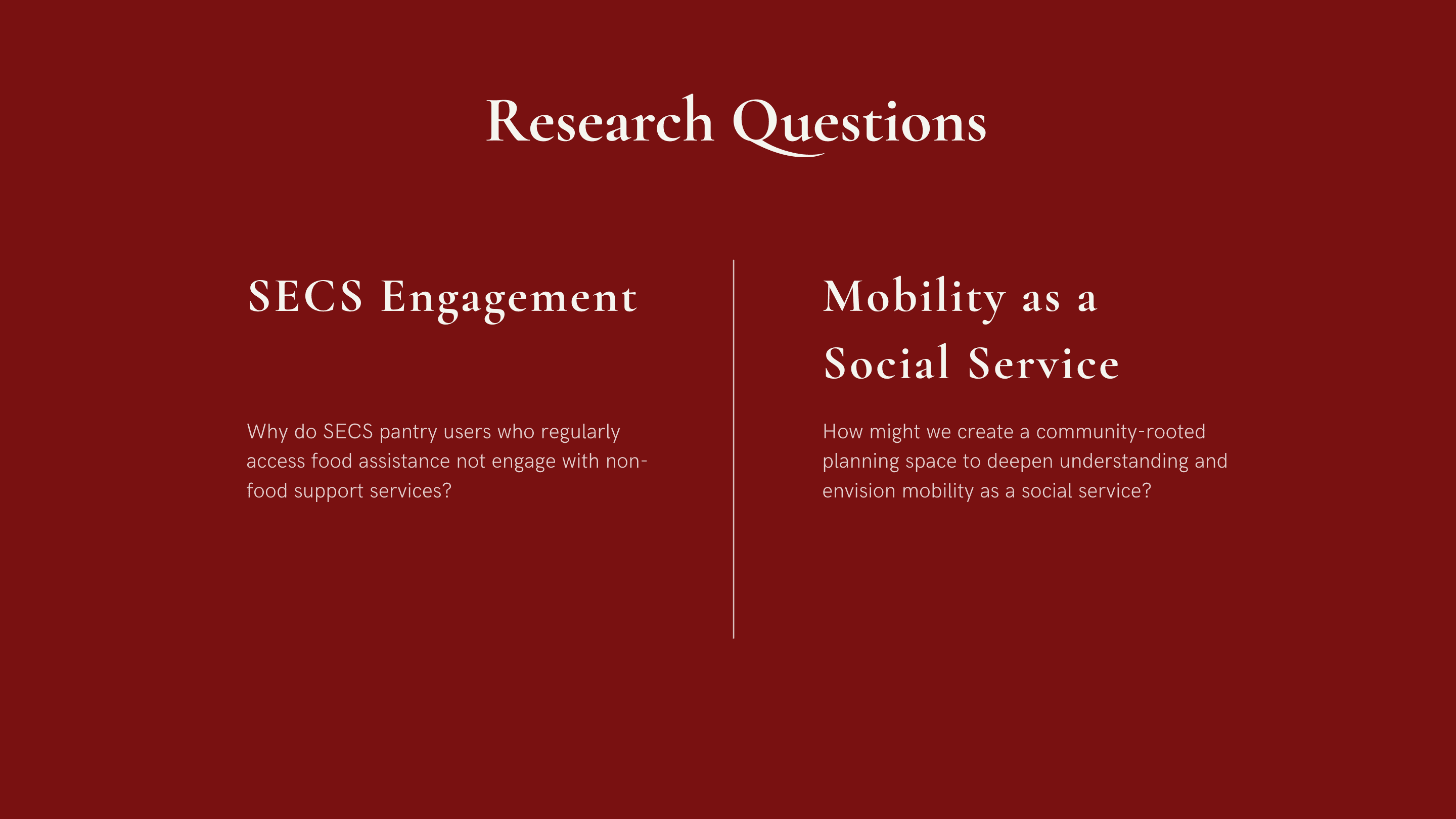
How might we create a community-rooted planning space to deepen understanding and envision mobility as a social service?
Roles
Product Designer / Product Manager
Duration
Company
Team
Tools
This capstone project, in collaboration with the Toyota Mobility Foundation and South East Community Services, explores how autonomous vehicles (AVs) can be reimagined as tools for social service delivery: enhancing access to food, healthcare, and essential resources in underserved communities.
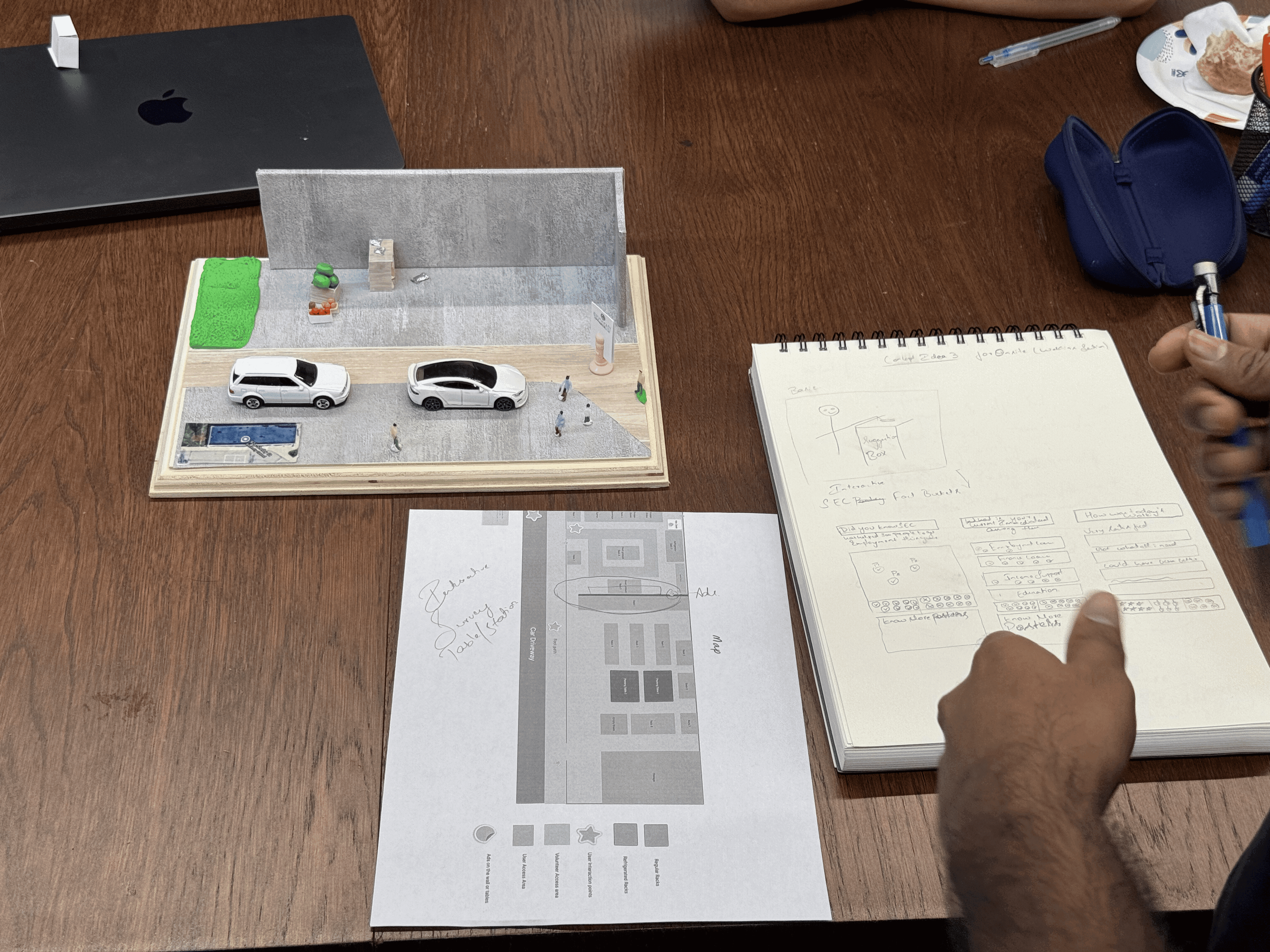
Centered on co-design with pantry clients and staff, the project delivers approachable engagement tools and a speculative mobility concept grounded in real-world needs and community values.
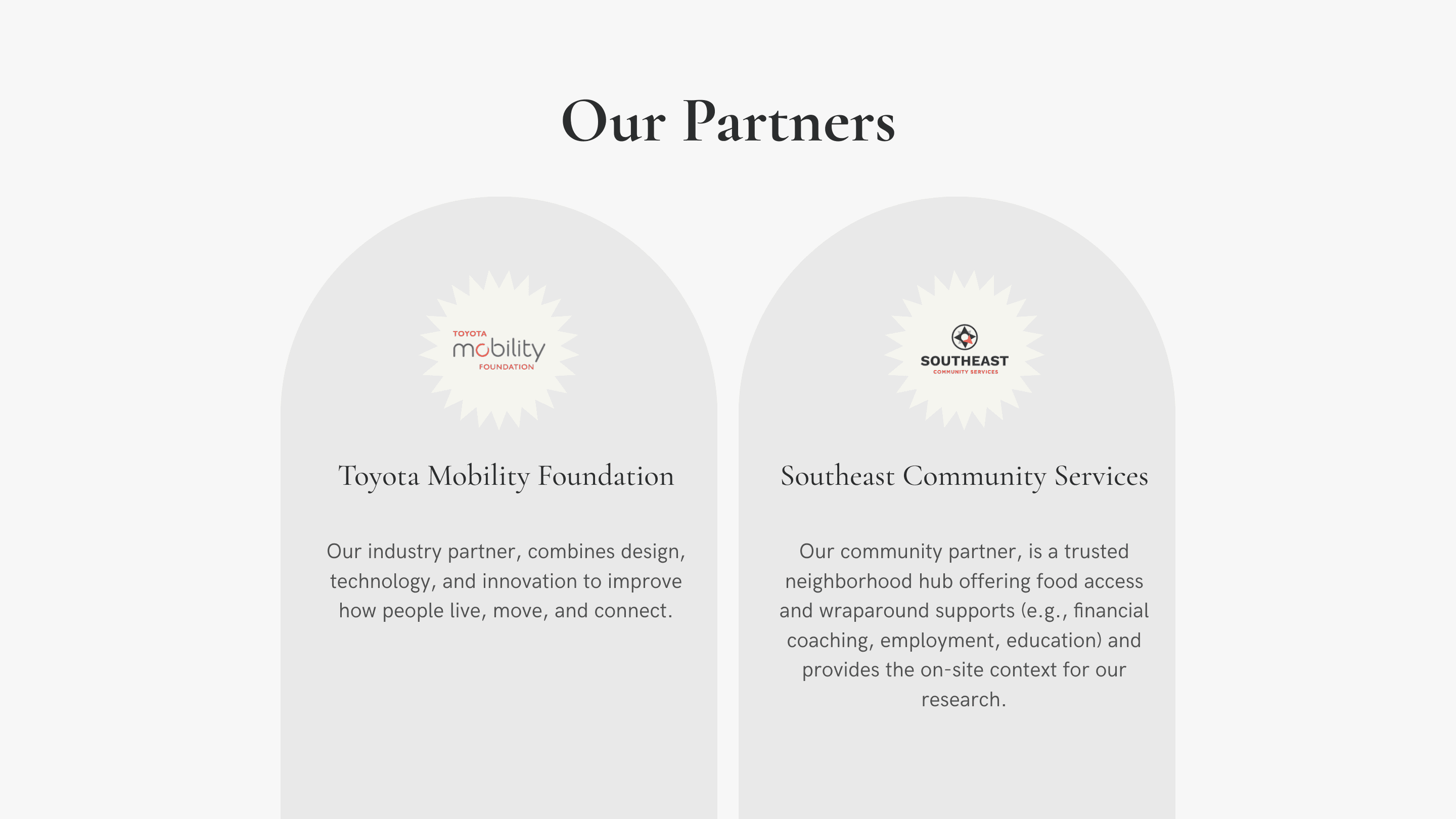
This project was shaped by the needs of two core partners:
Toyota Mobility Foundation (TMF): Design a speculative mobility concept that supports independence and dignity for pantry clients by reducing transportation and access barriers.
South East Community Services (SECS): Develop low-barrier engagement tools that community centers can use to better understand client needs, values, and aspirations.
Solution
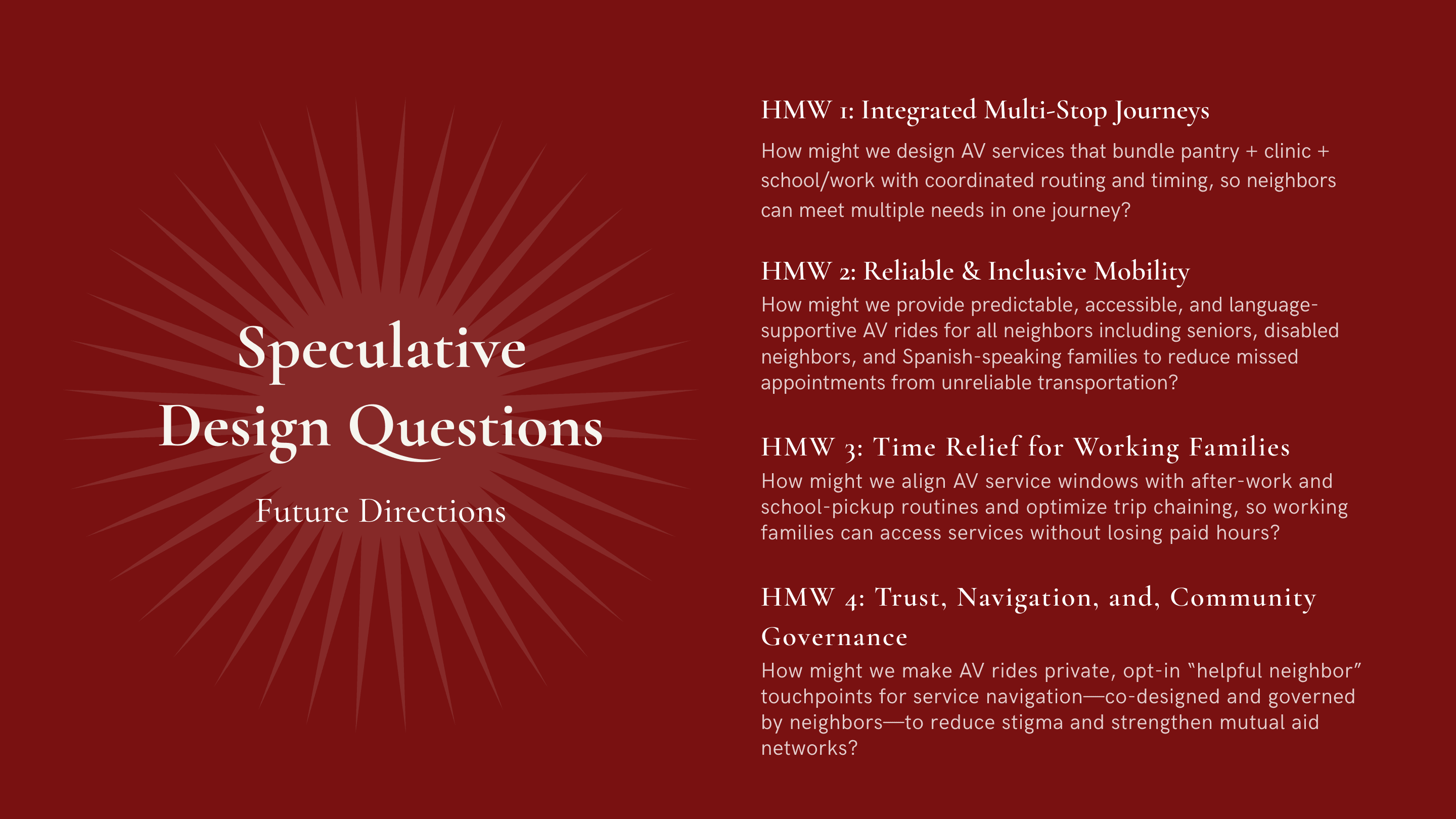
HMW questions translate research into design directions.
Grounded in our research, we synthesized strategic “How Might We” questions to guide the Spring 2026 speculative design phase, framing future mobility as a social service through the lens of lived experiences, values, and systemic needs.
User Research
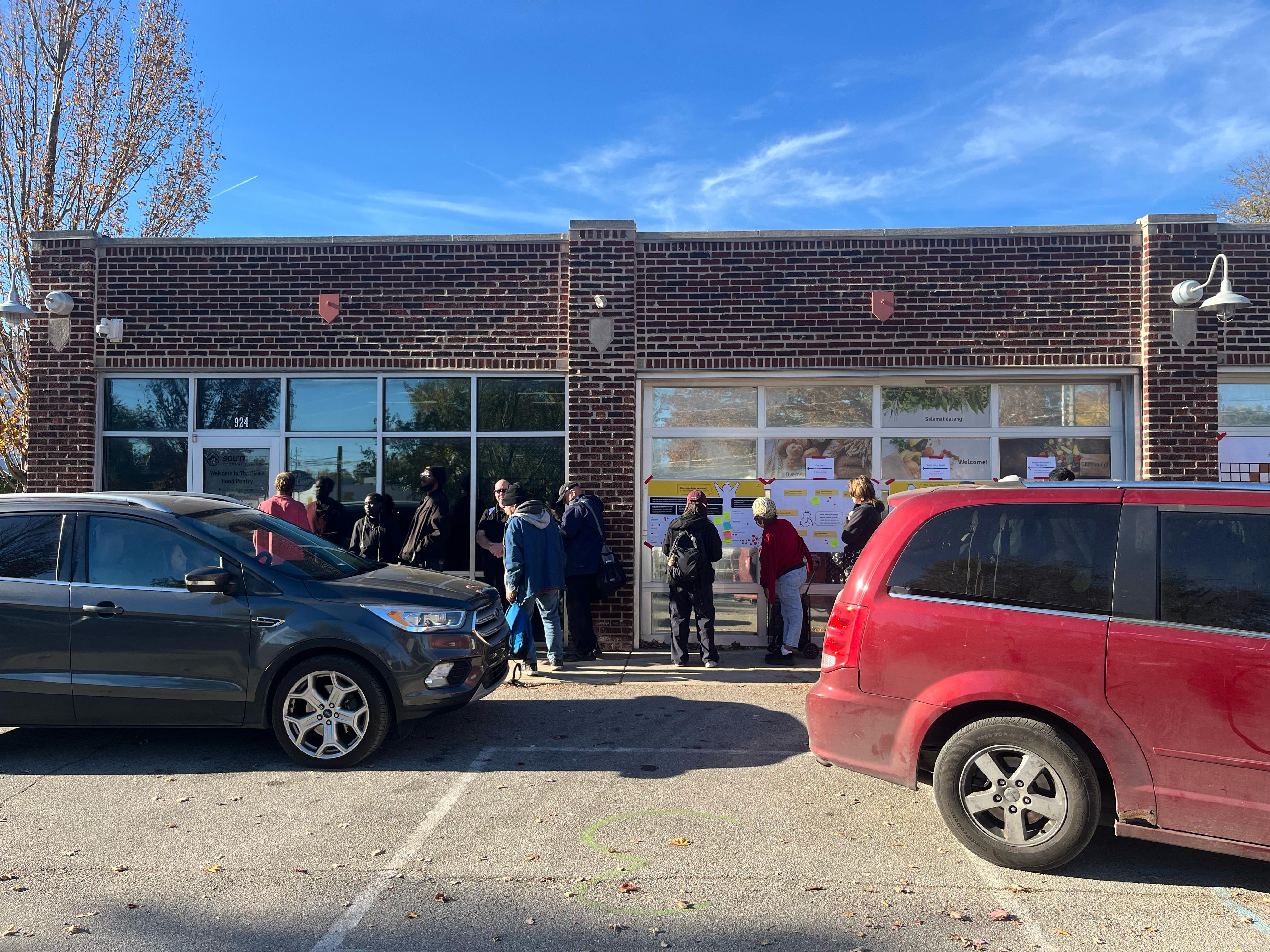
We centered community voices to surface insights on current barriers, evolving needs, and future mobility opportunities.
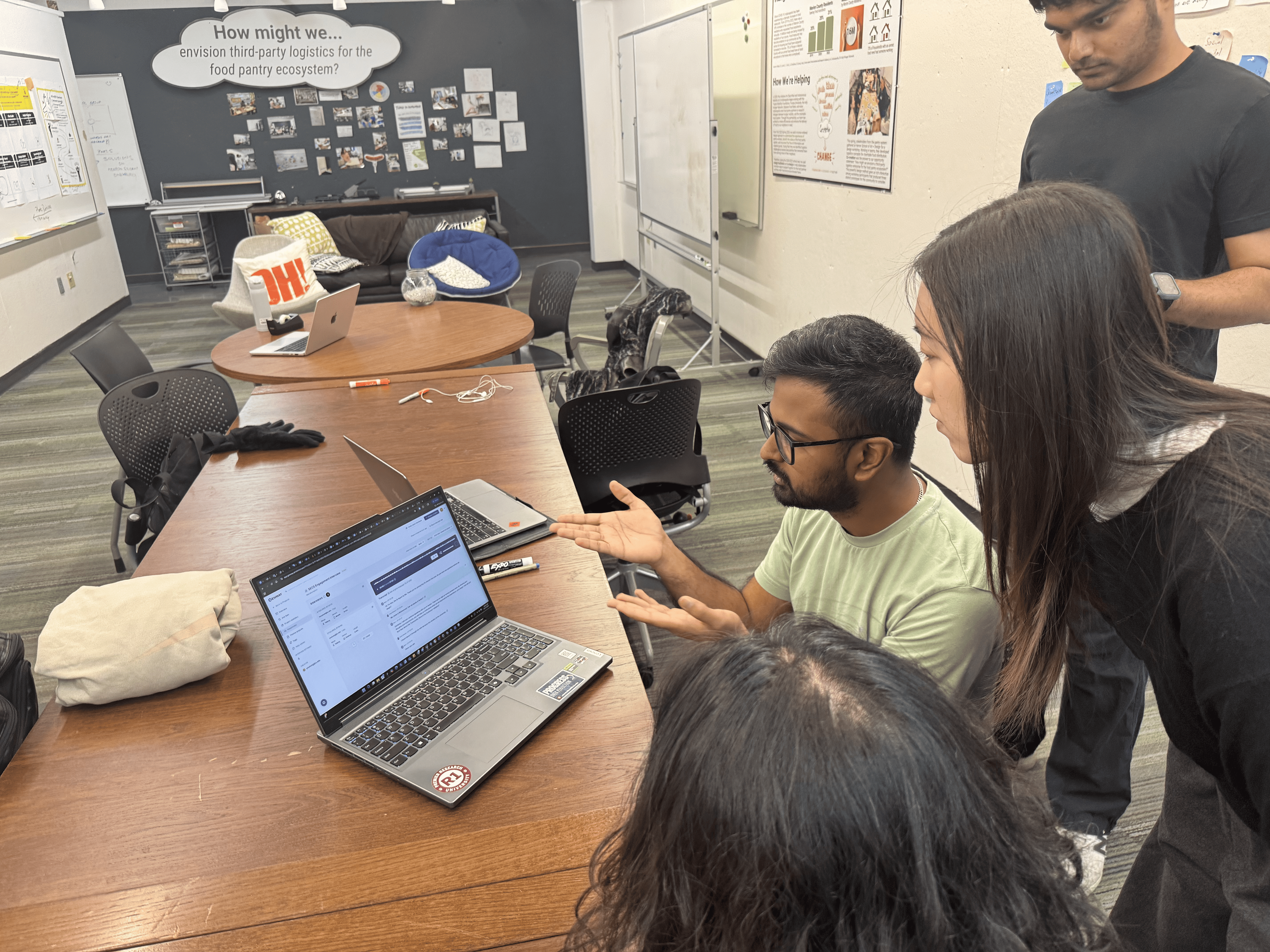
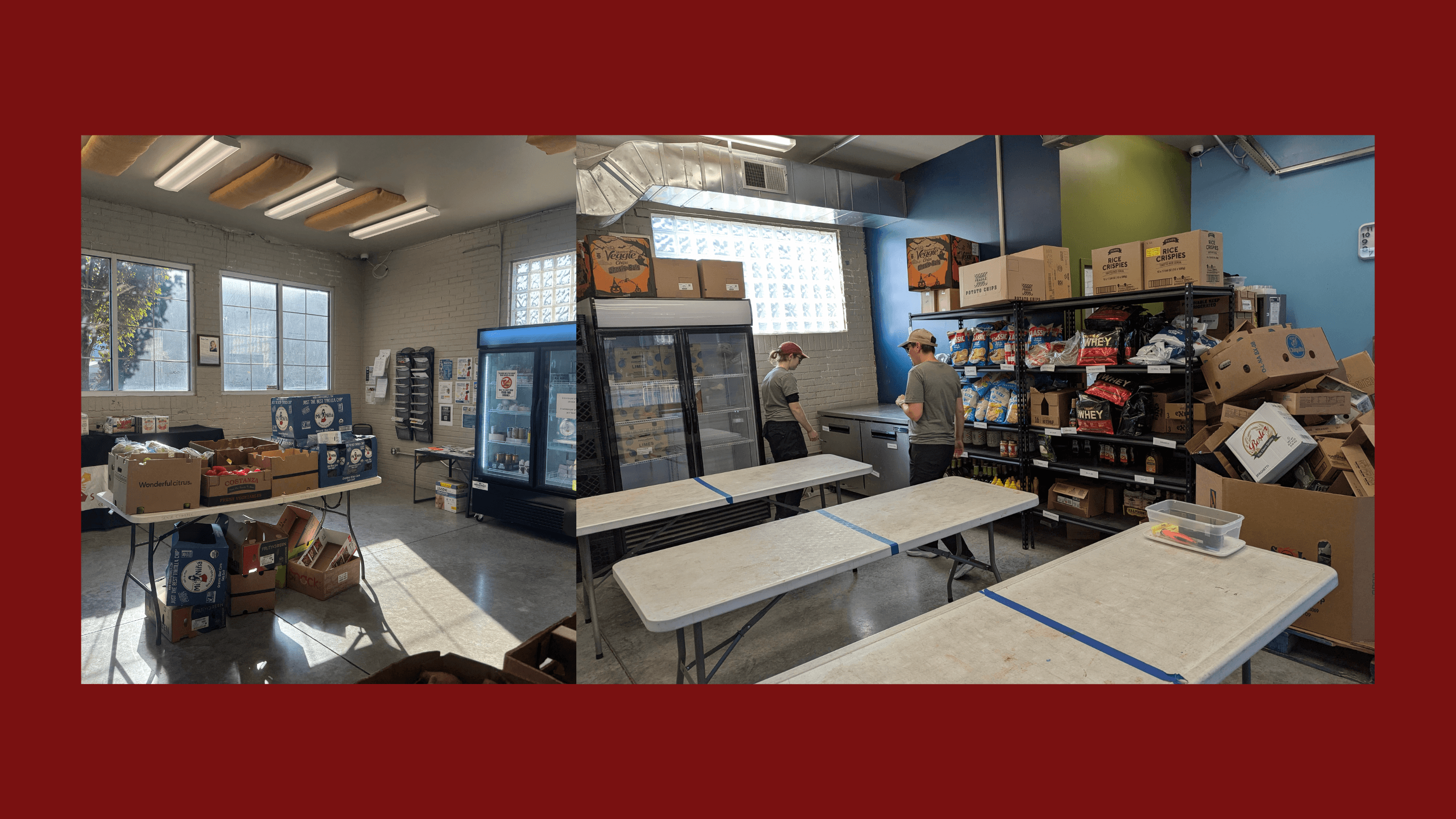
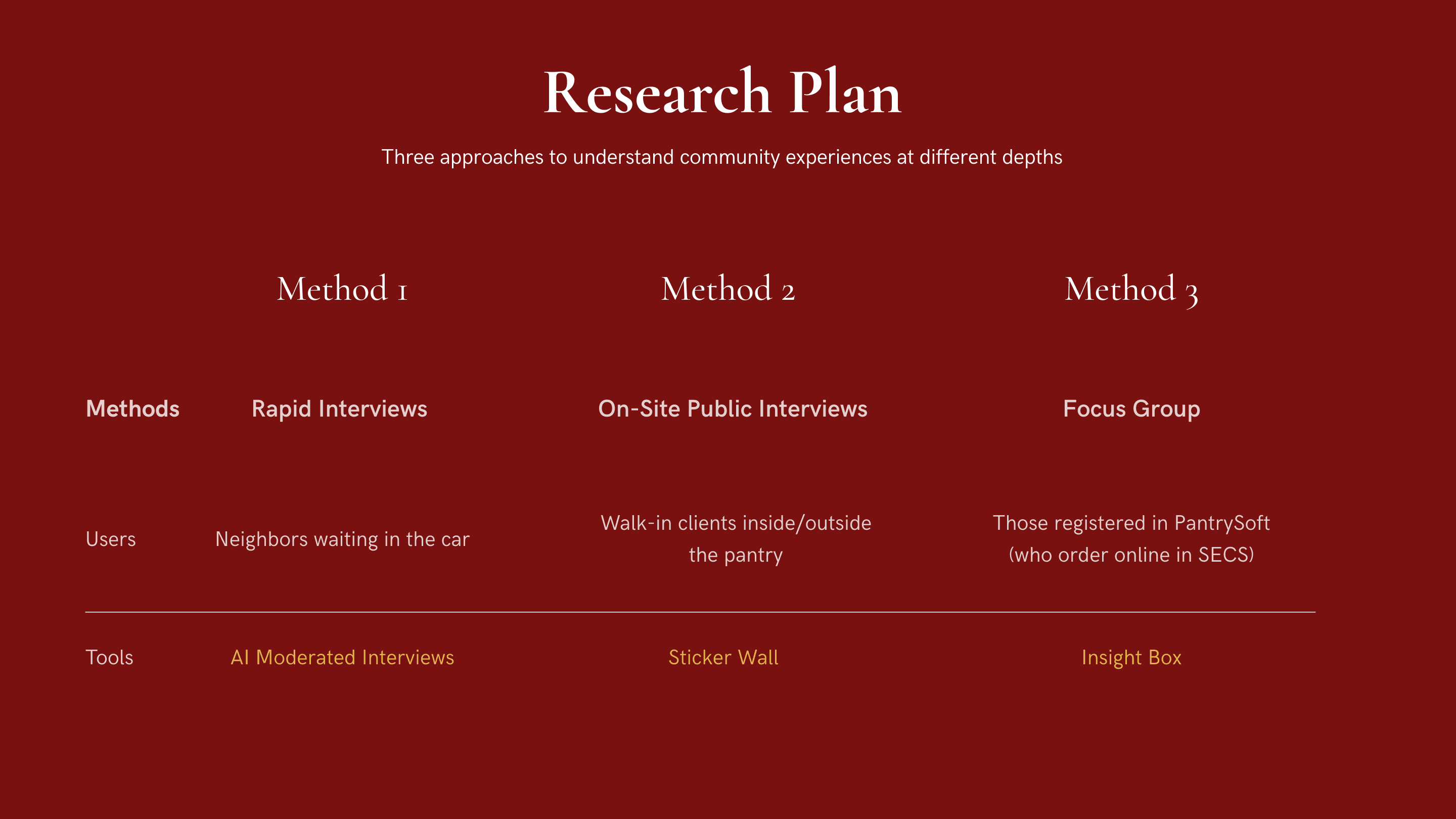
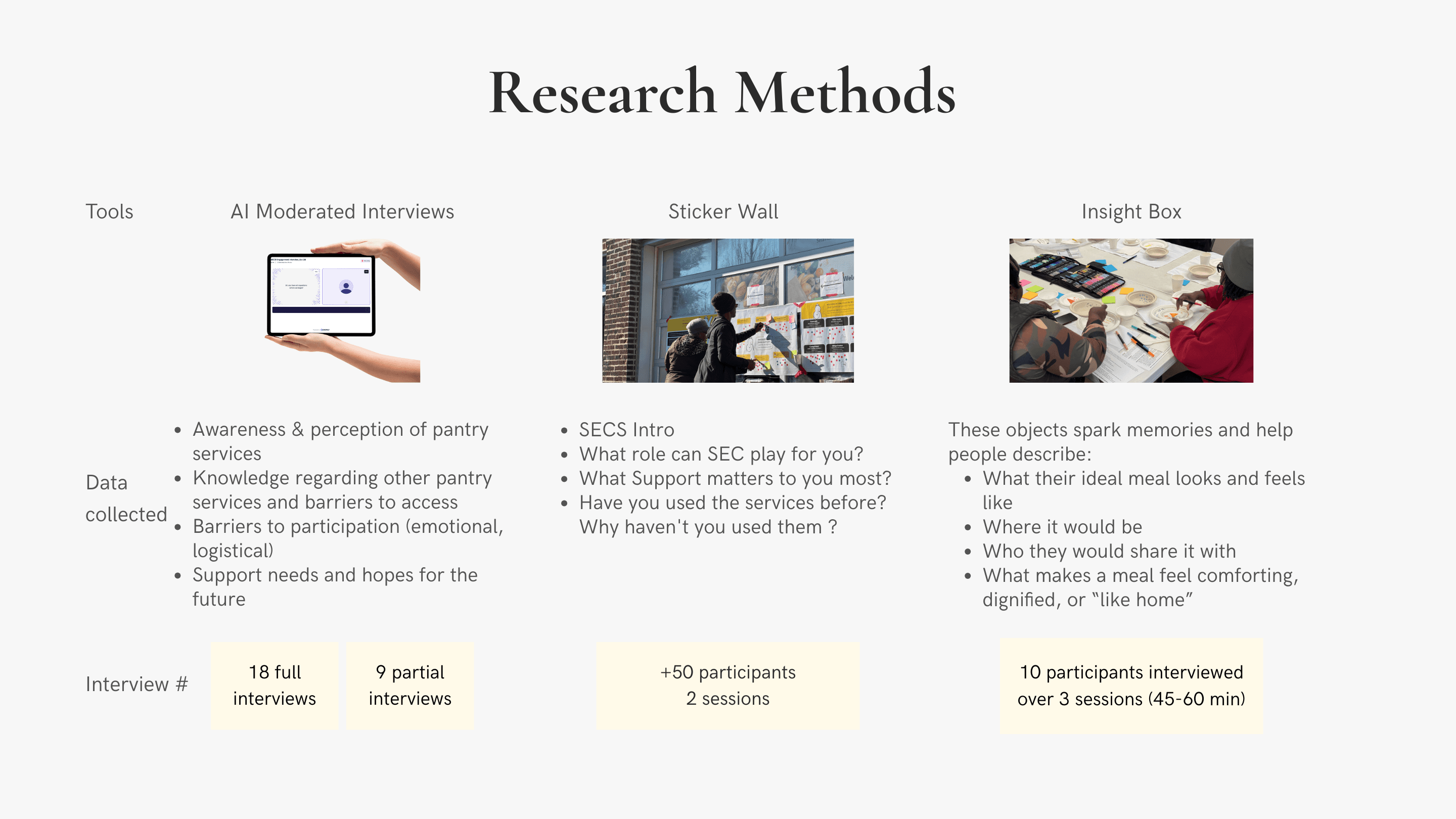
We adopted a qualitative participatory design approach focused on the UNDERSTAND stage of the design process, prioritizing community voices and lived experiences over purely quantitative metrics. Through a mix of rapid inputs, group-level patterns, and deeper narratives, we captured insights at multiple levels, making recurring themes more credible and actionable. Research was guided by a three-stage framework: Grounded Realities (current pantry experiences and access barriers), Transitional Insights (aspirations and readiness to seek support), and Future Envisioning (design opportunities for mobility as a social service).
Analysis
Collaborative theme-building across three methods turned community inputs into cohesive, actionable insights.
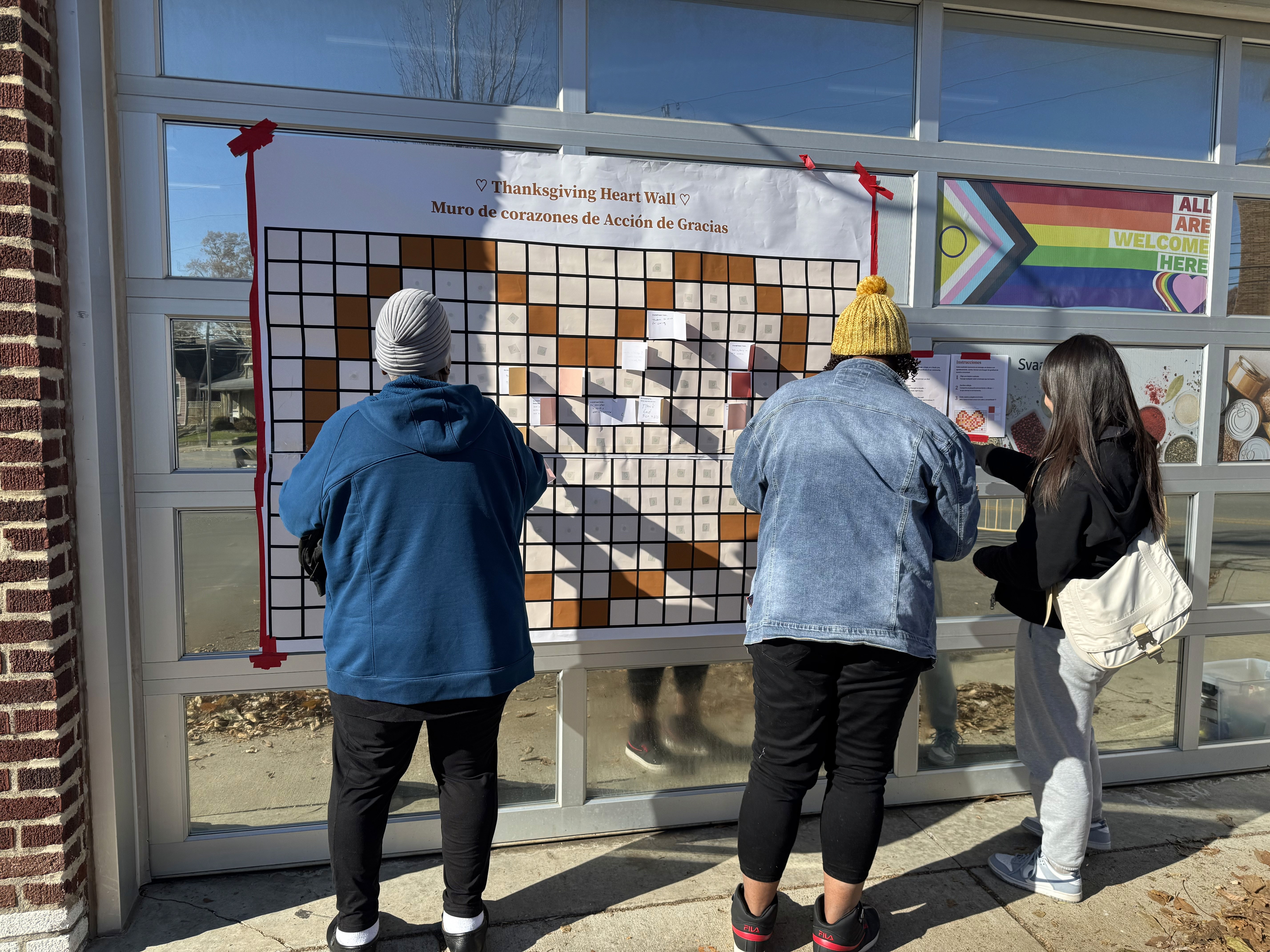
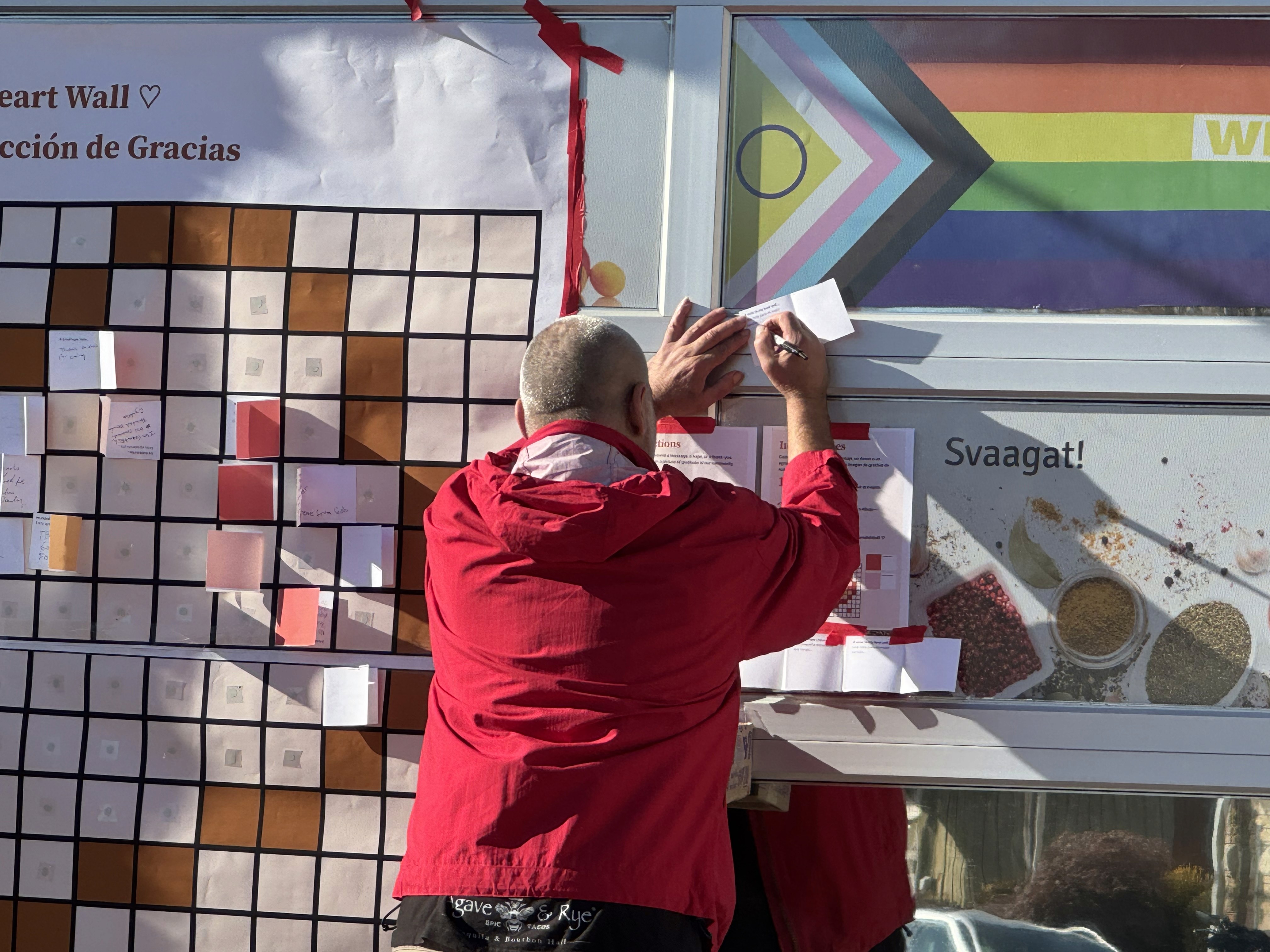
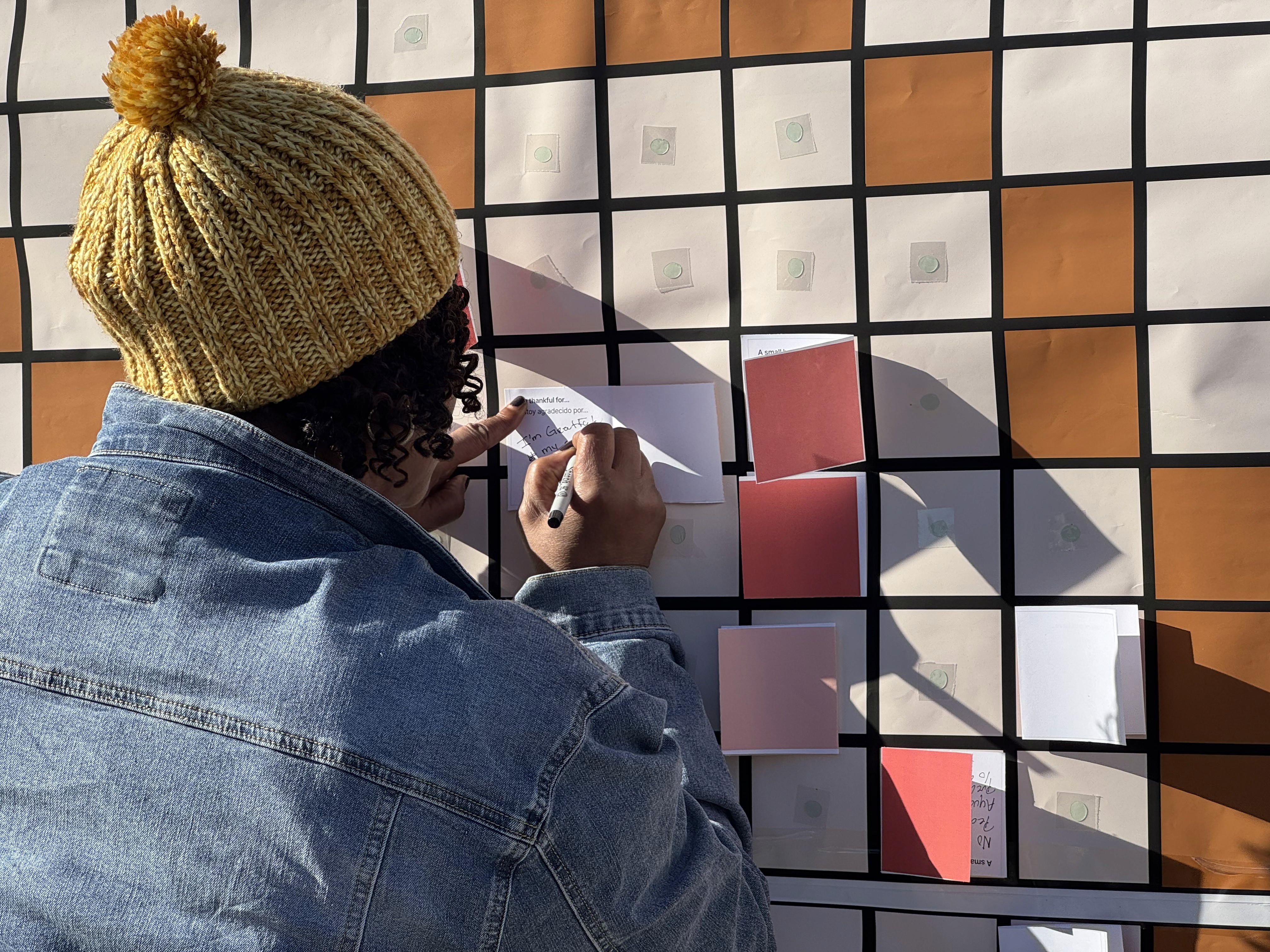
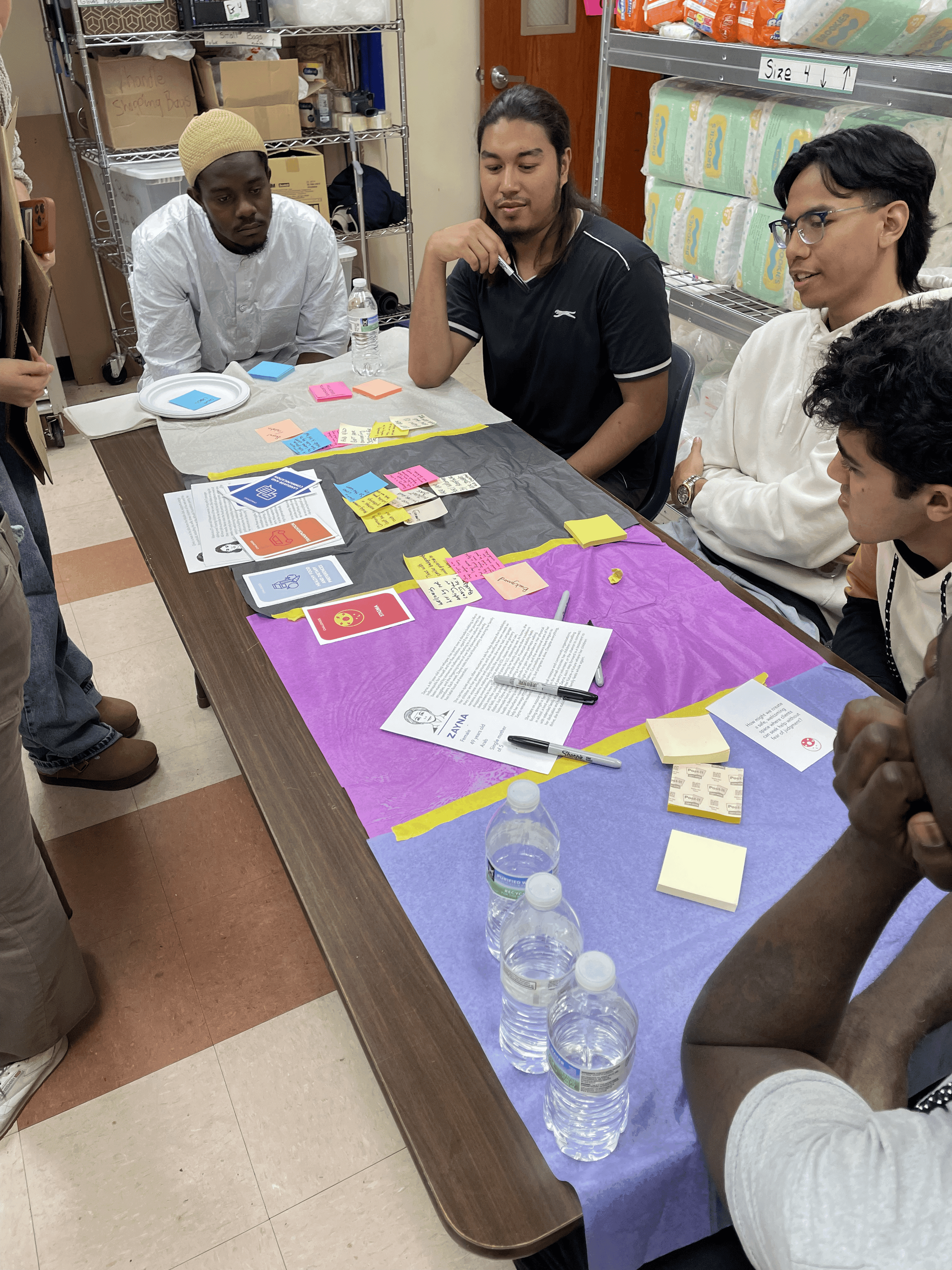
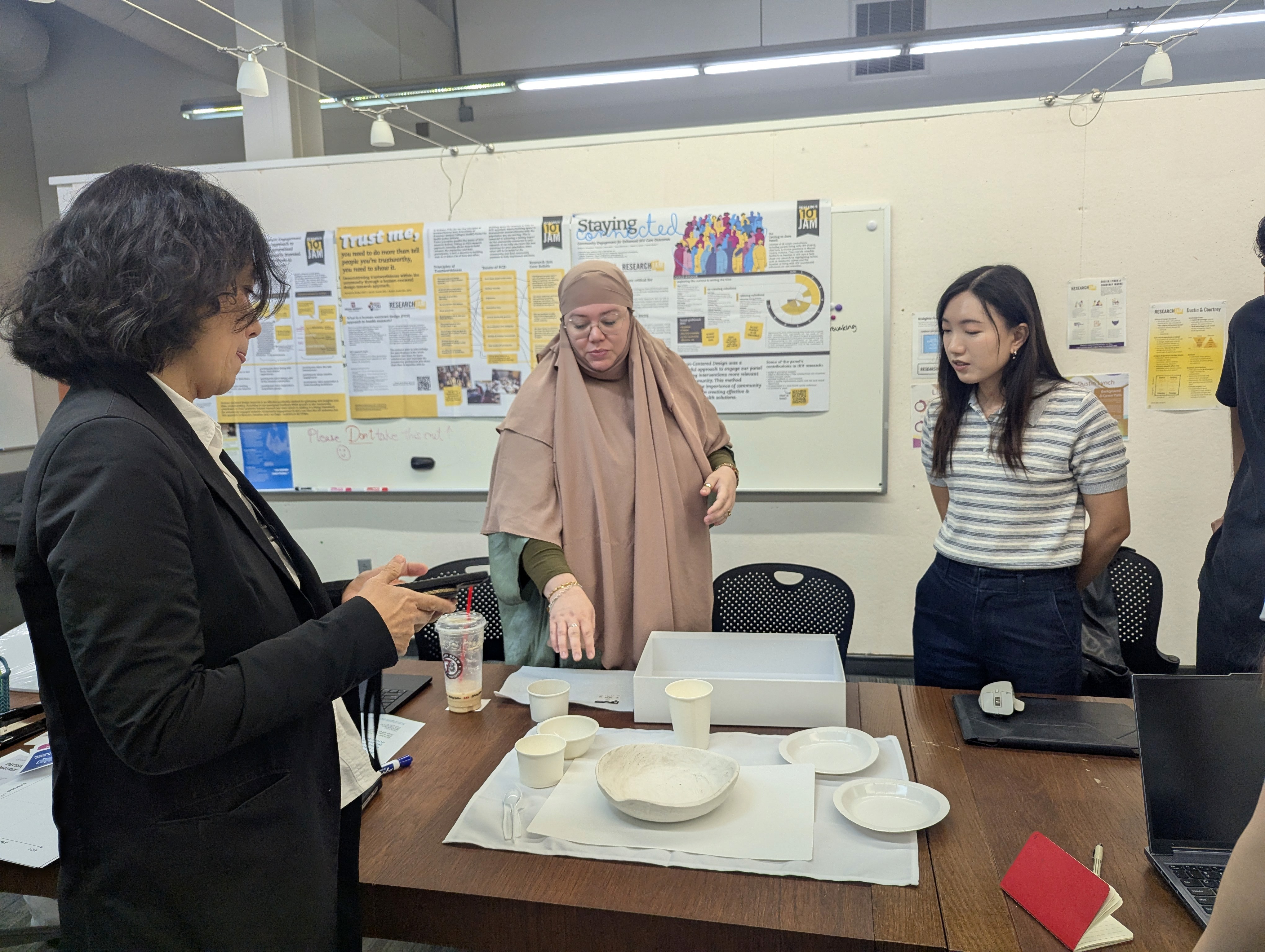
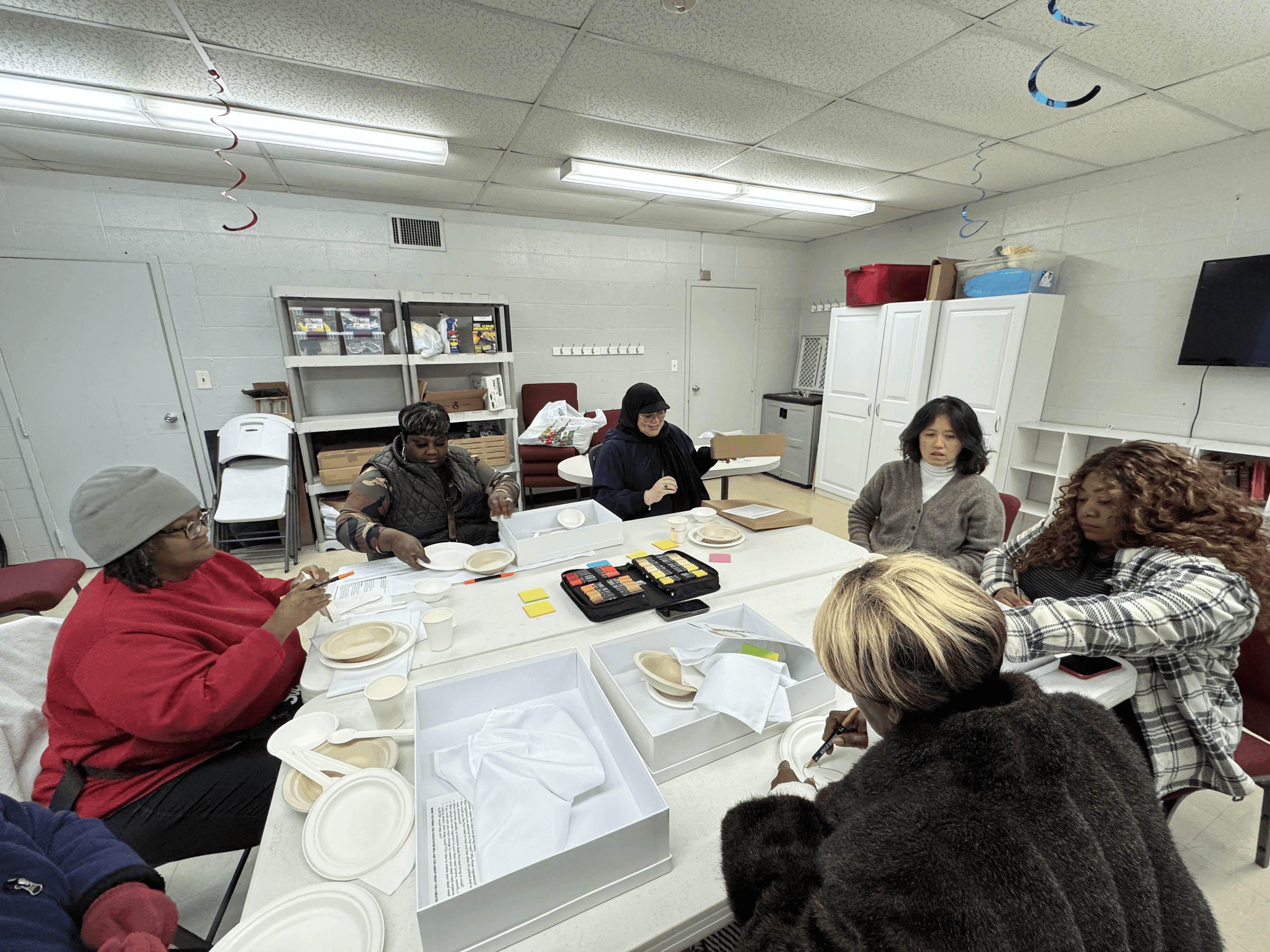
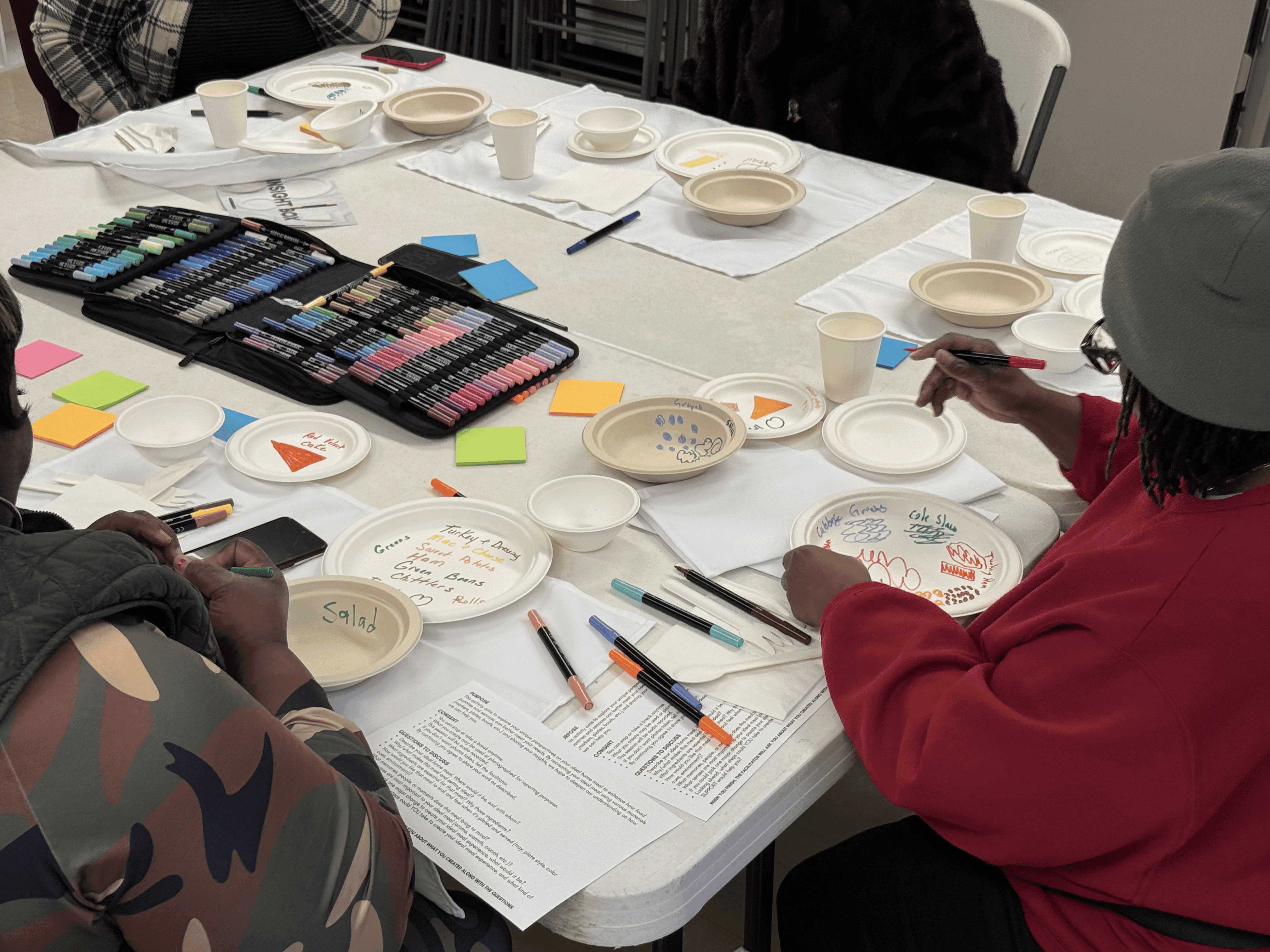
We conducted a structured qualitative analysis to translate stories, artifacts, and observations into actionable insights. Each method offered a distinct lens: AI interviews revealed personal context and sensitive barriers, sticker walls captured in-the-moment group patterns, and Insight Box sessions surfaced deeper values and aspirations.
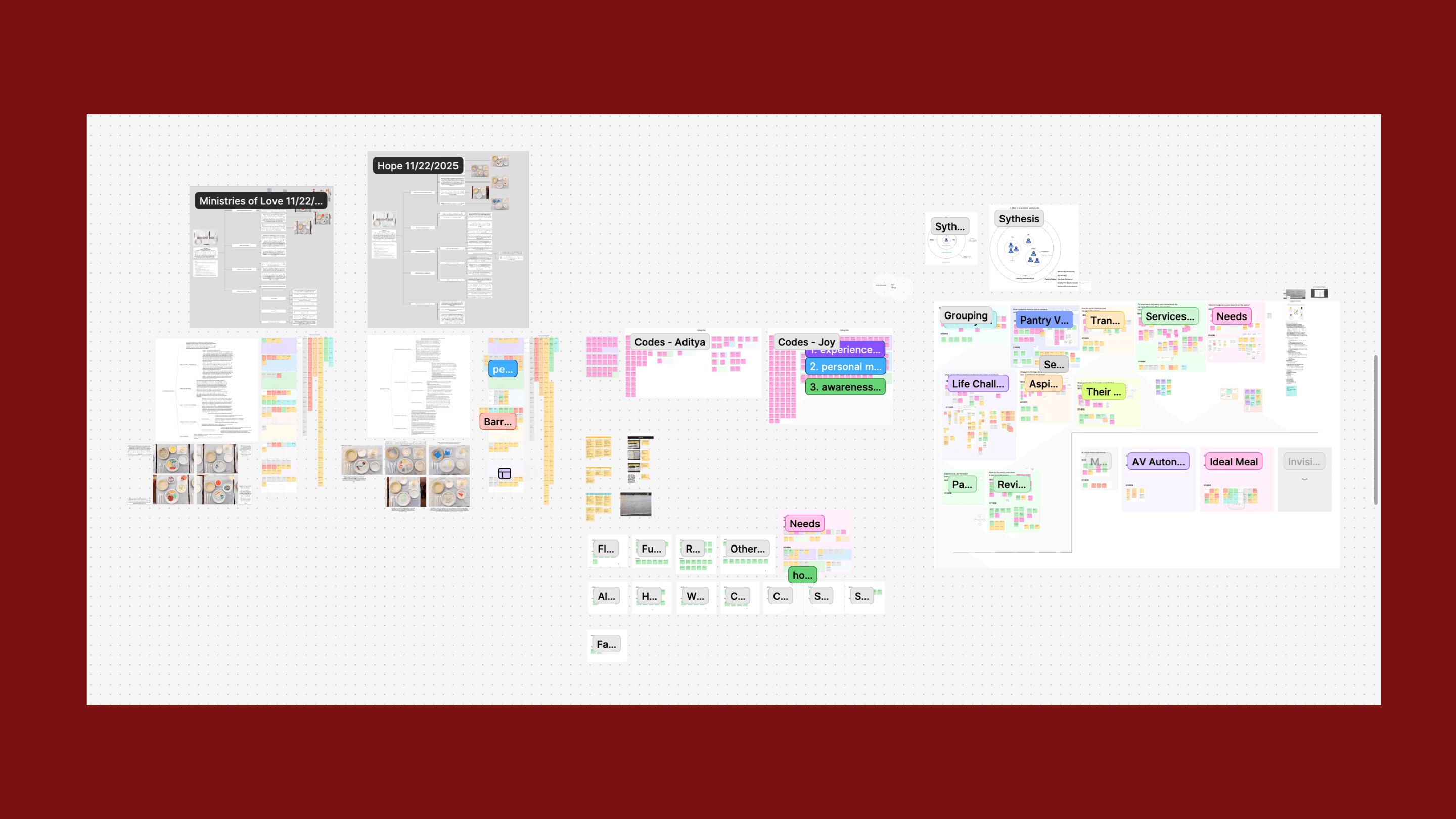
All data were coded and synthesized in Dedoose, enabling collaborative theme-building and the creation of visual system maps that highlight key breakdowns and design opportunities.
RESULTs Part I
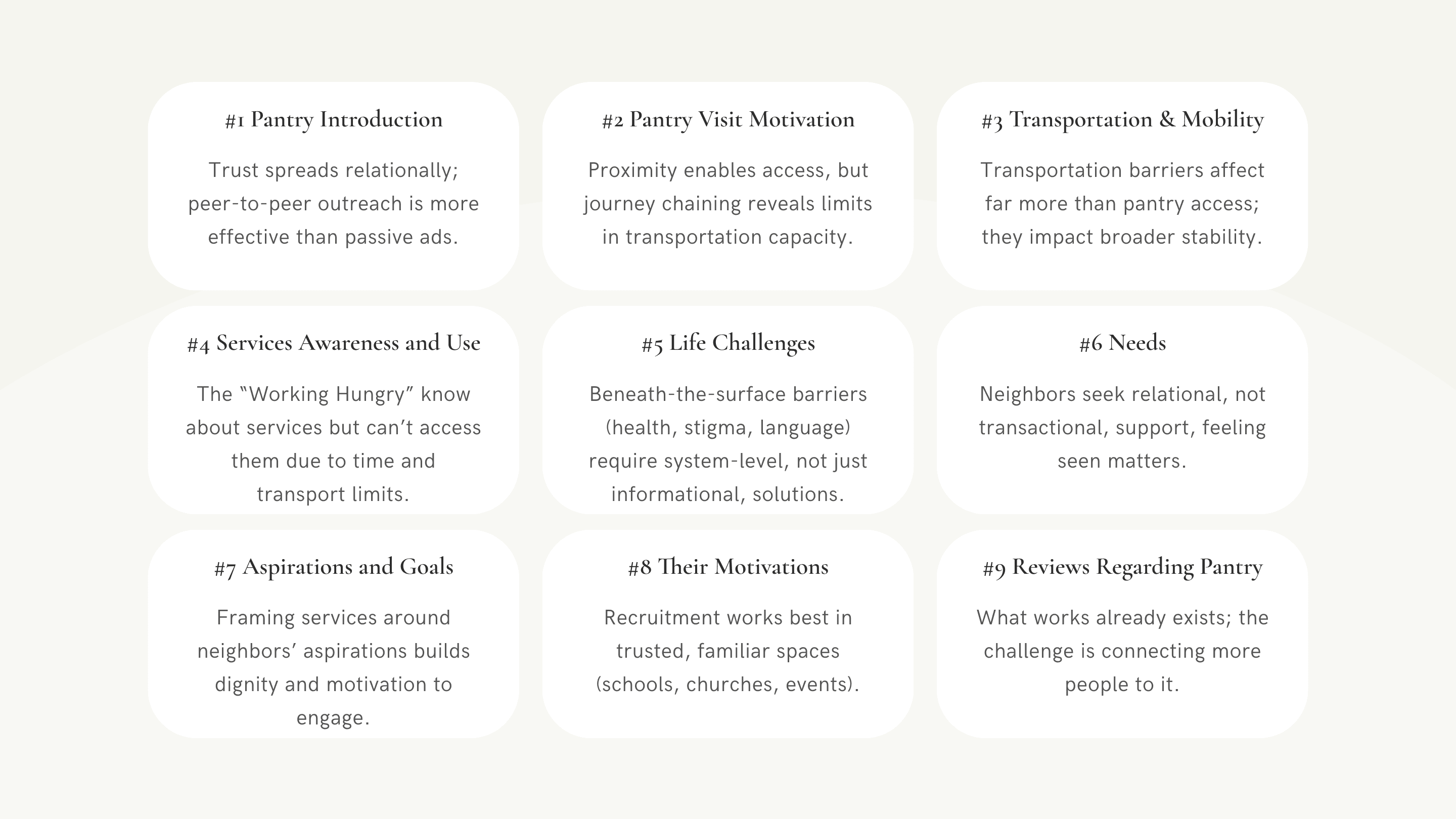
The first part of our results presents key research themes that reveal why neighbors engage or disengage with non-food programs at SECS.
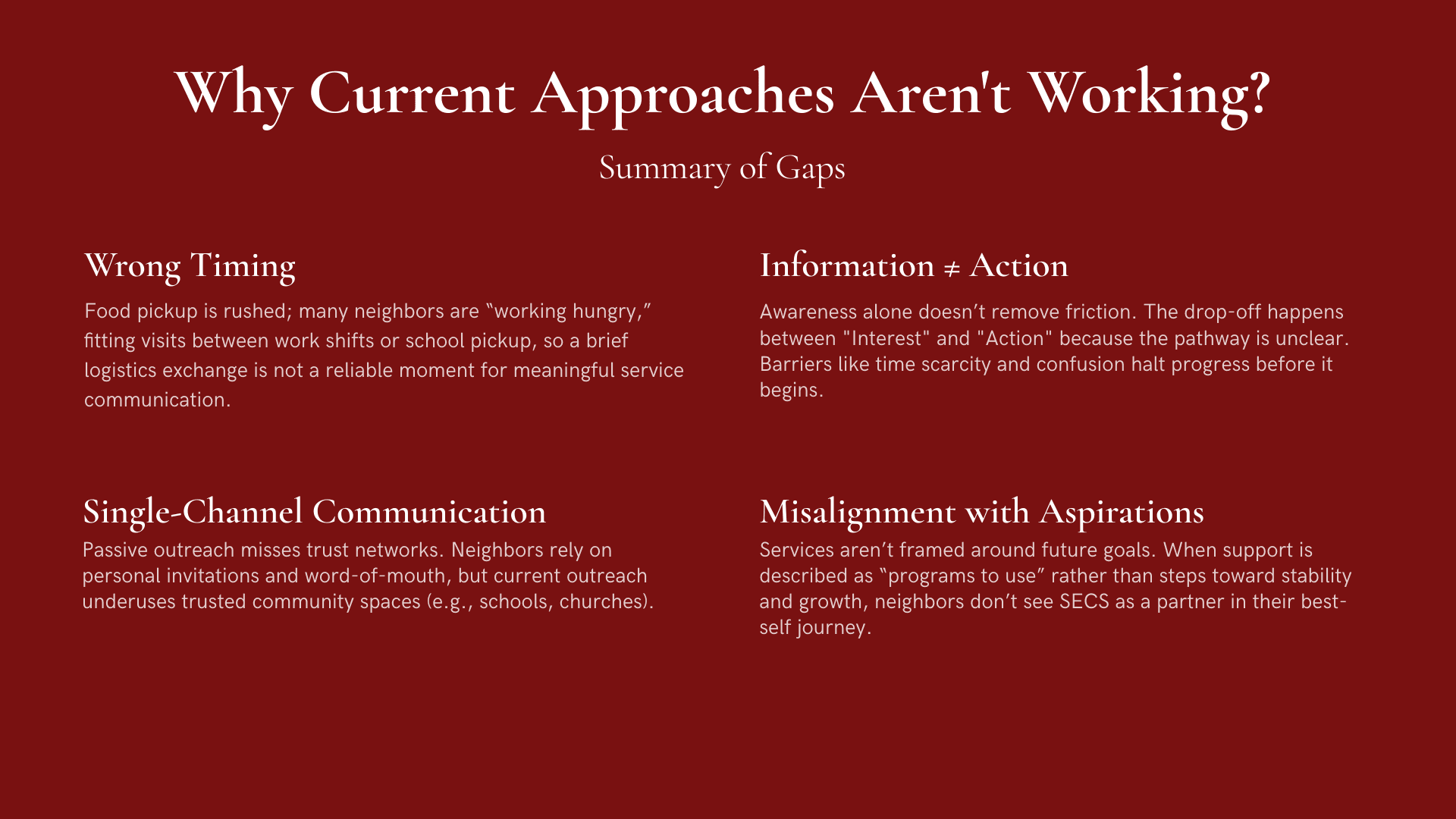
Based on key research themes, we identified why current approaches fall short and proposed strategies to better integrate services into the natural flow of neighbors’ lives.
RESULTs Part II
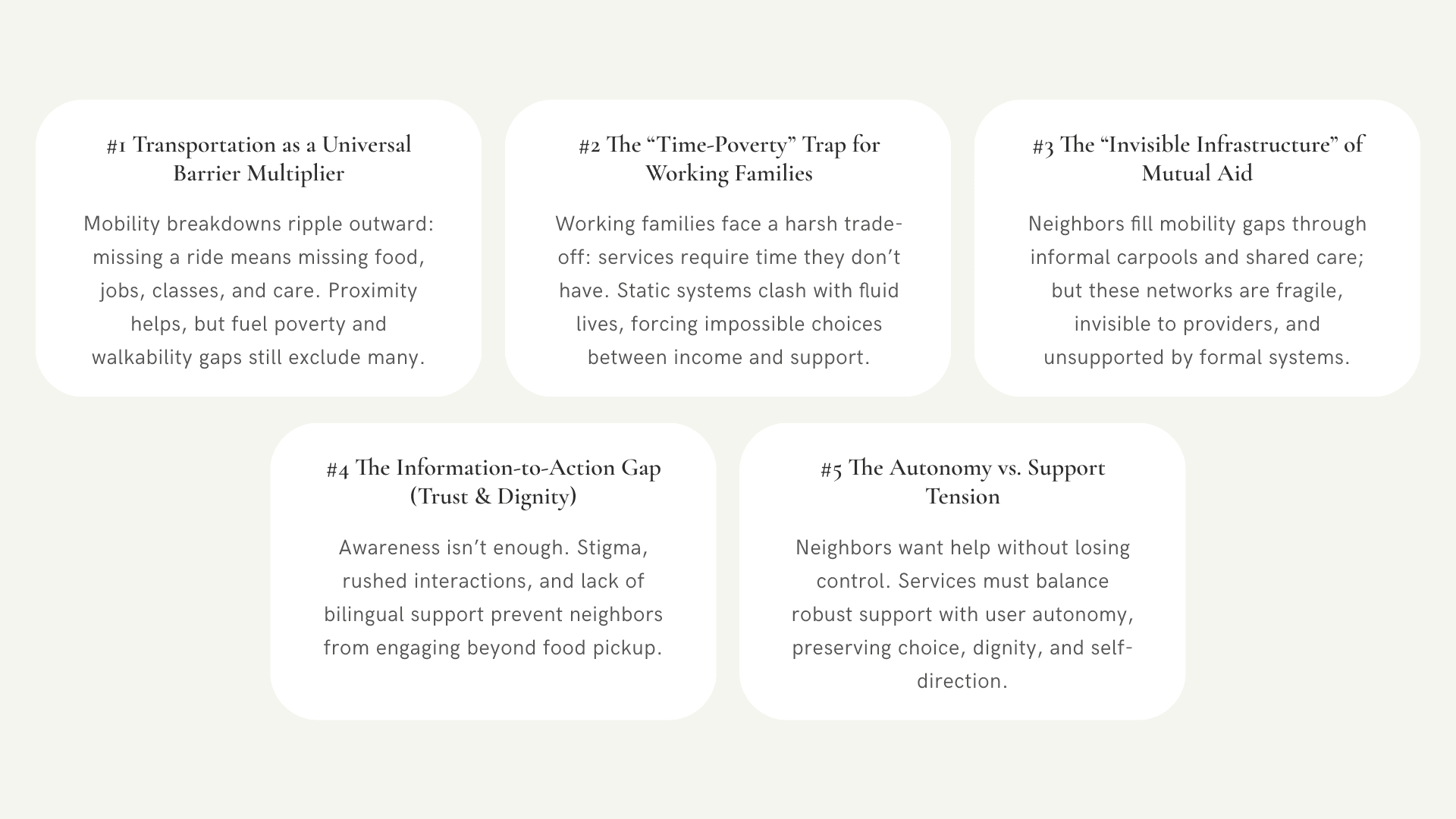
Our analysis revealed that mobility is not just a matter of transportation: it is the structural backbone of access. It shapes whether neighbors can engage not only with food pantries, but also with education, healthcare, job support, and community care. Reliable, dignified mobility is a precondition for participation in the broader social service ecosystem.
Through participatory research, we surfaced core themes that define this mobility landscape and point toward opportunities for AV-enabled service models that are inclusive, flexible, and community-rooted.
Reflections
This project challenged me to move beyond digital platforms and mobile design by engaging community members as co-creators and designing both service and speculative systems. I learned to conduct robust, participatory research while balancing future-oriented thinking with real-world constraints. The experience deepened my understanding of how design can shape systems and reinforced the value of building with communities, not just for them.