Indy Bites
Designing an inclusive food-based wayfinding system for Indianapolis
Client

Duration
Roles
UX Designer, led information architecture, wireframes, and interaction prototypes, and owned the final visual and interaction design
Team
Tools
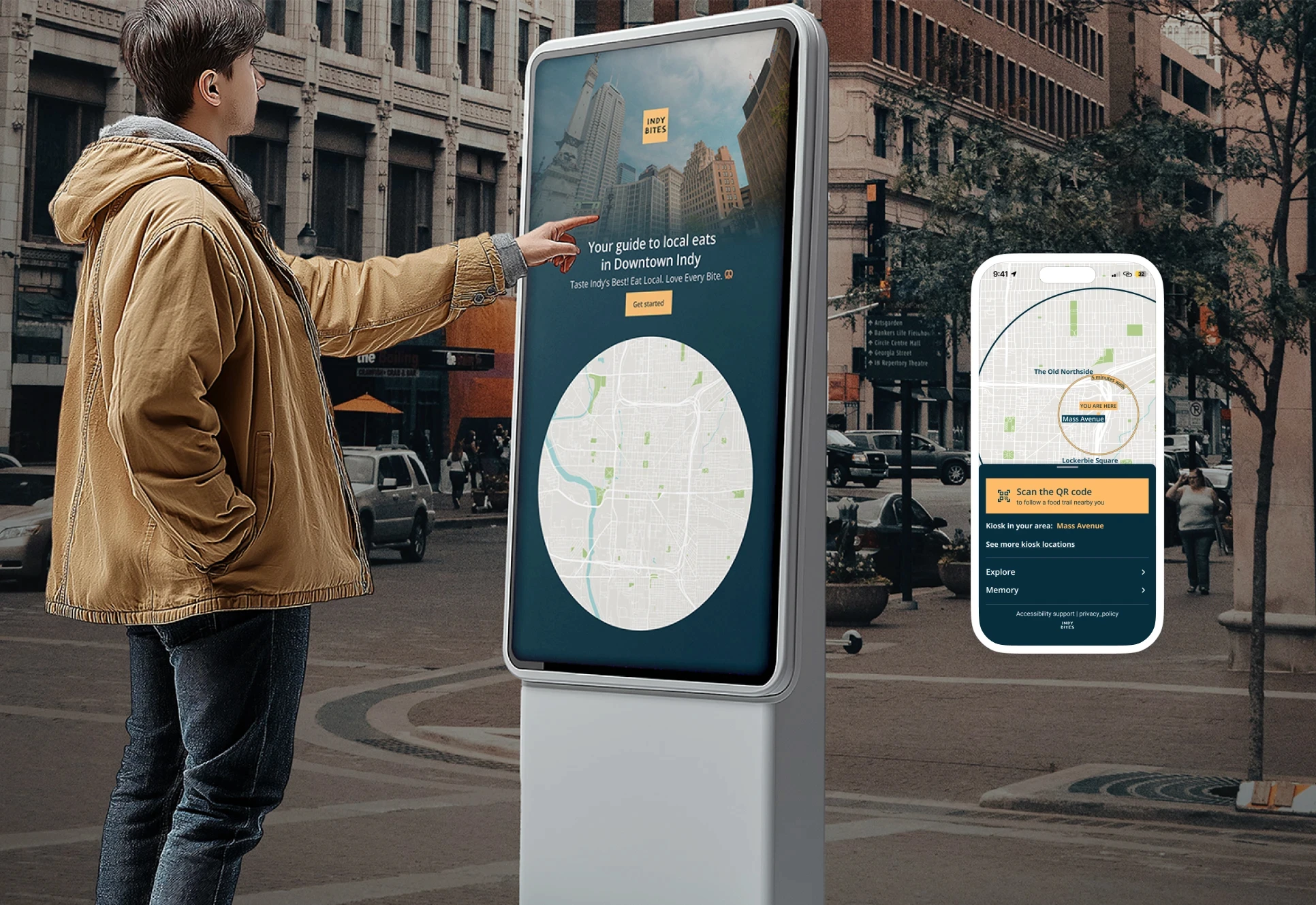
Indy Bites is a cultural wayfinding system that uses food as an entry point to explore Indianapolis. It connects kiosks and mobile touchpoints to help locals and visitors discover underrepresented restaurants and food events. By turning the city into a set of curated food trails, the experience guides people through Indianapolis’s diverse culinary heritage in a more intentional and accessible way.
The Challenge
Indy’s multicultural food scene is invisible in the tools people use to explore it
Despite a rich culinary landscape shaped by Black, Hispanic, Asian, and immigrant communities, Indianapolis's diverse food culture remains underrepresented in mainstream tourism and discovery tools. Local vendors lack visibility, and visitors rely on platforms that prioritize logistics over storytelling, which makes authentic, culturally rooted experiences difficult to find.
The Solution
Creating a multi-touchpoint wayfinding ecosystem
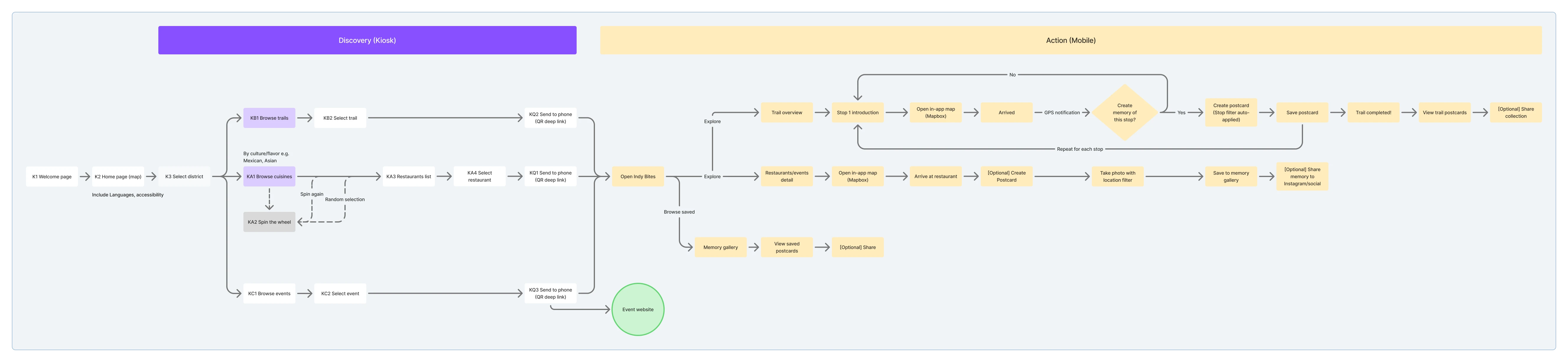
Rather than designing another restaurant discovery app, we focused on creating a connected ecosystem that meets people where they already are in downtown Indianapolis, and guides them through intentional cultural exploration.
Research & Discovery
Understanding how people explore food in Indianapolis
We conducted stakeholder interviews, analyzed competitor platforms, and examined user reviews to understand current exploration behaviors and pain points.
Design Process
Phase 1: Concept Development & Early Sketches
We mapped out three core features based on our research insights:
Discover Local Cuisines — Browse by cultural category
Explore Food Events — Find nearby food-centric happenings
Cultural Food Trails — Follow curated routes through the city
Early sketches helped us visualize screen layouts, identify design constraints, and prepare for rapid prototyping.
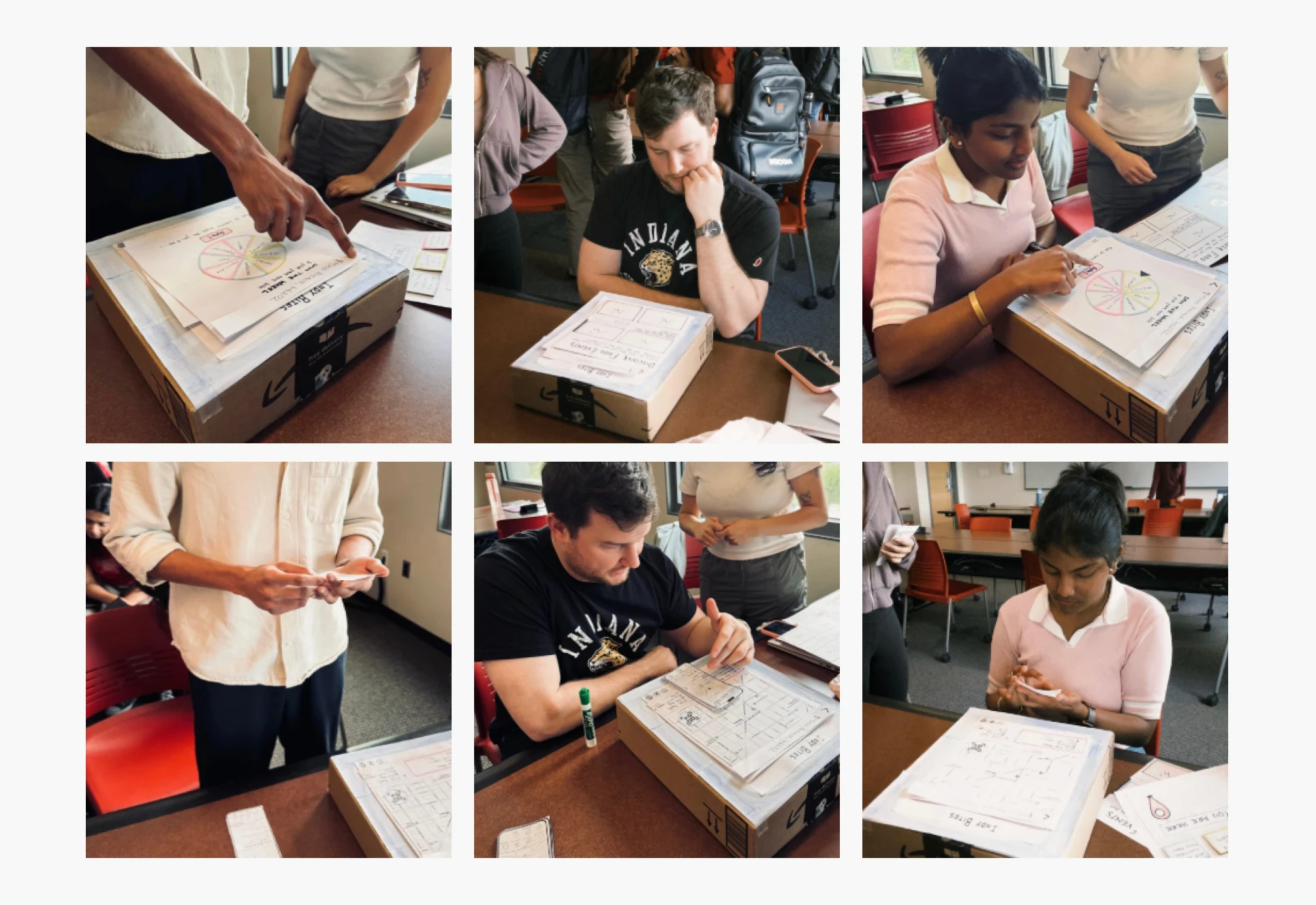
Phase 2: Paper Prototype Testing
Method: Informal think-aloud sessions with 5 participants
Tasks: Find an event, explore a cuisine category, understand trail concept
Phase 3: Mid-Fidelity Prototype & Cognitive Walkthrough
Method: Guided scenario walkthroughs in Figma with 4 participants
Focus: Identifying usability friction, content comprehension, and interaction expectations