Toyota Client
Service Design
Autonomous Mobility as a Social Service
Designing a community-rooted planning space to reimagine mobility as a social service

Role
Product Designer & UX Researcher
Timeline
Team
Tools
Overview
In collaboration with the Toyota Mobility Foundation and South East Community Services, we explored how autonomous vehicles could be tools for equity, not just transit.
*This project is supported by The Public Interest Technology University Network (PIT-UN), Indy Hunger Network, The Toyota Mobility Foundation, and The Initiative for Electrified & Autonomous Mobility (IEAM).
Here's what we did
Reimagine mobility as a bridge between immediate relief and long-term support.
SECS offers food, financial coaching, employment support, and education, yet most neighbors access only the food. Transportation gaps, time poverty, and unclear pathways limit participation; in parallel, TMF sought to explore how autonomous vehicles could function as tools for equity, not just transportation.
We set out to answer two questions:
Why do regular pantry users underutilize non-food support services?
How might we design a mobility ecosystem that connects neighbors to broader support?
We are designing an interactive website prototype to showcase a speculative ecosystem of what AV mobility could enable, paired with a final research report grounding the vision in community realities.
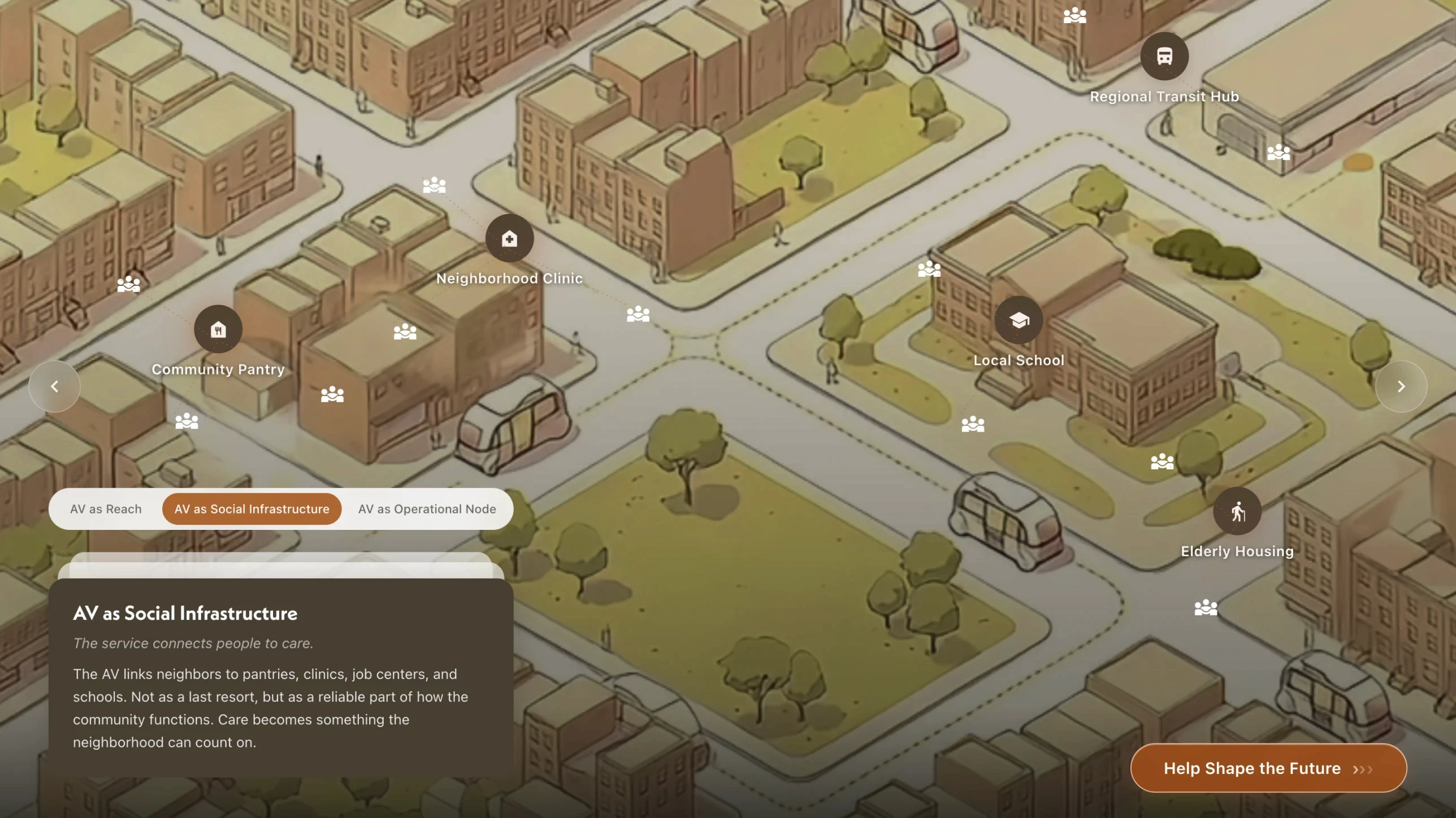
Service design concept interactive website
Research
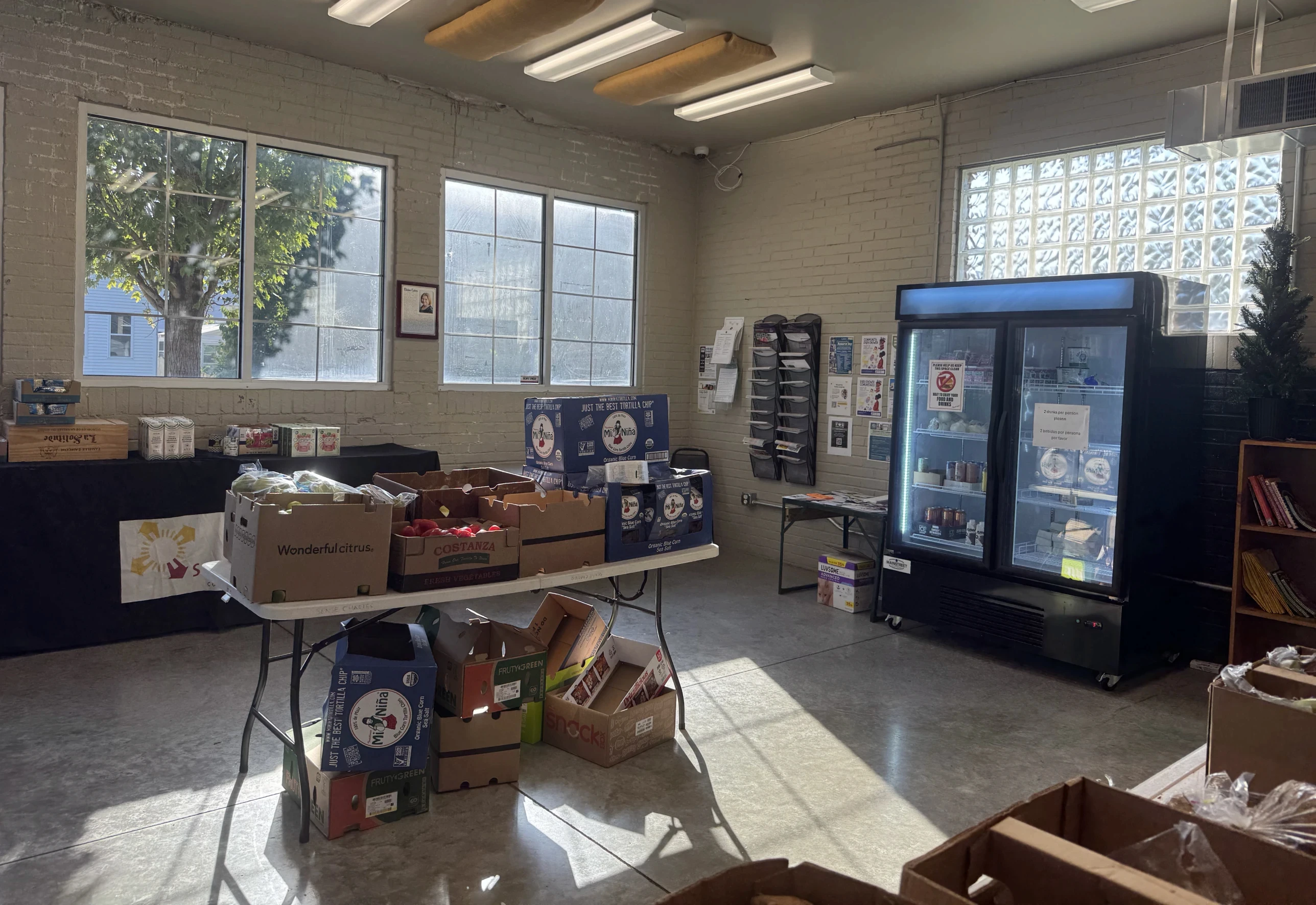
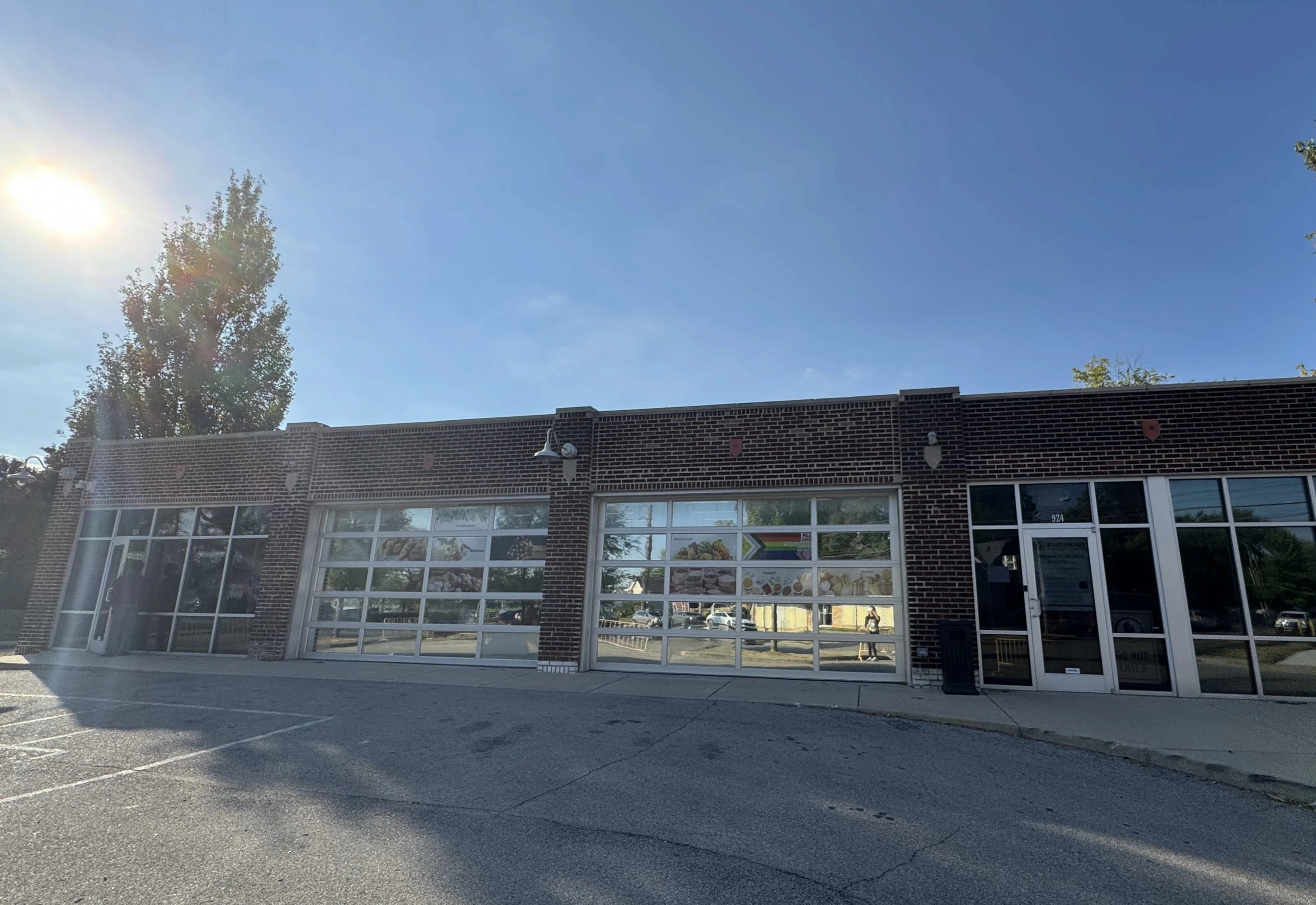
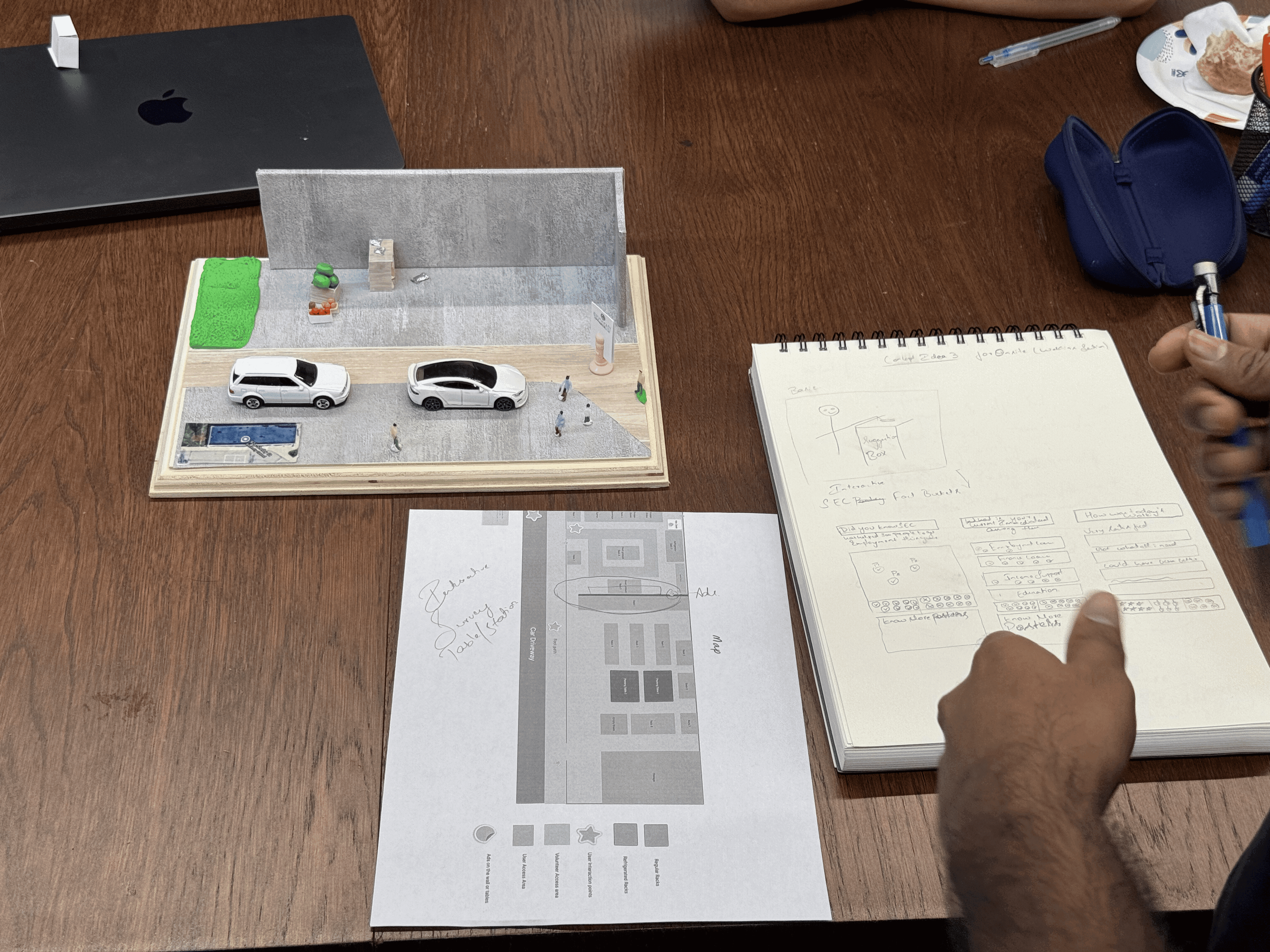
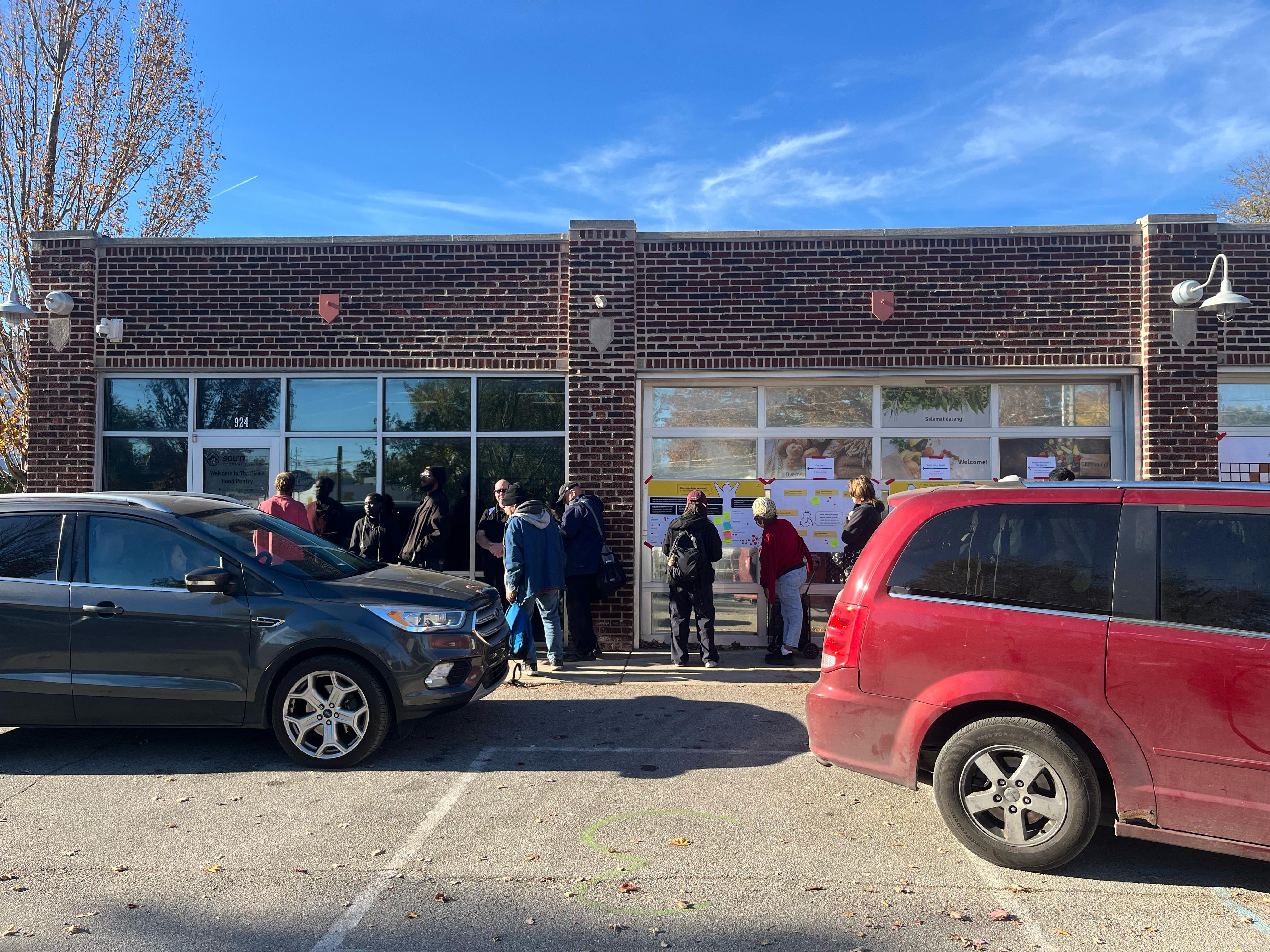
On-site observation at Southeast Community Services
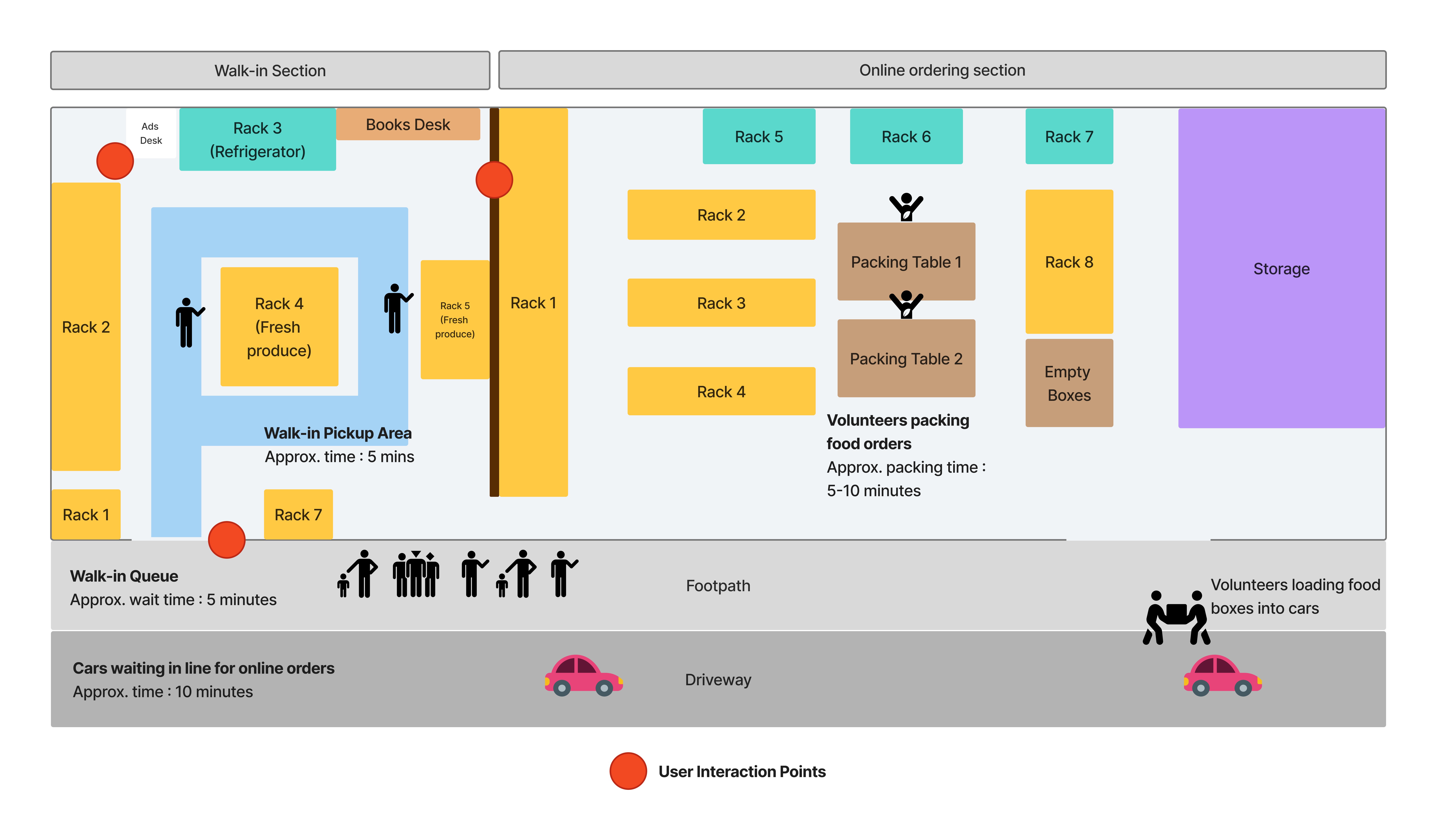
Observation map highlighting key user interaction points
Centering Community Voices to uncover Barriers, Needs, & Mobility Opportunities
We adopted a qualitative participatory design approach focused on the UNDERSTAND stage of the design process, prioritizing lived experiences. By combining rapid inputs, group-level patterns, and deep narratives, we surfaced recurring themes that were credible, actionable, and grounded in community realities.
AI Rapid Interviews
Users: Neighbors waiting in cars
Tool: Genway AI (customized for pantry context)
Format: Conversational, semi-structured with adaptive AI branching
How it worked: Conducted on-site with clients in their cars during online order pickup. Clients scanned a QR code and completed a self-guided interview on their phone.
Participants: 27 total interviews; 5 Spanish, 22 English

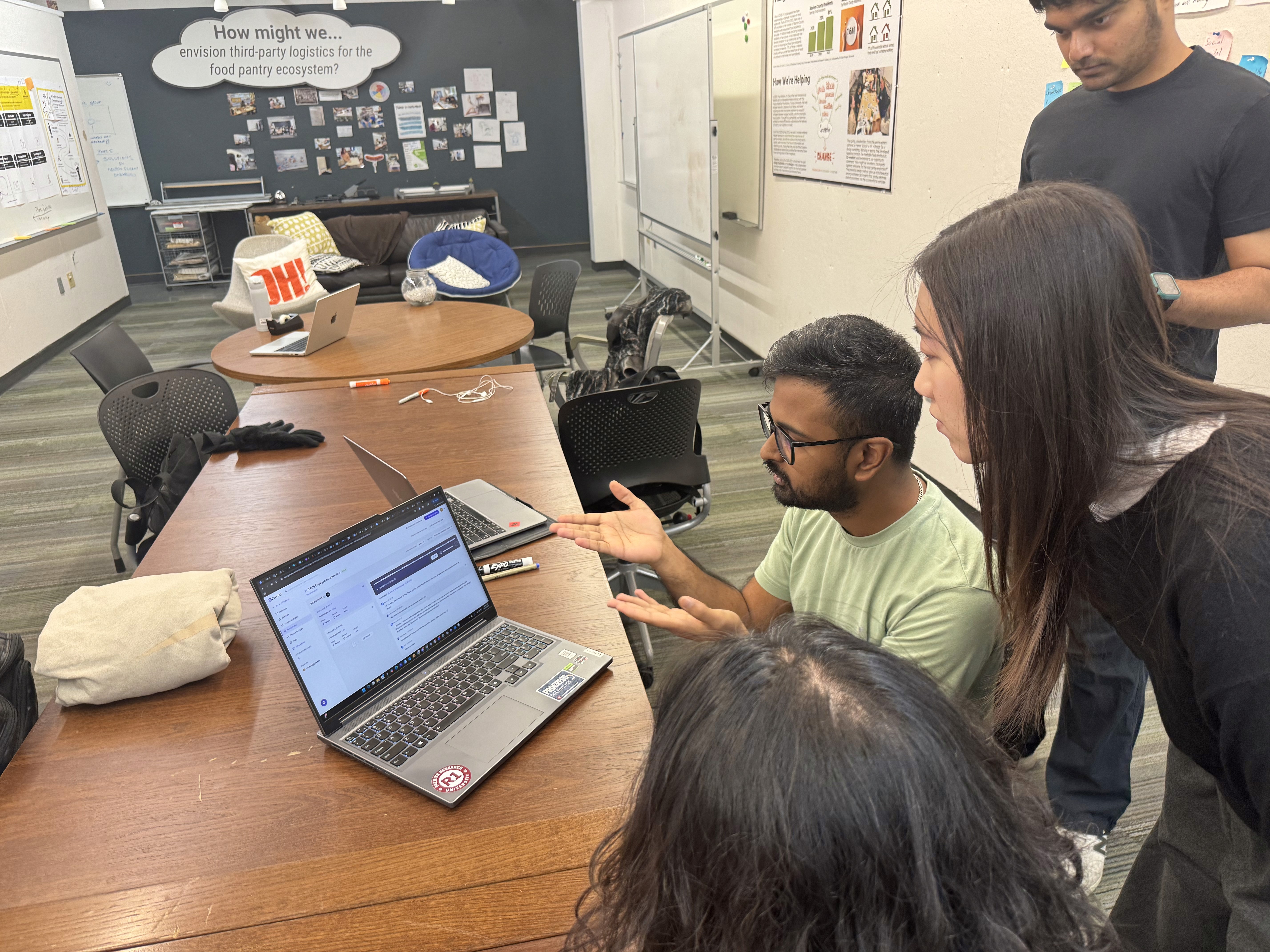
Designing and testing AI-moderated rapid interviews with my teammate Shashi :)
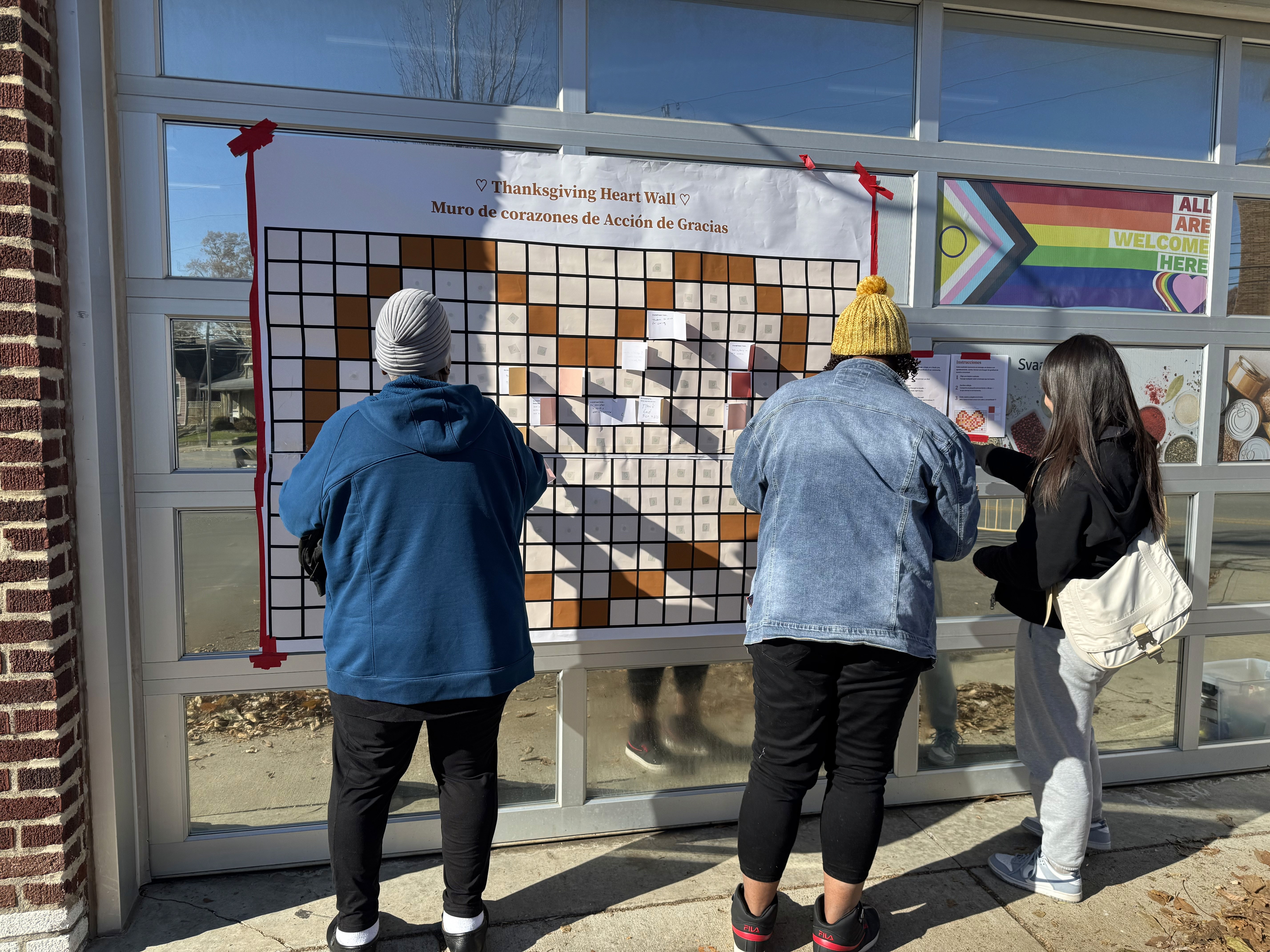
On-Site Public Interviews (Sticker Wall)
Users: Walk-in clients (inside/outside pantry)
Tool: Quick-response prompt posters
Approach: Friendly, low-pressure visuals to encourage casual participation
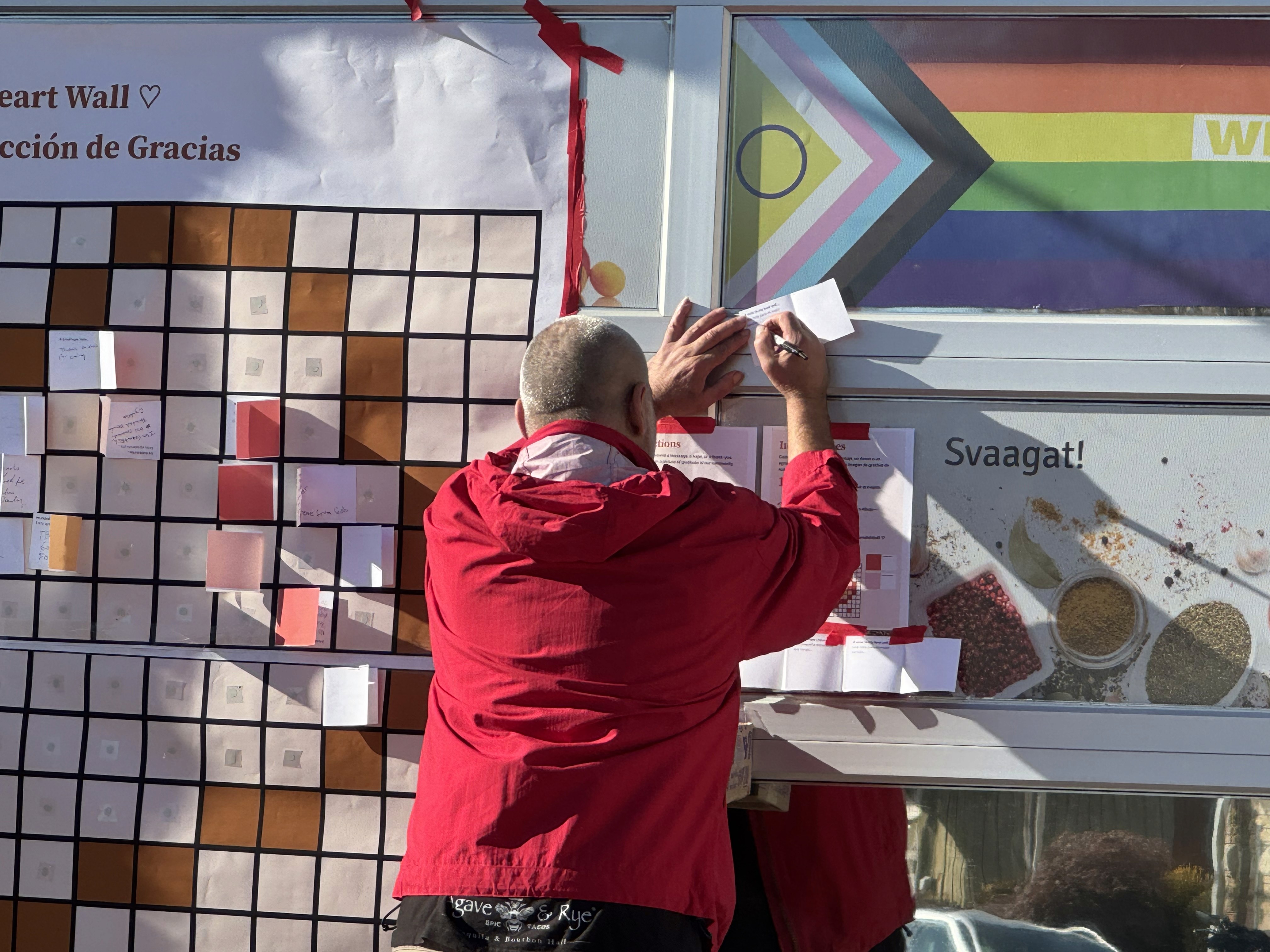
How it worked: Placed outside the pantry during wait times. Neighbors shared quick responses in under a minute, turning idle time into insight without the formality of an interview.
Participants: 50+ participants, 2 sessions
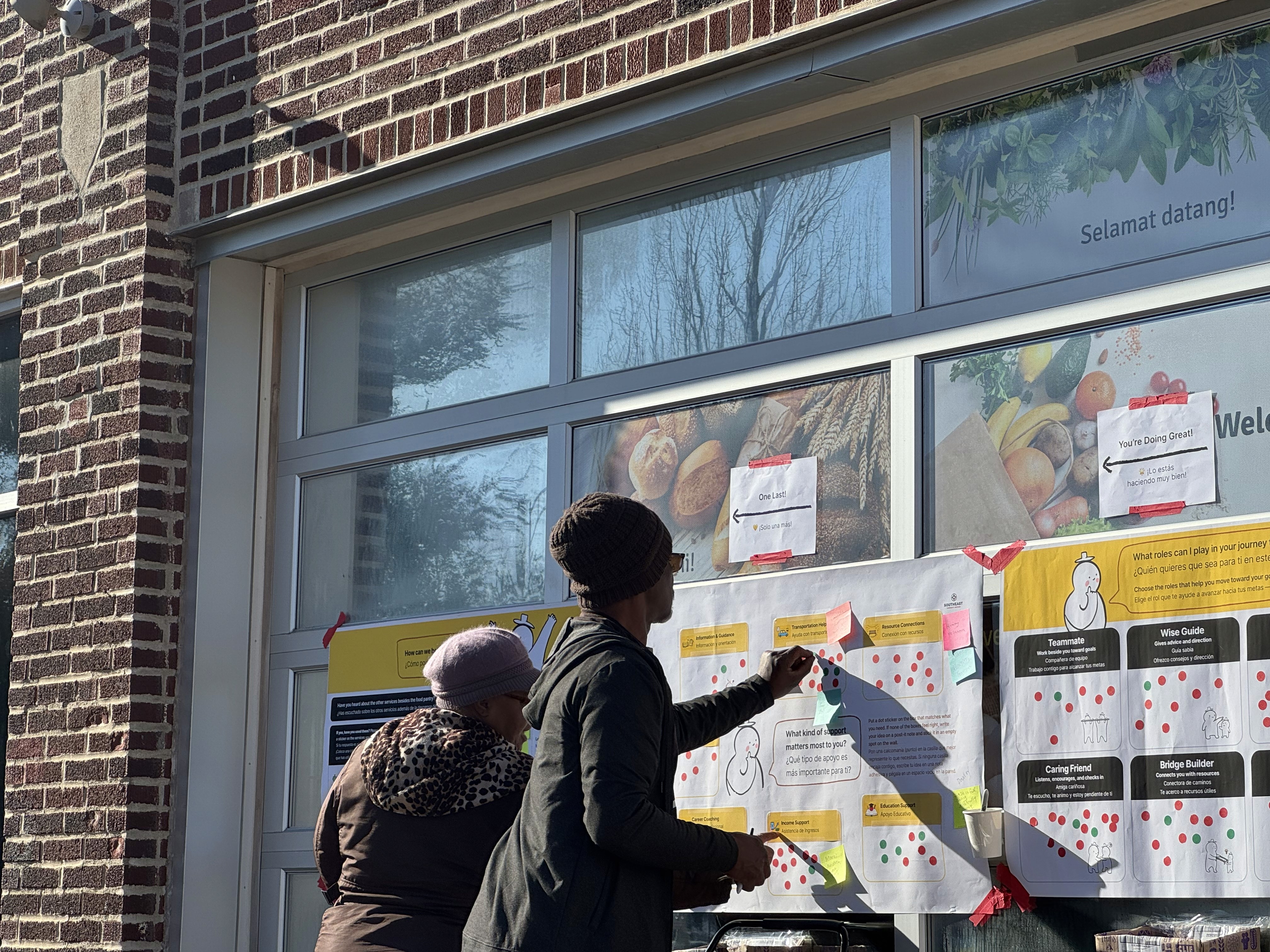
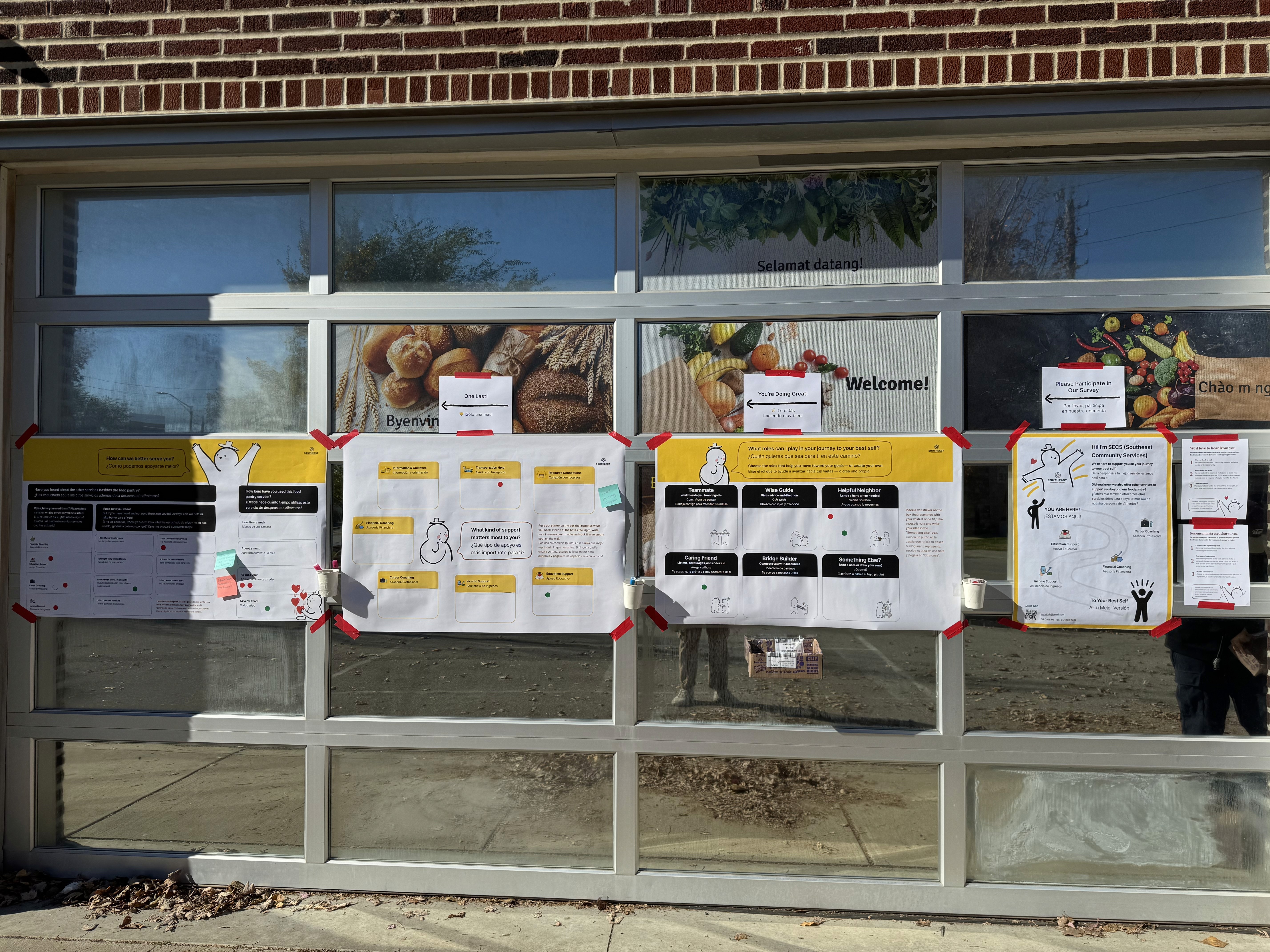
Sticker wall installed outside the pantry
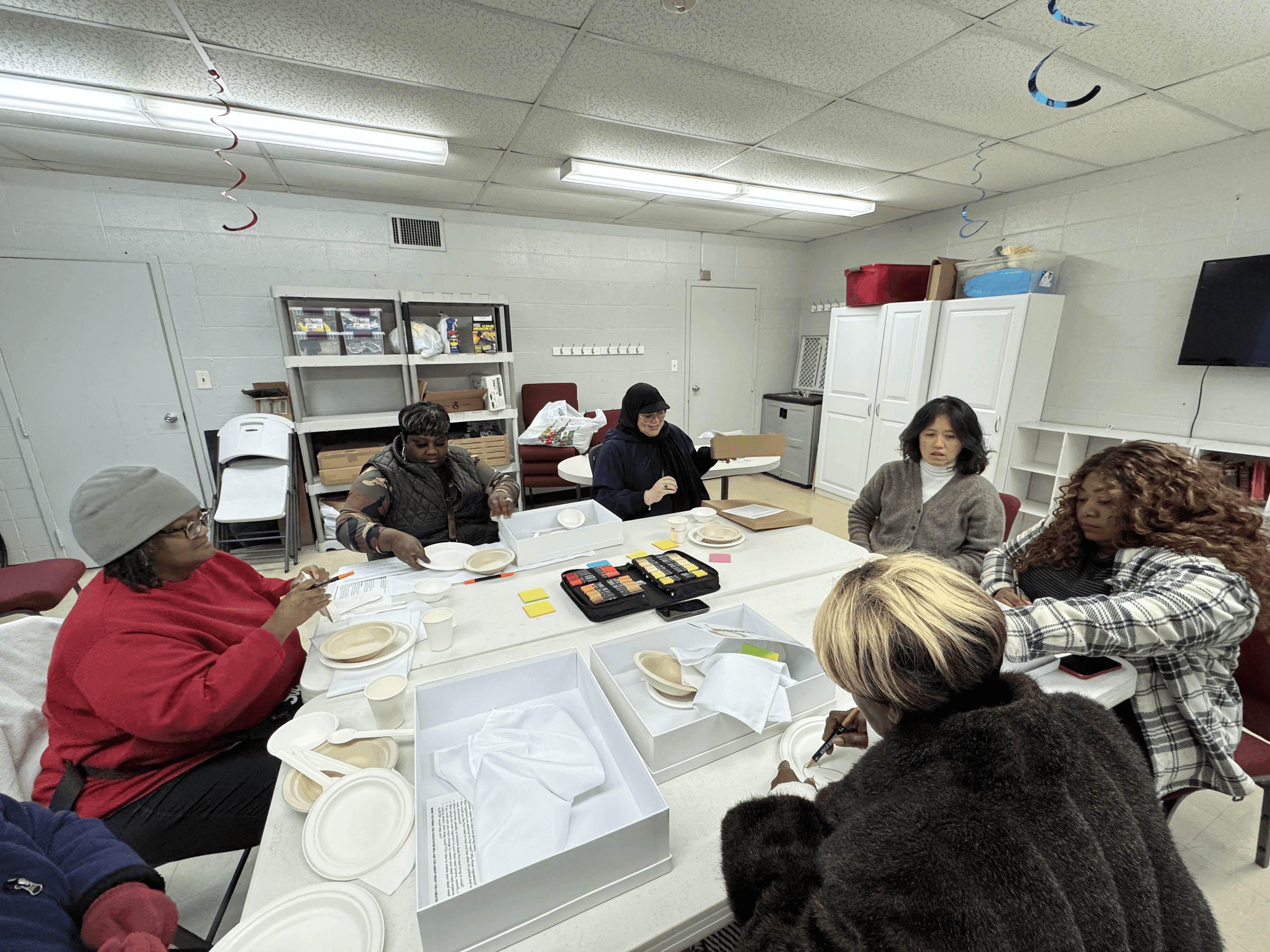
Focus Groups (Insight Box)
Users: PantrySoft registered online clients
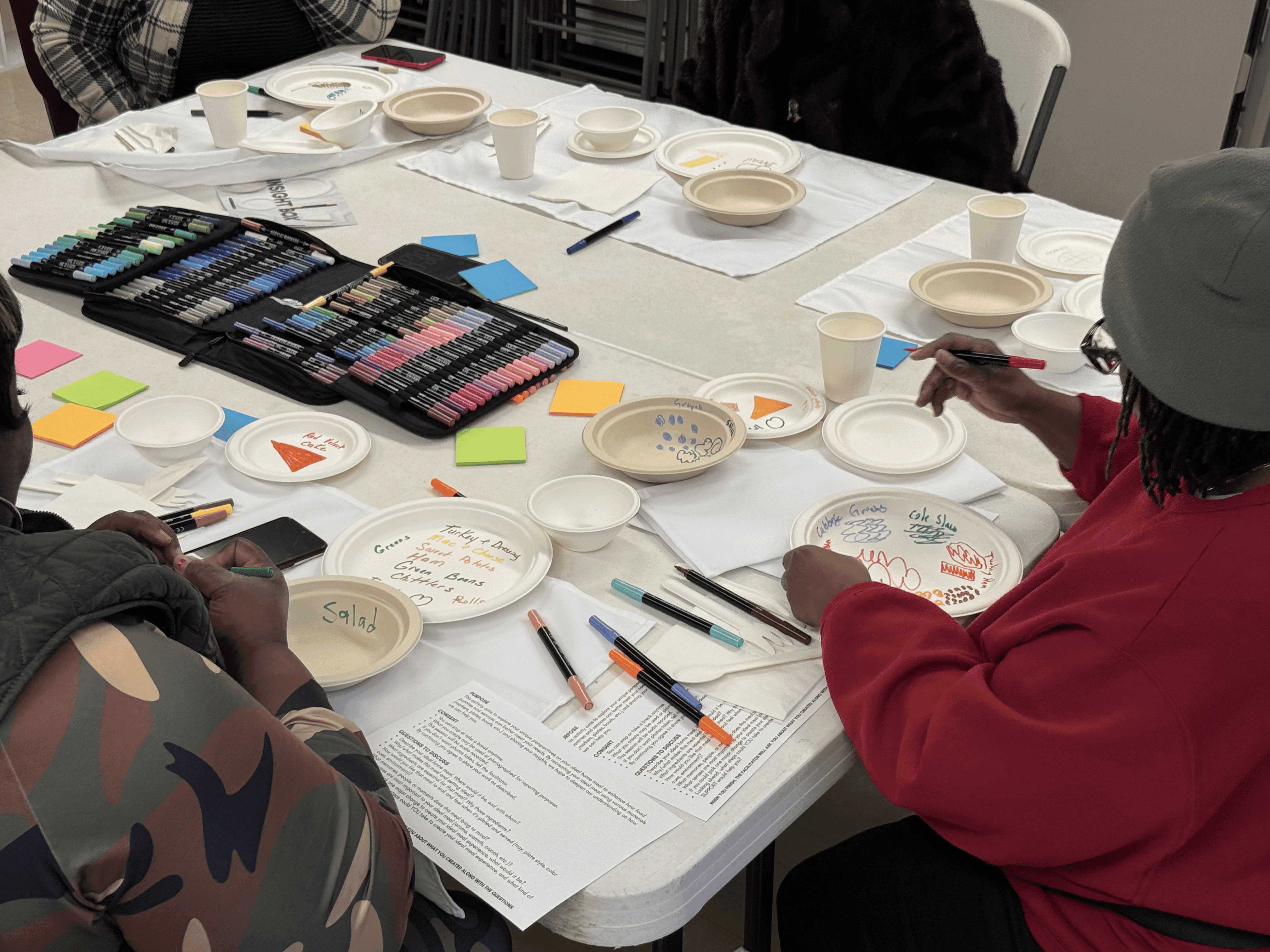
Tool: Guided, hands-on activity centered on the “ideal meal”
Approach: Physical objects used to spark reflection and storytelling
How it worked: Facilitated structured group sessions where everyday conversation surfaced deeper insights about dignity, comfort, and belonging.
Participants: 10 participants, 3 sessions
Turning Community Inputs into cohesive, actionable insights
We conducted a structured qualitative analysis to translate stories, artifacts, and observations into meaningful themes.
All data were coded in Dedoose and collaboratively synthesized into system maps that highlight key breakdowns and design opportunities.
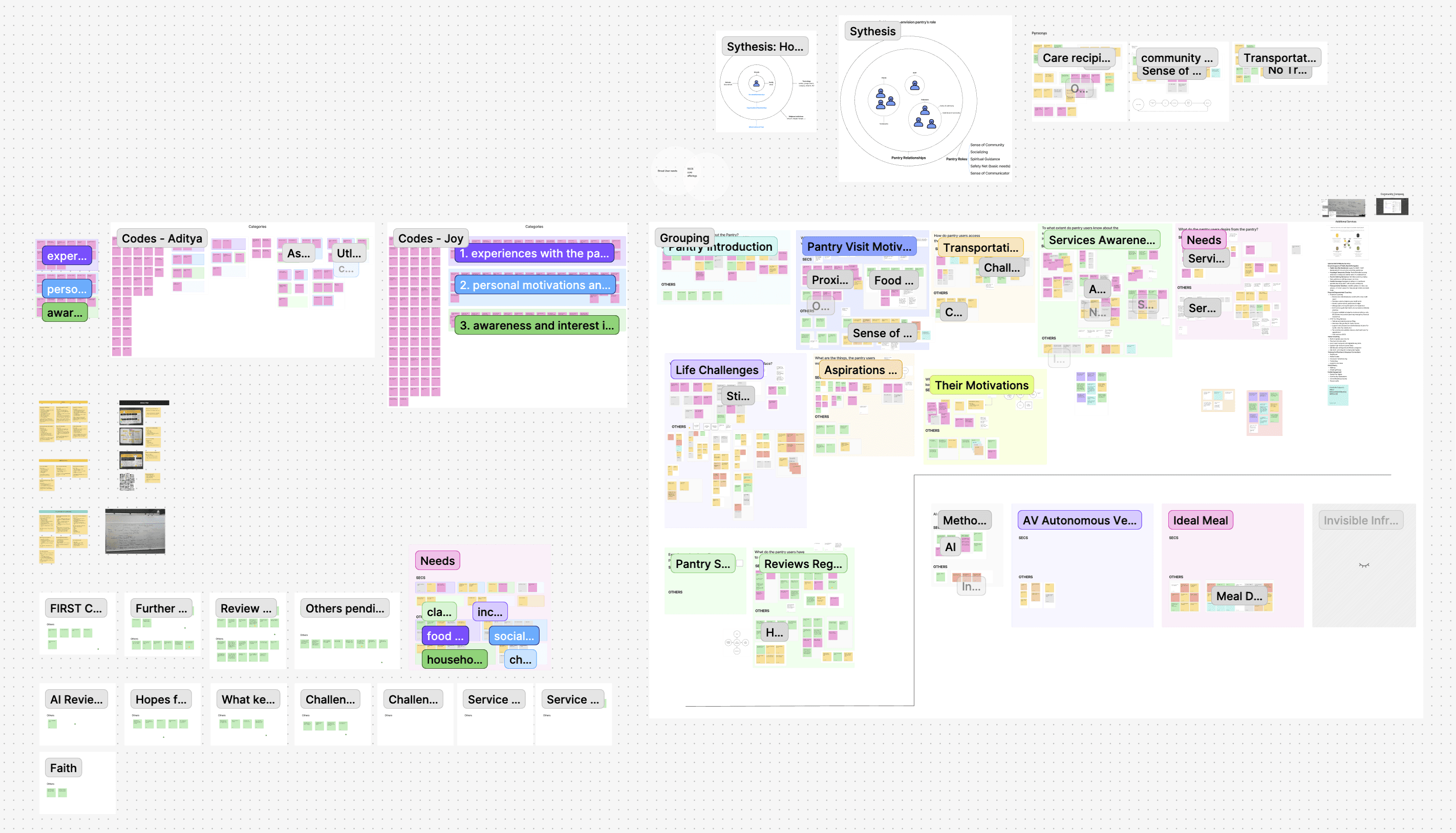
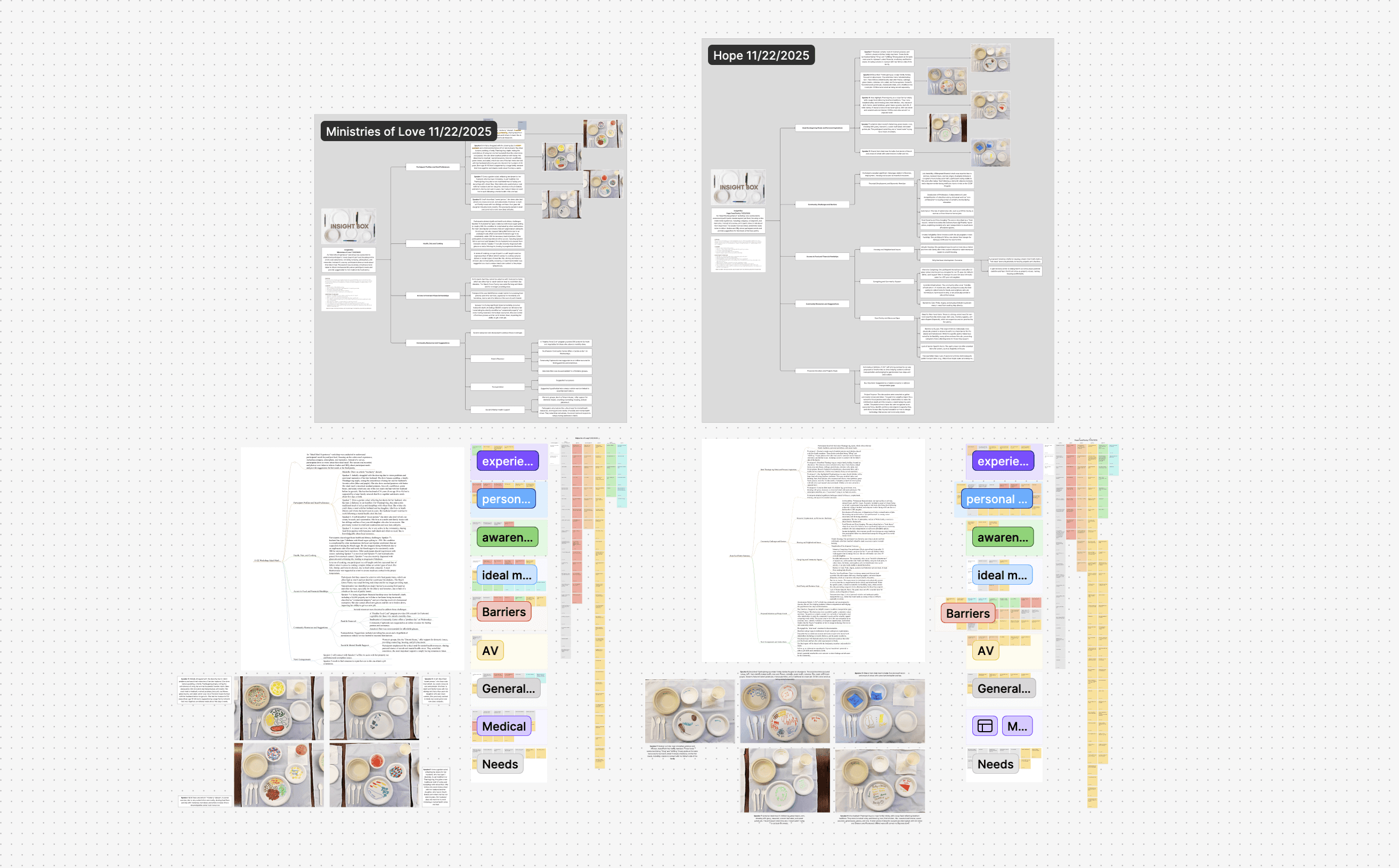
Collaborative synthesis in FigJam!
Why neighbors know about services but don't use them?
Four Engagement Pathways
Information Gap: Neighbor is not aware that non-food services exist. Views SECS purely as a food pantry.
No Perceived Need: Knows services exist but does not see them as relevant to their current situation.
Mobility Gap: Aware and interested but faces practical barriers — time, transport, childcare, eligibility confusion — that prevent action.
Process Gap: Engaged once but received no follow-up. Stranded between initial contact and sustained participation.
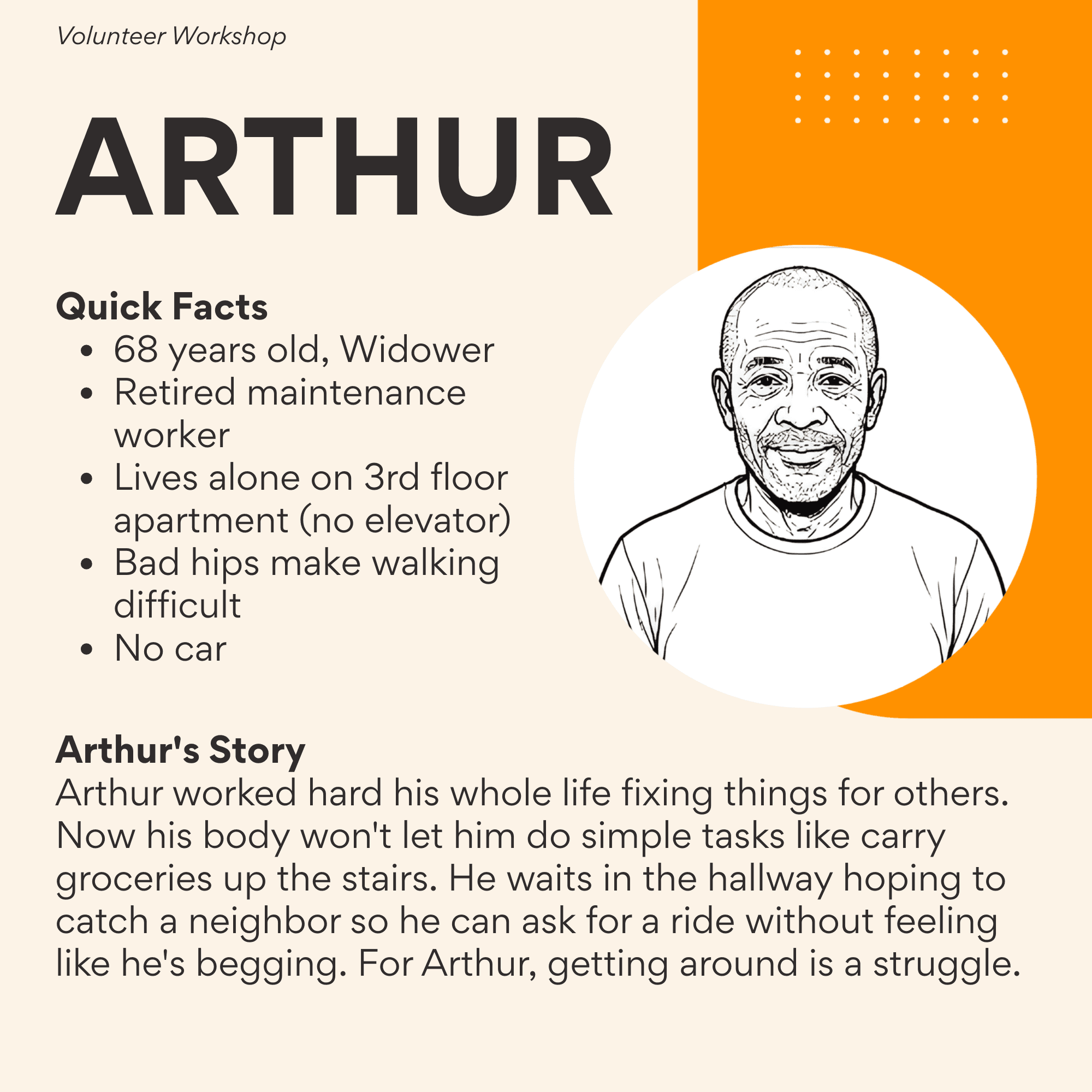
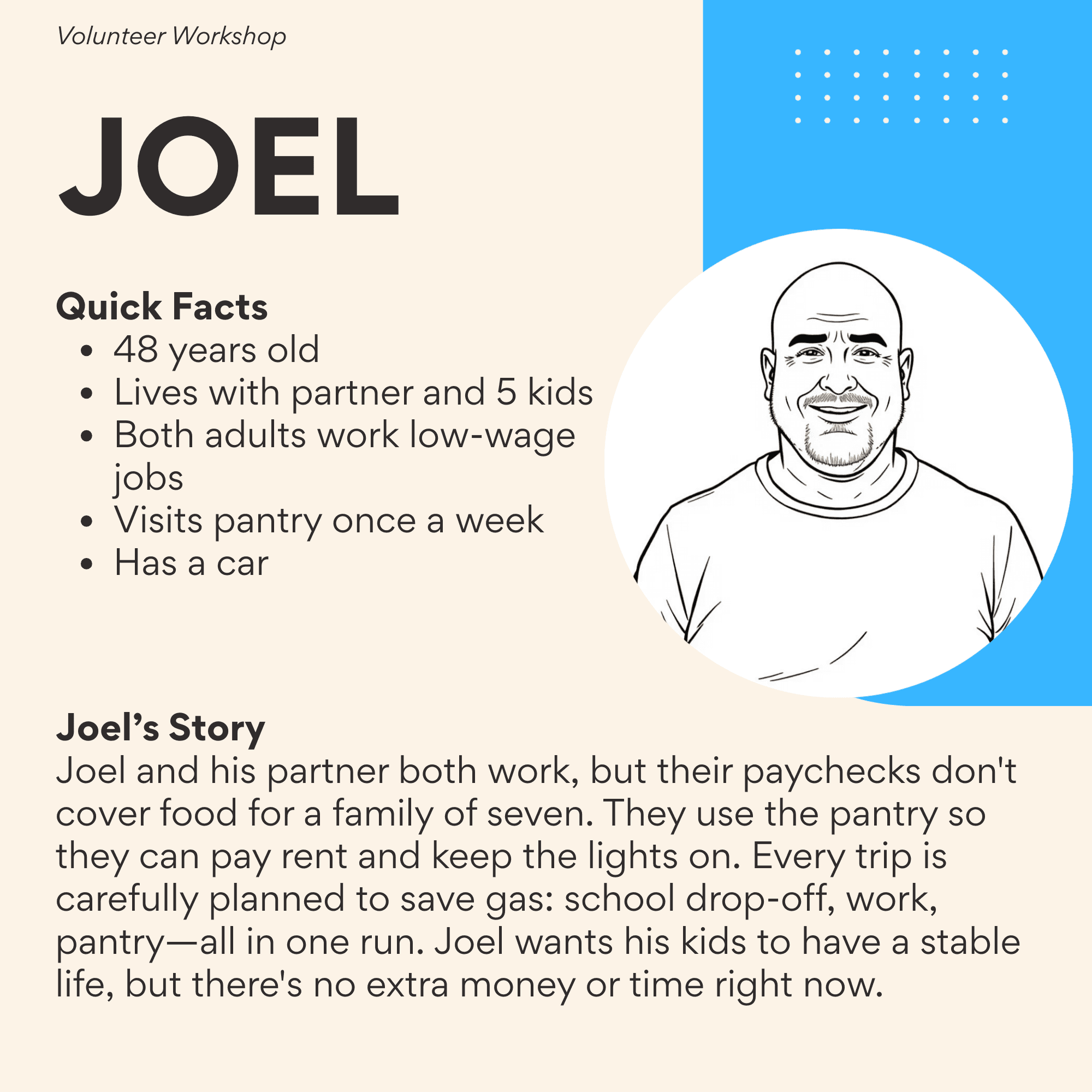
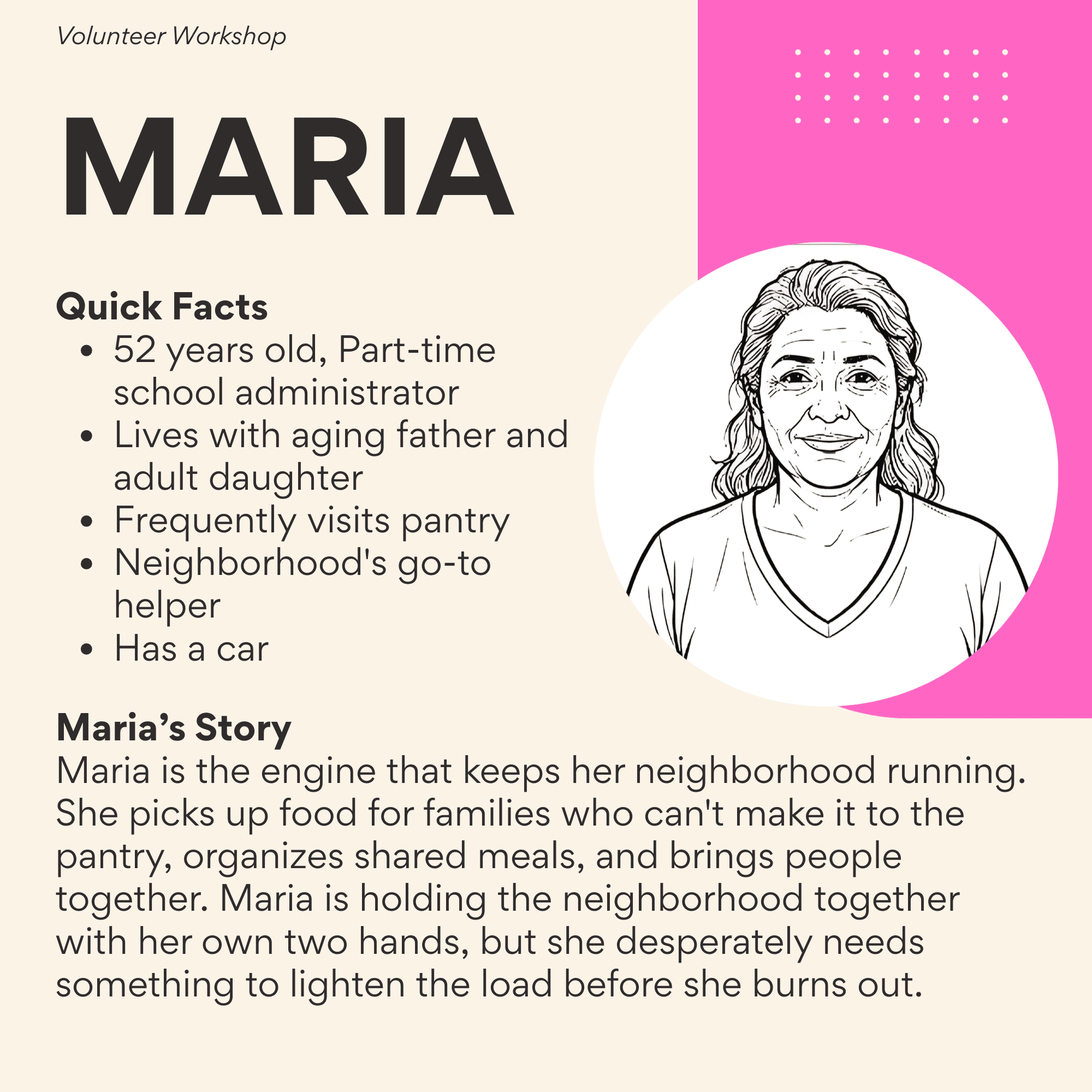
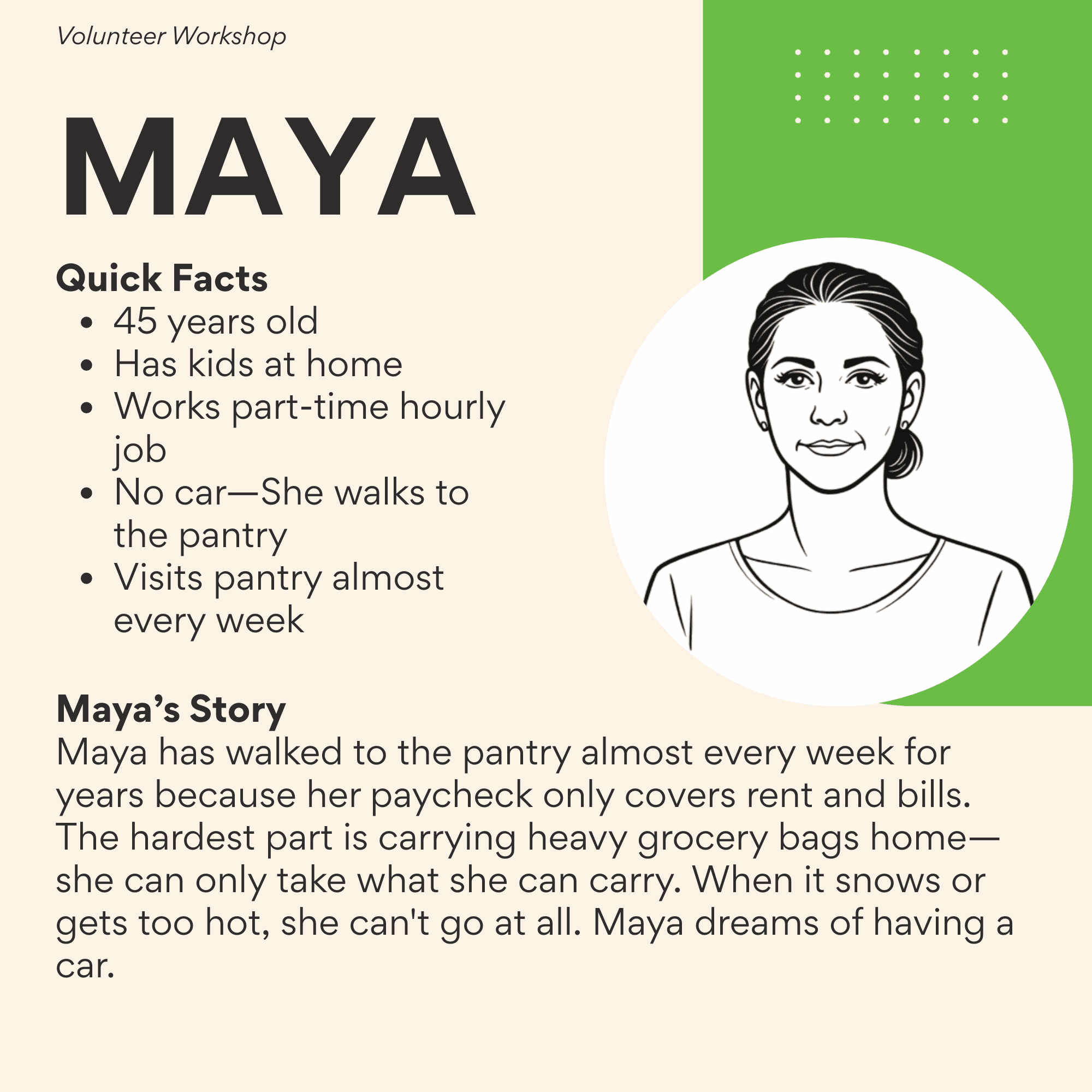
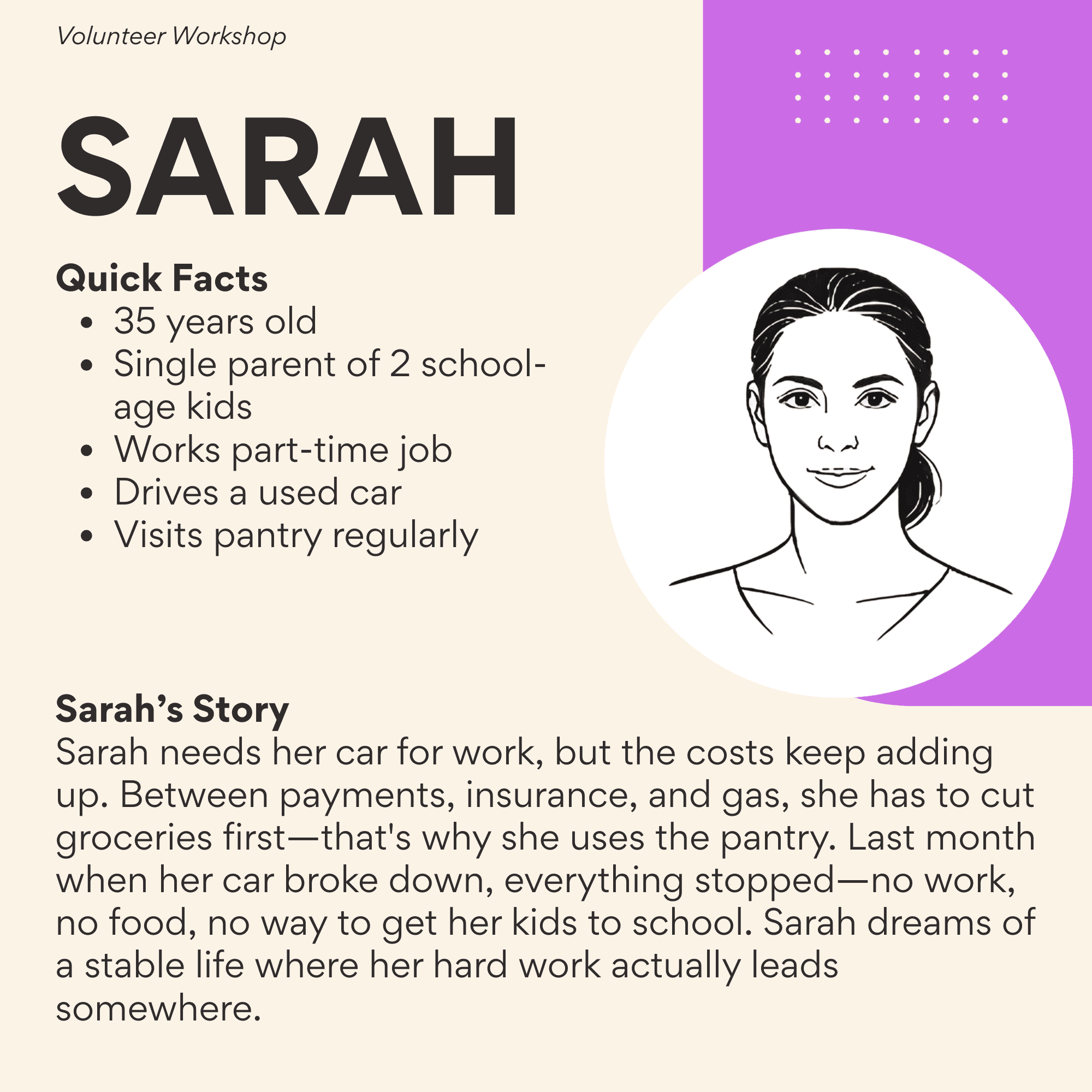
Personas (derived from research themes & interview patterns)
These personas help us evaluate solutions across access, transportation, dignity, and community support, and serve as workshop materials for community co-design.
To bring these insights to life, we’re facilitating 3+ co-design workshops to test and refine speculative mobility concepts with community partners.
How might we design an autonomous mobility system that works the way neighbors actually live?
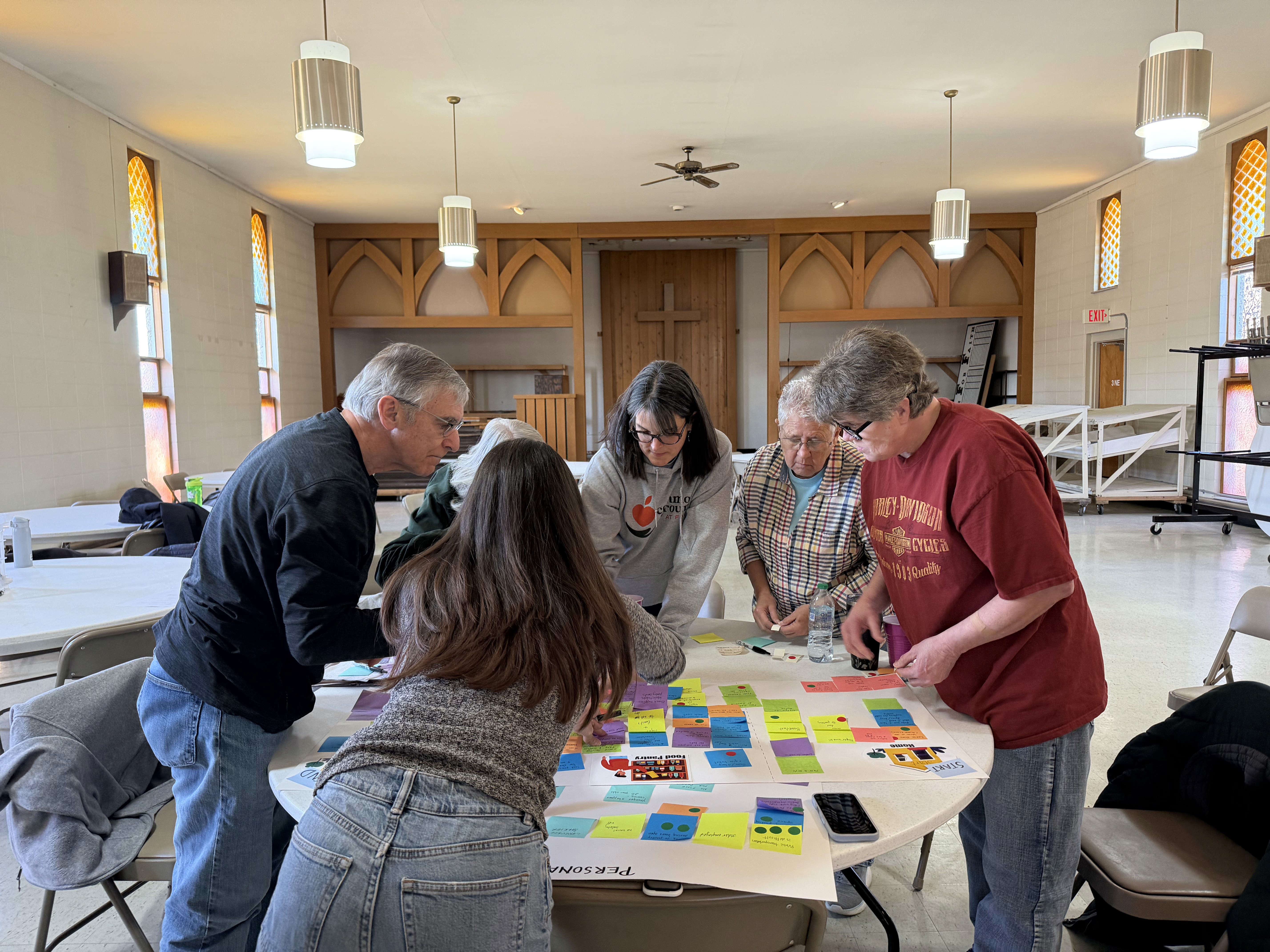
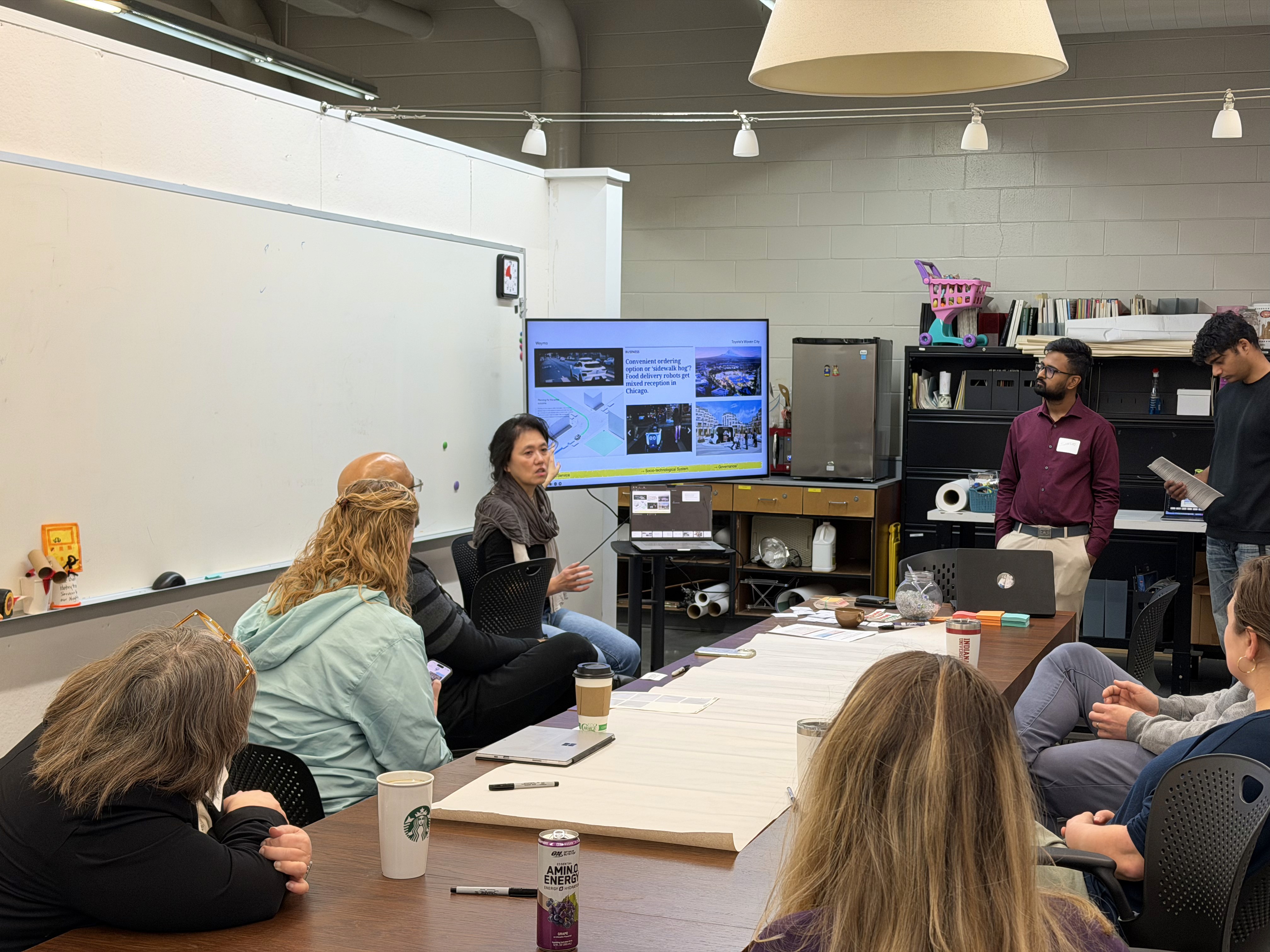
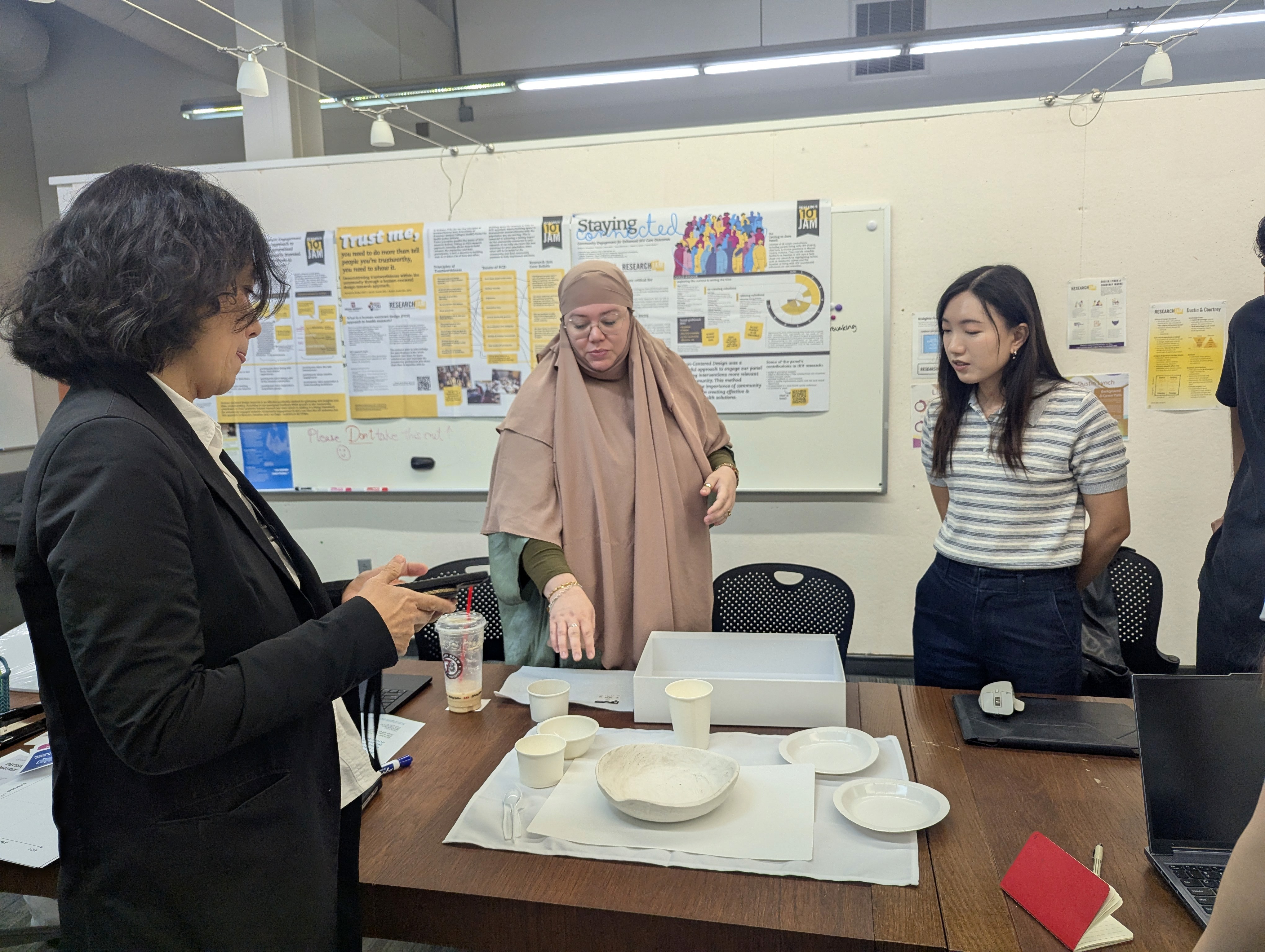
Workshop participants: internal team, pantry volunteers, and community system stakeholders (e.g., IndyGo, Gleaners).

Sensemaking map synthesizing insights from Workshop 1 (created by me)
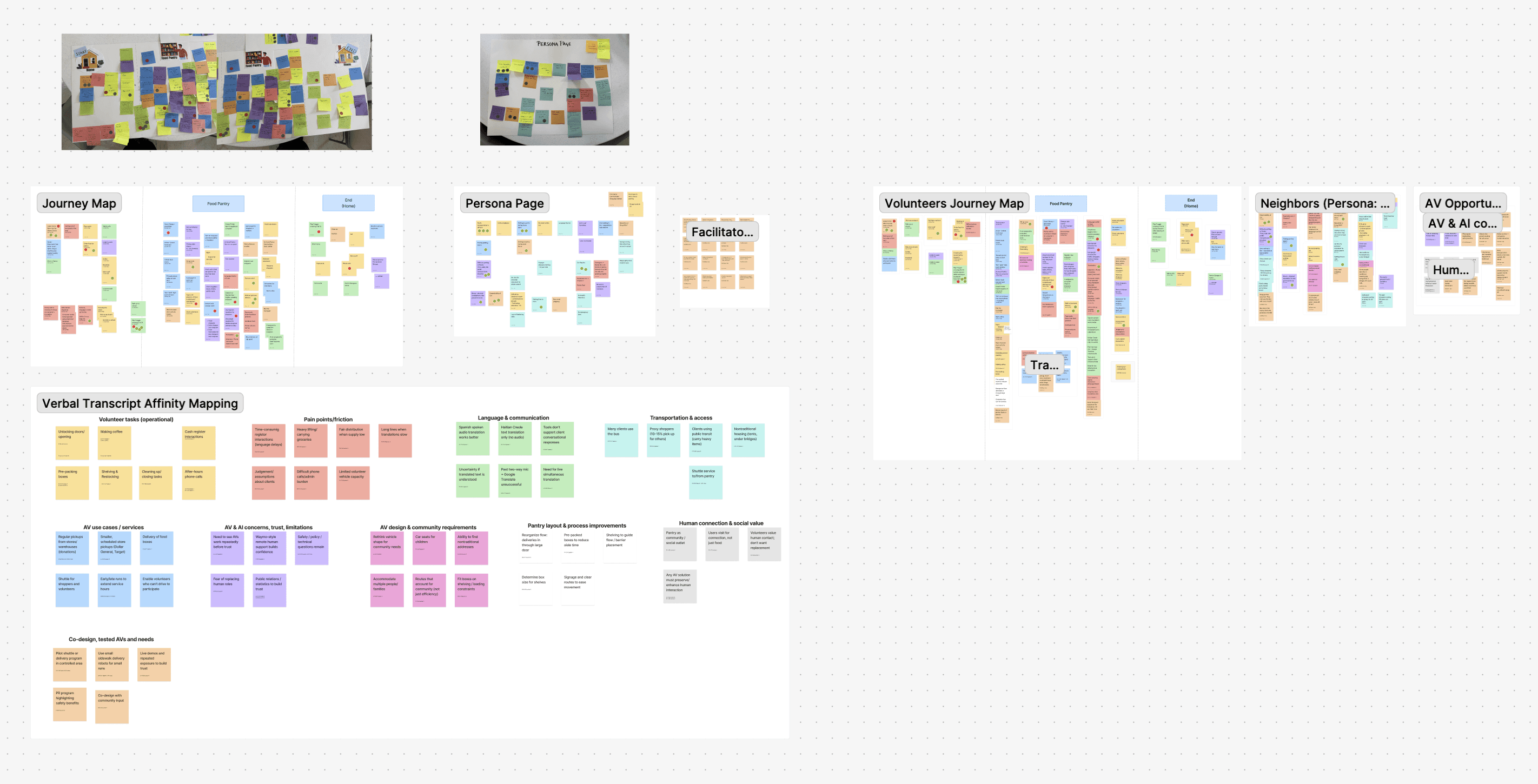
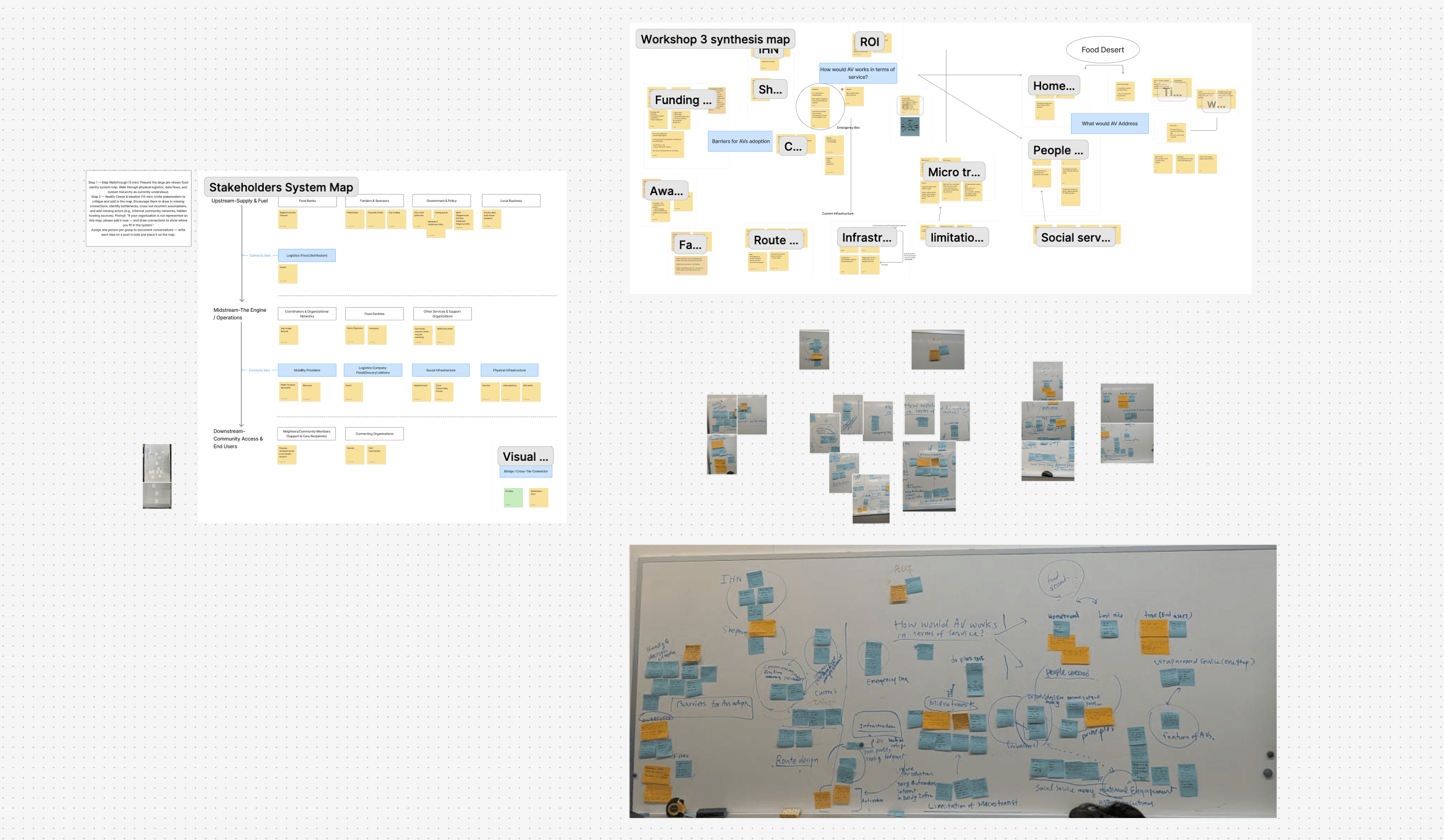
Sensemaking map synthesizing Workshop 1 insights (independently created)!!
Next steps: from Insights to Experience
Decision-makers need a way to experience the system from the community’s perspective, not just understand it through data.
The prototype developed from this work is not a product demo, but a narrative tool. It translates ecosystem-level findings of the research and workshops into a human-scale story that a Toyota executive, a SECS volunteer, and a transit planner can all sit inside.
Rather than showcasing what AVs can do, it explores what communities could experience if mobility were designed around them—as an overview of the service ecosystem.
Prototype is a work in progress — stay tuned!
Reflections
This project challenged me to move beyond digital platforms and mobile design by engaging community members as co-creators and designing both service and speculative systems. I learned to conduct robust, participatory research while balancing future-oriented thinking with real-world constraints. The experience deepened my understanding of how design can shape systems and reinforced the value of building with communities, not just for them.